Daily Sabah logo

Politics
Diplomacy Legislation War On Terror EU Affairs Elections News Analysis
TÜRKİYE
Istanbul Education Investigations Minorities Expat Corner Diaspora
World
Mid-East Europe Americas Asia Pacific Africa Syrian Crisis Islamophobia
Business
Automotive Economy Energy Finance Tourism Tech Defense Transportation News Analysis
Lifestyle
Health Environment Travel Food Fashion Science Religion History Feature Expat Corner
Arts
Cinema Music Events Portrait Reviews Performing Arts
Sports
Football Basketball Motorsports Tennis
Opinion
Columns Op-Ed Reader's Corner Editorial
PHOTO GALLERY
JOBS ABOUT US RSS PRIVACY CONTACT US
© Turkuvaz Haberleşme ve Yayıncılık 2025

Daily Sabah - Latest & Breaking News from Turkey | Istanbul

  • Politics
    • Diplomacy
    • Legislation
    • War On Terror
    • EU Affairs
    • Elections
    • News Analysis
  • TÜRKİYE
    • Istanbul
    • Education
    • Investigations
    • Minorities
    • Expat Corner
    • Diaspora
  • World
    • Mid-East
    • Europe
    • Americas
    • Asia Pacific
    • Africa
    • Syrian Crisis
    • Islamophobia
  • Business
    • Automotive
    • Economy
    • Energy
    • Finance
    • Tourism
    • Tech
    • Defense
    • Transportation
    • News Analysis
  • Lifestyle
    • Health
    • Environment
    • Travel
    • Food
    • Fashion
    • Science
    • Religion
    • History
    • Feature
    • Expat Corner
  • Arts
    • Cinema
    • Music
    • Events
    • Portrait
    • Reviews
    • Performing Arts
  • Sports
    • Football
    • Basketball
    • Motorsports
    • Tennis
  • Gallery
  • Opinion
    • Columns
    • Op-Ed
    • Reader's Corner
    • Editorial
  • TV
  • Politics
  • Diplomacy
  • Legislation
  • War On Terror
  • EU Affairs
  • Elections
  • News Analysis

Political will from US needed to overcome challenges, sources say

by Dilara Aslan

ANKARA Jun 09, 2021 - 12:42 pm GMT+3
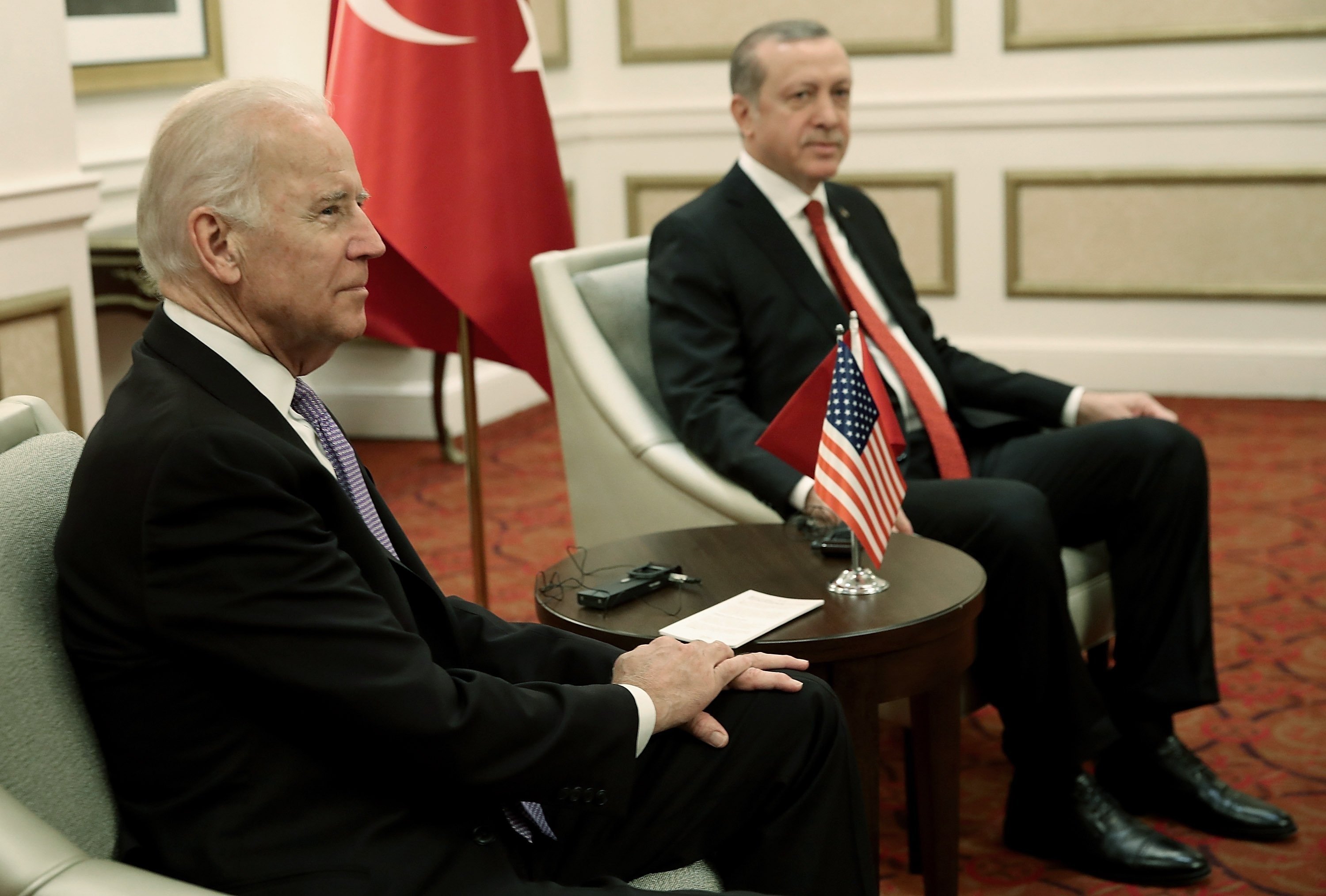
U.S. then-Vice President Joe Biden (L) meets with Turkish President Recep Tayyip Erdoğan in Washington, D.C., U.S., March 31, 2016. (Getty Images)
by Dilara Aslan Jun 09, 2021 12:42 pm

Although NATO allies Turkey and the U.S. have voiced interest in resetting recently strained ties, disagreements on several points remain, and sources have pointed out that political cooperation is the key to progress

As both Turkey and the United States are looking to turn a new page in relations and review their long-standing differences, sources underline that significant political will is needed from Washington to overcome the existing challenges.

U.S. President Joe Biden and President Recep Tayyip Erdoğan are scheduled to meet and discuss a range of issues including Syria, Afghanistan, the Eastern Mediterranean and the S-400s issue next week on the sidelines of the NATO summit in Brussels.

Speaking on the S-400s problem, sources told Daily Sabah: “We seek now a political road map rather than a technical one. Turkey sent a non-paper to Washington on this issue and the U.S. side is currently working on this paper.”

Ties between NATO allies Turkey and the U.S. were badly strained in 2019 over Ankara’s acquisition of the advanced S-400 air defense system, prompting Washington to remove Turkey from its F-35 Lightning II jet program. The U.S. argued that the system was incompatible with NATO systems and could be used by Russia to covertly obtain classified information on the F-35 jets. Turkey, however, insists that the S-400 would not be integrated into NATO systems and would not pose a threat to the alliance.

Back in December, the U.S. decided to impose sanctions on Turkey over the purchase of Russian-made missile defense systems. Ankara’s proposal to create a technical working group on the issue were rejected by the U.S.

Saying that apart from the non-paper, there was no new agenda by the U.S., sources added: “The U.S. stance remains the same.”

“Political will is needed in order to overcome the challenges.”

Apart from the S-400 issue, Ankara and Washington’s relations reached a new low when Biden decided to label the 1915 events a “genocide” while long-existing problems such U.S. support for the Syrian branch of the PKK terrorist organization, the YPG, as well as the U.S. refusal to extradite Fetullah Gülen, the leader of the Gülenist Terror Group (FETÖ), continue.

According to U.S. officials, Washington, on the other hand, is also expected to raise issues including “democracy, values and human rights.”

The two NATO allies also have differing views in the Nagorno-Karabakh conflict as well as Ankara's hydrocarbon exploration activities in the Eastern Mediterranean.

Sources underlined that Ankara’s role in Afghanistan in the aftermath of the planned U.S. pullout could serve as an area of cooperation and rebuilding trust. Most recently, Turkish Defense Minister Hulusi Akar said Monday that Turkey can remain at Hamid Karzai International Airport if its political, financial and logistical demands are met.

The most important point straining relations, however, remains the support Turkey’s NATO ally gives to a terrorist organization threatening Ankara’s national security. Sources point out that though there is a tendency to work together closely in Syria, U.S. support for the YPG remains Turkey’s red line.

The PKK is a designated terrorist organization in the U.S., Turkey and the European Union, and Washington's support for its Syrian affiliate has been a major strain on bilateral relations with Ankara. The U.S. primarily partnered with the YPG in northeastern Syria in its fight against the Daesh terrorist group. On the other hand, Turkey strongly opposed the YPG's presence in northern Syria. Ankara has long objected to the U.S.' support for the YPG, a group that poses a threat to Turkey and that terrorizes local people, destroying their homes and forcing them to flee.

Under the pretext of fighting Daesh, the U.S. has provided military training and given truckloads of military support to the YPG, despite its NATO ally's security concerns. Underlining that one cannot support one terrorist group to defeat another, Turkey conducted its own counterterrorism operations, over the course of which it has managed to remove a significant number of terrorists from the region.


  • shortlink copied
  • Last Update: Jun 09, 2021 2:50 pm
    KEYWORDS
    turkey-us relations s-400s us-ypg relations syrian civil war afghanistan
    The Daily Sabah Newsletter
    Keep up to date with what’s happening in Turkey, it’s region and the world.
    You can unsubscribe at any time. By signing up you are agreeing to our Terms of Use and Privacy Policy. This site is protected by reCAPTCHA and the Google Privacy Policy and Terms of Service apply.
    No Image
    Turkey's oil wrestling festival returns after yearlong hiatus
    PHOTOGALLERY
    • POLITICS
    • Diplomacy
    • Legislation
    • War On Terror
    • EU Affairs
    • News Analysis
    • TÜRKİYE
    • Istanbul
    • Education
    • Investigations
    • Minorities
    • Diaspora
    • World
    • Mid-East
    • Europe
    • Americas
    • Asia Pacific
    • Africa
    • Syrian Crisis
    • İslamophobia
    • Business
    • Automotive
    • Economy
    • Energy
    • Finance
    • Tourism
    • Tech
    • Defense
    • Transportation
    • News Analysis
    • Lifestyle
    • Health
    • Environment
    • Travel
    • Food
    • Fashion
    • Science
    • Religion
    • History
    • Feature
    • Expat Corner
    • Arts
    • Cinema
    • Music
    • Events
    • Portrait
    • Performing Arts
    • Reviews
    • Sports
    • Football
    • Basketball
    • Motorsports
    • Tennis
    • Opinion
    • Columns
    • Op-Ed
    • Reader's Corner
    • Editorial
    • Photo gallery
    • DS TV
    • Jobs
    • privacy
    • about us
    • contact us
    • RSS
    © Turkuvaz Haberleşme ve Yayıncılık 2021