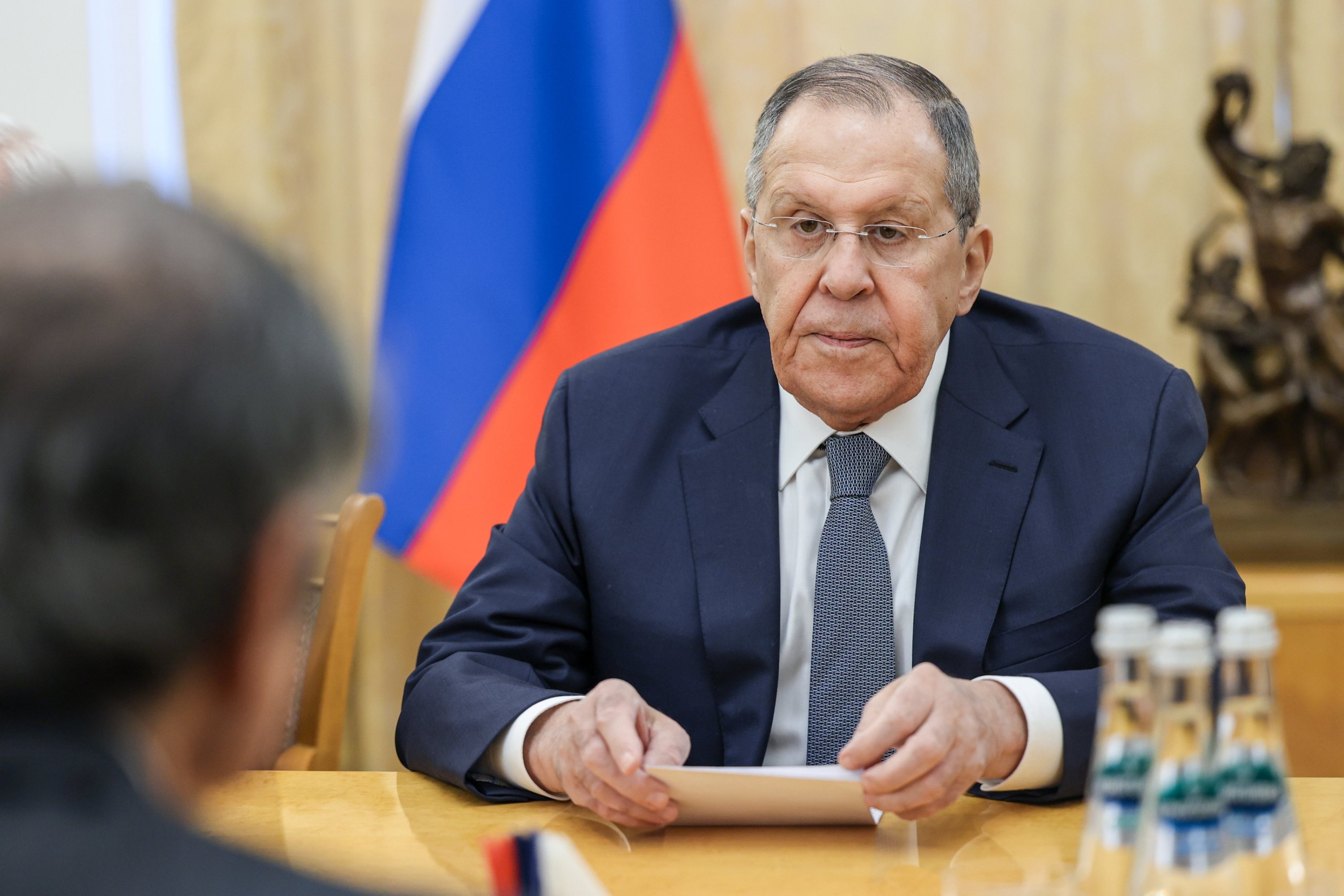
Russian Foreign Minister Sergey Lavrov will participate in the Antalya Diplomacy Forum that will be held in the eponymous Turkish city, the ministry’s spokesperson announced on Wednesday.
Spokesperson Maria Zakharova told a weekly press briefing that Lavrov will be in Türkiye on April 17-18 to attend the forum, upon the invitation of Foreign Minister Hakan Fidan.
Lavrov has participated in the previous editions of the forum, but he has not been to Türkiye since February 2025, a significant gap for the top diplomat of a country that Türkiye has close ties with.
Zaharova said Lavrov, apart from addressing the forum, would hold bilateral meetings with his counterparts. “It is expected that the talks would focus on developments in the Middle East, the Southern Caucasus and the Black Sea, along with international issues and relations with third countries.”
Turkish-Russian relations have not lost steam despite the Russia-Ukraine conflict. Ankara maintains close ties with both sides. Yet, diplomacy between Ankara and Moscow was largely confined to phone diplomacy and bilateral talks on the margins of international events. Russian President Vladimir Putin held a phone call with President Recep Tayyip Erdoğan last week, shortly before a surprise visit by Ukrainian President Volodymyr Zelenskyy to Türkiye.
At the forum, Türkiye aims to highlight its vision for diplomacy and peace as Ankara has raised its profile as a key mediator in conflicts in recent years.
With Israel’s aggressive expansionism threatening to further destabilize the region, from the Gulf to Syria and Iran, Türkiye promotes itself as an oasis of stability. The two-day forum will be a platform for Ankara to showcase this vision, discussing sharpening the foresight for future challenges and efficient ways to address those issues.
Erdoğan and Fidan are scheduled to make keynote speeches at the forum, which will host leaders’ panels and other sessions entitled ADFPanels, ADFRounds and ADFTalks.
The event is expected to be attended by decision-makers, diplomats, academics, businesspeople, and representatives of media and civic society for discussions on managing uncertainties, emergency issues and future challenges through interactive sessions and bilateral meetings.
The forum last year hosted participants from 155 countries, including 21 heads of state and government and 61 ministers.