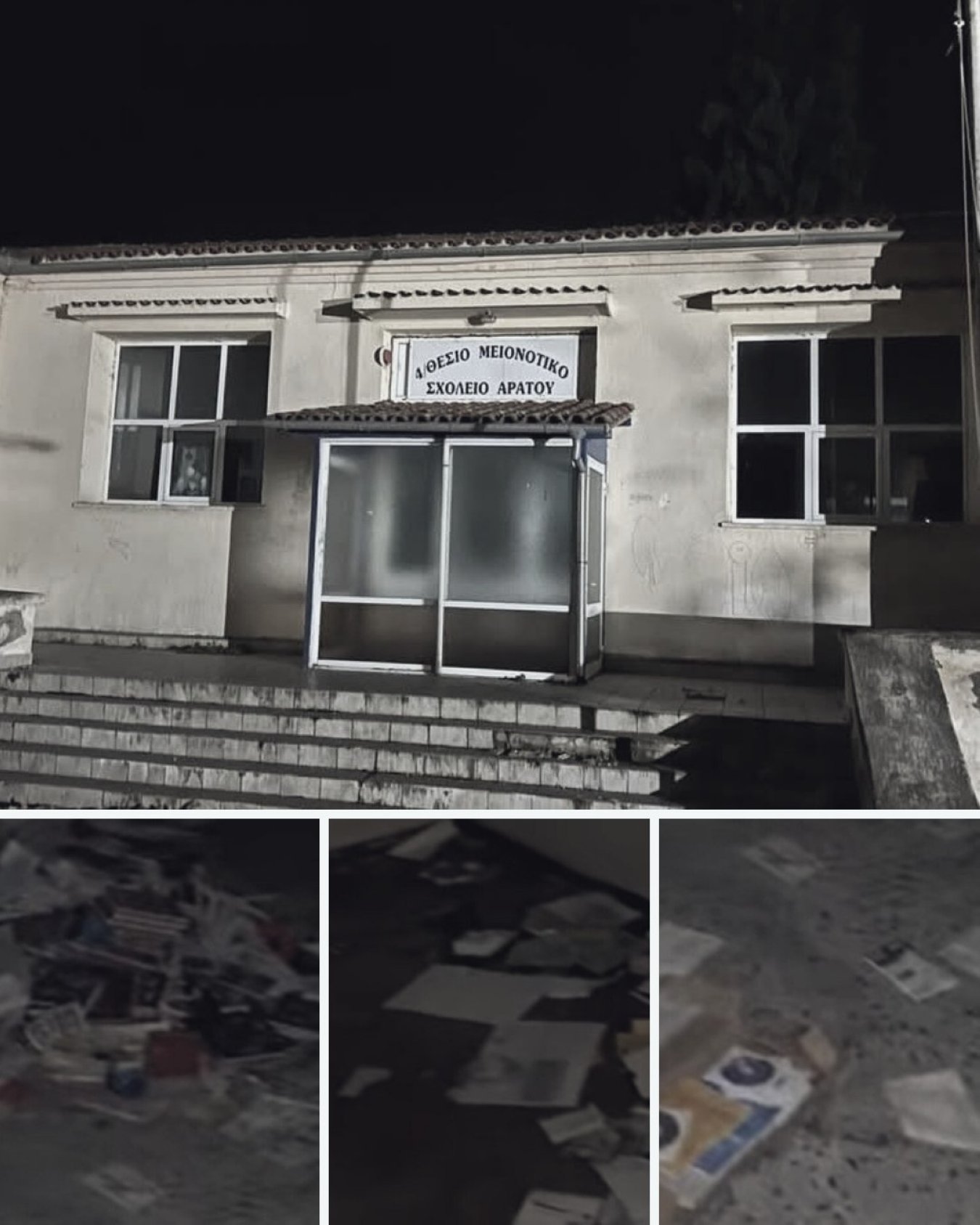
A Turkish minority school in Greece’s Western Thrace region was targeted in an attack that drew strong condemnation from minority organizations, which urged Greek authorities to identify the perpetrators and hold them to account.
Reactions poured Wednesday to an attack targeting a Turkish minority primary school in the Karacaoğlan village.
In a statement, the Friendship Equality Peace Party (DEB) denounced the attack on the school building in Karacaoğlan village, located in the Rhodope province, saying the education rights of the Western Thrace Turkish minority have long been subjected to systematic violations.
The party said minority schools have been unlawfully shut down over the years and stressed that damaging a minority school building in such an atmosphere of pressure is unacceptable.
The Federation of Western Thrace Turks in Europe (ABTTF) also condemned the attack, voicing deep concern and outrage on behalf of Western Thrace Turks living across Europe.
The federation called for the incident to be swiftly clarified, the perpetrators identified and brought to justice, and appropriate penalties imposed, emphasizing that attacks targeting minority educational institutions are unacceptable.
The attack came to light on Jan. 4, when local residents noticed the damage. Police launched an investigation at the school following the discovery.
The Western Thrace Turkish Minority Advisory Board also condemned the attack, recalling that a similar incident had occurred in the past and warning that repeated acts targeting minority institutions further undermine the sense of security among the community.
Some 150,000 Muslim Turks in Western Thrace, economically one of the poorest in Greece, have long complained about deteriorating conditions. Seeing the community as a “hostage” of its ties with Türkiye, the Greek government has committed numerous breaches of its treaty obligations and European Court of Human Rights (ECtHR) rulings over the years, including the closure of schools, the banning of Turkish-language education and refusing to legally allow the community to elect their religious leaders like muftis (Muslim clerics), which is also another treaty right.