Türkiye is intensifying efforts to establish marine parks in the Aegean Sea and other surrounding waters while closely watching Greece’s expected announcement of marine protected areas by the end of June. The move comes amid Ankara’s concern that Athens’ initiative may be tied to long-standing disputes in the Aegean.
According to diplomatic sources, Türkiye is carefully evaluating whether the marine parks Greece is expected to declare in the Ionian and Aegean Seas will overlap with contentious maritime zones. While Ankara supports environmental protection and sustainable marine management, it maintains that unilateral actions under the guise of ecological preservation must not be allowed to mask political motives or alter the delicate status quo in the Aegean.
“Preventive measures are being reviewed against possible unilateral steps,” sources told Anadolu Agency (AA), adding that Türkiye is assessing broader environmental protection initiatives in all its seas – including the Aegean, Eastern Mediterranean, Black Sea and the Sea of Marmara.
The current dynamic is seen as a continuation of Greek efforts to internationalize bilateral problems with Türkiye. The Turkish Foreign Ministry had already criticized Greece in 2023, warning that Athens was exploiting environmental agendas for political leverage.
“Despite the recent normalization trend in our bilateral relations, Greece is again abusing environmental issues in an attempt to score diplomatic points,” the ministry said.
Türkiye is not standing idle. In September 2024, it signed the Biodiversity Beyond National Jurisdiction (BBNJ) agreement during the 79th United Nations General Assembly. The domestic ratification process is currently underway. This landmark international accord aims to conserve and sustainably use marine biodiversity in areas beyond national jurisdiction.
Simultaneously, Türkiye has been working on its Marine Spatial Planning (MSP) framework, which was officially announced on April 16. The plan aims to manage marine resources in all Turkish seas in a balanced and sustainable manner. Authorities are currently working on enhancing the scope and technical content of the plan, and necessary applications have already been submitted for its registration with the U.N.
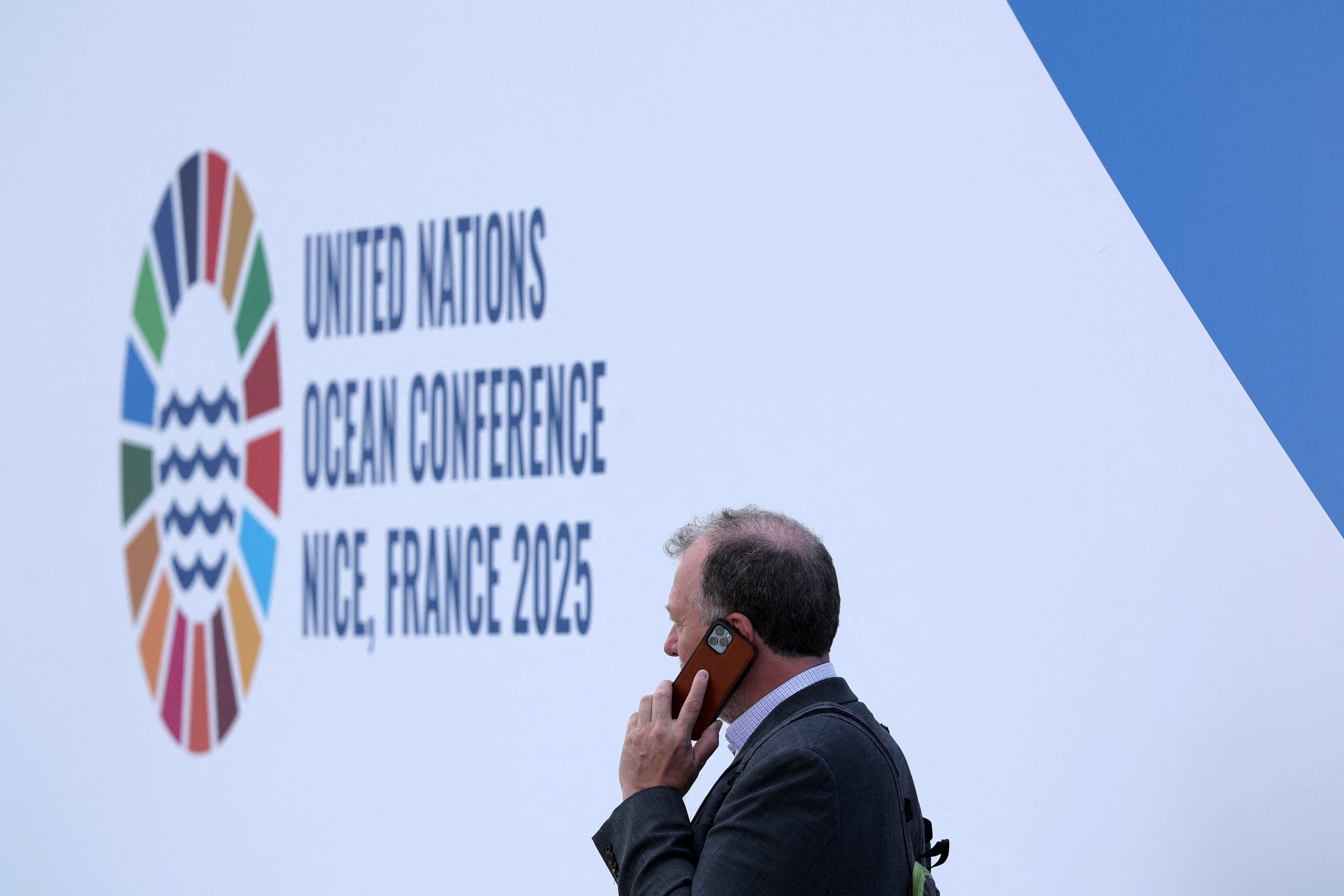
In this context, Ankara also participates in the ongoing United Nations Ocean Conference in Nice, France. Türkiye is represented by Environment, Urbanization and Climate Change Deputy Minister Fatma Varank leading a delegation to articulate Ankara’s commitment to marine conservation. Türkiye is expected to deliver an official address at the summit.
Greek Prime Minister Kyriakos Mitsotakis, addressing the same U.N. Ocean Conference in Nice, reaffirmed Greece’s commitment to declare new marine parks in the Ionian and Aegean Seas before the end of June. These parks, originally announced during the 2024 “Our Ocean” conference held in Athens, are expected to prohibit deep-sea trawling and introduce stronger regulations to prevent overfishing.
Although the Greek initiative appears to be environmentally driven, Türkiye sees the potential for this effort to spill into the geopolitical realm, especially given the long-standing disputes between the two NATO neighbors regarding maritime boundaries, continental shelves, airspace and demilitarized islands in the Aegean.
Türkiye stresses that international environmental norms should not be instrumentalized to undermine the rights of coastal states or distort the balance of power in contested areas. Any attempt to establish conservation zones that may impact the status of disputed territories is seen as unacceptable.
Ankara’s proactive stance on marine spatial planning is part of a broader strategy to assert its maritime rights and uphold international legal norms in the face of what it sees as encroaching initiatives by Greece. Turkish officials maintain that marine protection efforts must be transparent, equitable and cooperative, particularly in semi-enclosed seas like the Aegean, where maritime boundaries remain unsettled.
As Türkiye moves to institutionalize its marine planning within international frameworks, it seeks to preempt efforts that may attempt to redefine maritime jurisdiction through environmental discourse. The broader message from Ankara is clear: marine conservation is vital, but not at the cost of geopolitical stability or sovereign rights.
While Türkiye and Greece have recently engaged in dialogue to ease bilateral tensions, the marine parks issue underscores how even shared global concerns like environmental protection can become arenas of quiet competition in a historically fraught region.
After a long period of tensions marked by disputes over irregular migration, the Cyprus dispute, energy exploration and territorial sovereignty in the Aegean, Ankara and Athens have been taking confidence-building steps for a fragile normalization of their relations since late 2023.