Foreign Minister Hakan Fidan will represent the country at the July 16-17 talks on the divided island of Cyprus in New York, U.S.
“The expanded 5+1 informal talks” will bring together the main actors on the future of the island in the presence of U.N. Secretary-General Antonio Guterres.
Foreign Ministry sources stated on Tuesday that Türkiye aims to take steps to enhance a culture of cooperation between the two sides in Cyprus and hopes these will be discussed during the talks, “to serve the development of good neighborly relations between the two states in the island.”
Cyprus is split between the Greek and Turkish Cypriot communities. Greek Cypriots control the southern part of the island and are recognized by the international community as a state, despite protests from Turkish Cypriots and Türkiye. The Turkish Republic of Northern Cyprus (TRNC), located in the northern part of the island, is recognized by Türkiye, which is a guarantor state in the resolution of the longstanding “Cyprus question.” TRNC President Ersin Tatar and Greek Cypriot leader Nikos Christodoulides will join Fidan, Guterres, as well as the foreign minister of Greece, George Gerapettis and the U.K. Minister of State for Europe, North America and Overseas Territories, Stephen Doughty. Greece and the U.K. are other guarantor states in the process.
All sides participating in the New York talks last came together in Switzerland’s Geneva in March. The talks, at least for now, are informal and ministry sources said they should not be viewed as “continuation of earlier negotiation processes (between Turkish and Greek Cypriot sides), nor “beginning of a new negotiation process.”
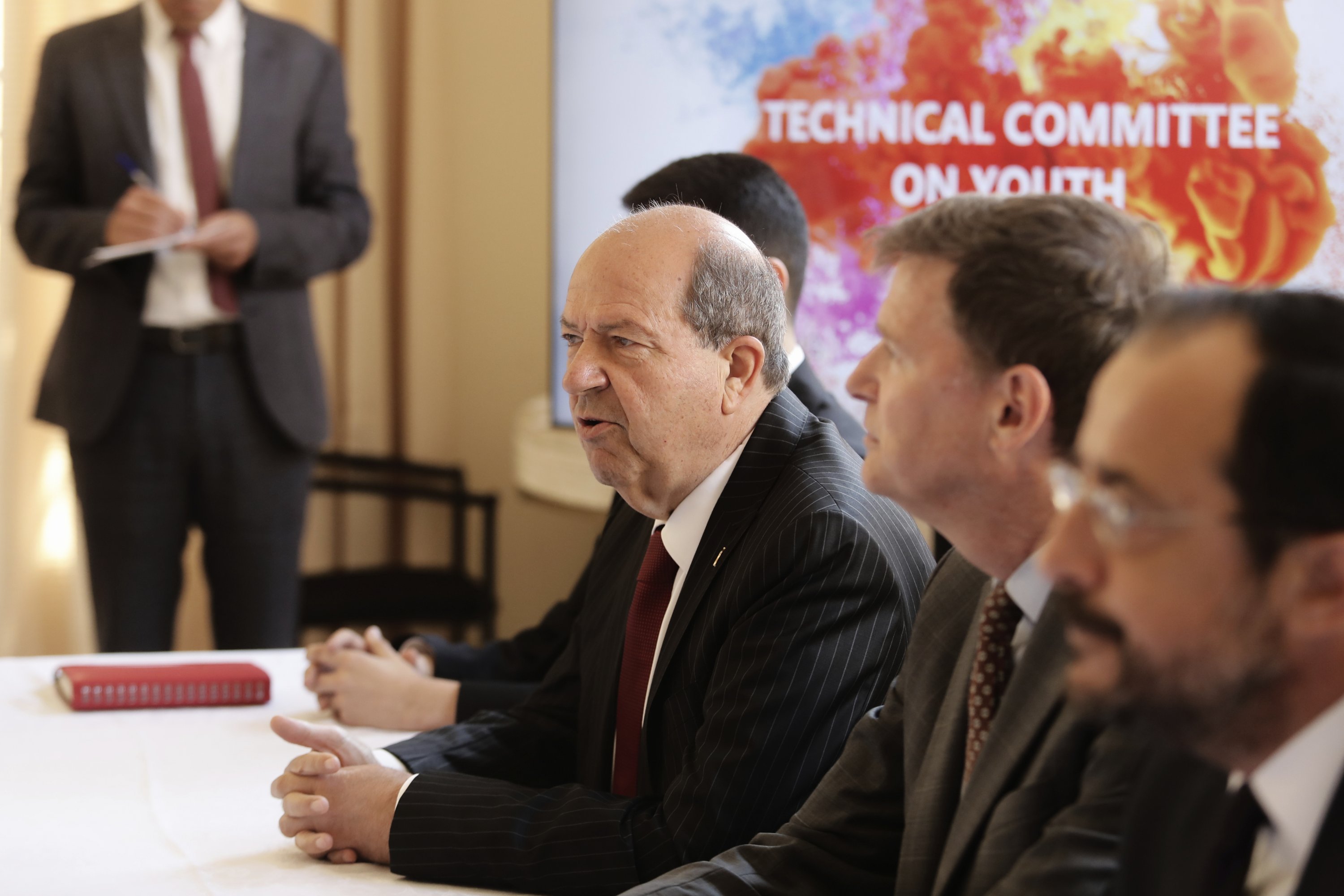
The talks in Geneva focused on exploring areas of cooperation between the two sides on the island, rather than reaching a final resolution on the status of the communities. Eventually, the sides agreed upon the opening of new crossing points in the divided island where Greek Cypriots and Turkish Cypriots are separated by a U.N. buffer zone, clearance of land mines, cooperation on environment and climate change, solar-powered electricity production in the buffer zone, restoration of cemeteries and the establishment of a joint technical committee for the youth. Although progress was reported in some topics discussed in Geneva, cooperation stalled in others, such as the clearance of mines and electricity production, due to the uncompromising stance of the Greek Cypriot side.
The talks are overseen by Maria Angela Holguin Cuellar, who was appointed by Guterres as the U.N. secretary-general's envoy for Cyprus and took office on May 12. Cuellar had launched a diplomatic blitz since then, meeting Greek and Turkish Cypriot leaders, as well as Fidan, Gerapetritis and Doughty, before talks with EU Council chief Antonio Costa on July 2. The EU sides with Greek Cypriots on the future of the island as the community is recognized as a state by the bloc and a member of the EU.
Speaking to reporters as he left for New York on Tuesday, TRNC President Ersin Tatar lamented that Greek Cypriots had only escalated tensions since the last talks. Tatar stated that the commencement of direct flights and trade with the TRNC was necessary for the resumption of negotiations on the island's status, but the Greek Cypriot side opposed the creation of a “positive atmosphere.”
“The international community should see this and stand for Turkish Cypriots,” he said.
Tatar said they would not compromise their sovereignty, and he was flying to New York to safeguard the rights of Turkish Cypriots. He also criticized the Greek Cypriot administration for “terrorizing people with a campaign of arrests against people and companies who purchased properties in the TRNC."
The president also accused the U.N. of “merely watching the developments in the region.”
“In my talks in New York, I will highlight the importance of peace and security for a possible agreement in the future,” he said.