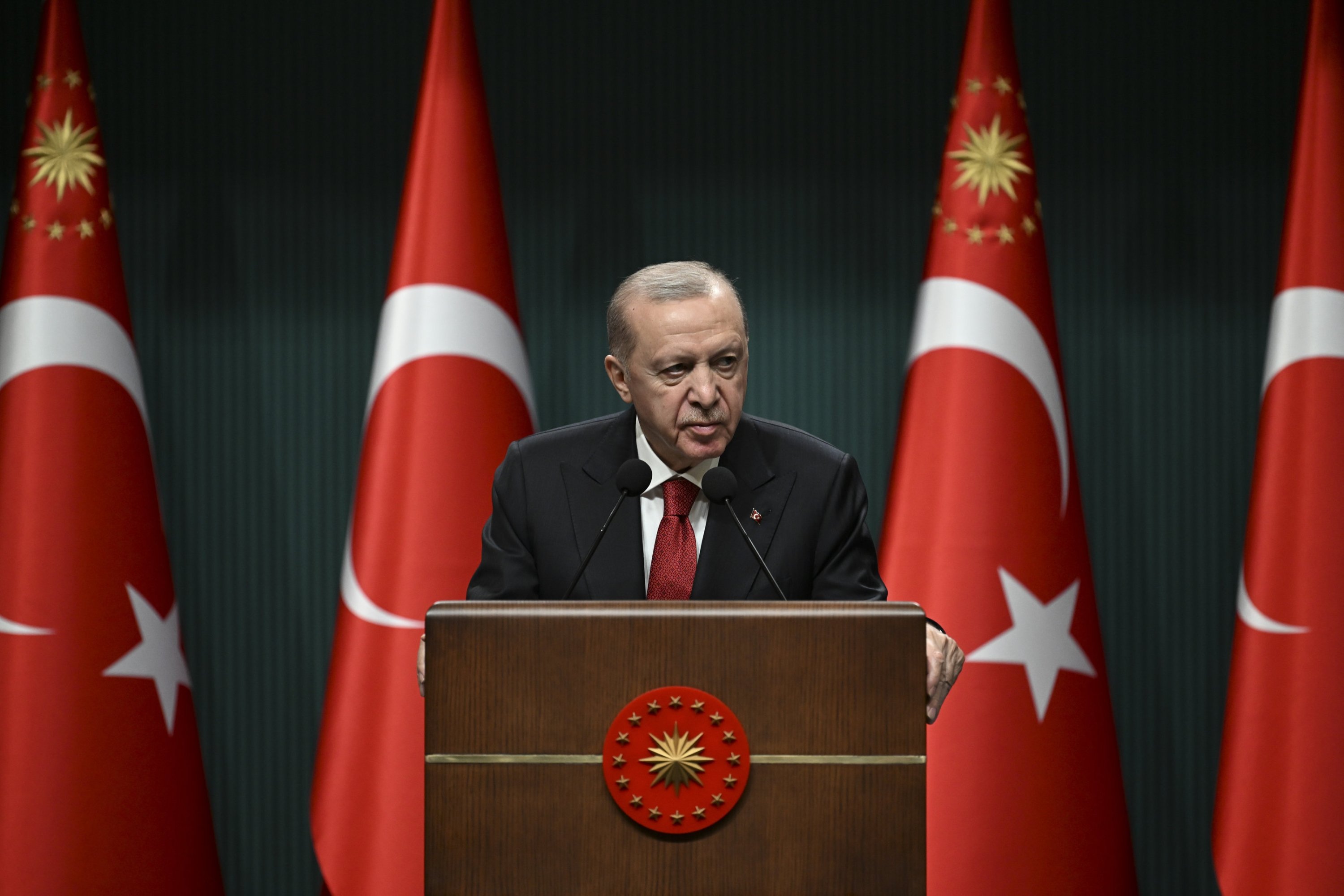
The war led by Israel against regional countries is imposing a growing cost on the entire world, President Recep Tayyip Erdoğan said Tuesday, warning that escalating tensions, including disruptions in the Strait of Hormuz, are pushing the global economy into turmoil, as its consequences are being felt far beyond the Middle East.
“As the war drags on, new complications continue to emerge,” Erdoğan told a news conference after a Cabinet meeting in the capital Ankara, pointing to the closure of the Strait of Hormuz as a development that has already caused serious turbulence in the global economy.
Highlighting the strategic importance of the waterway, through which roughly 20% of global energy trade passes, Erdoğan warned that disruptions have forced some countries to take measures to reduce fuel consumption.
He emphasized that the economic burden of the conflict is growing by the day, underlining the urgent need to bring the war to an end.
Erdoğan also called for immediate action against Israeli Prime Minister Benjamin Netanyahu and his circle, describing them as responsible for ongoing violence and urging all countries to adopt a bold and proactive stance for the sake of regional peace and humanity.
Türkiye, he said, has been among the countries accurately assessing the developments and acting with “state wisdom,” while maintaining a balanced and principled position.
“We are determined to keep our country outside the ring of fire,” Erdoğan added, warning against the risk of the conflict turning into a prolonged war of attrition among regional states.
He stressed that Türkiye does not want to see the conflict expand further, reiterating Ankara’s call for de-escalation and a swift resolution.
Erdoğan’s remarks come amid growing concerns over the broader economic and geopolitical consequences of the war, as energy markets and global trade routes face increasing pressure.
Türkiye, a neighbor of Iran and a NATO ally of the United States, has been keen on defusing the conflict. Türkiye, Pakistan and Egypt passed messages between Washington and Tehran over the weekend, U.S.-based Axios reported Monday.