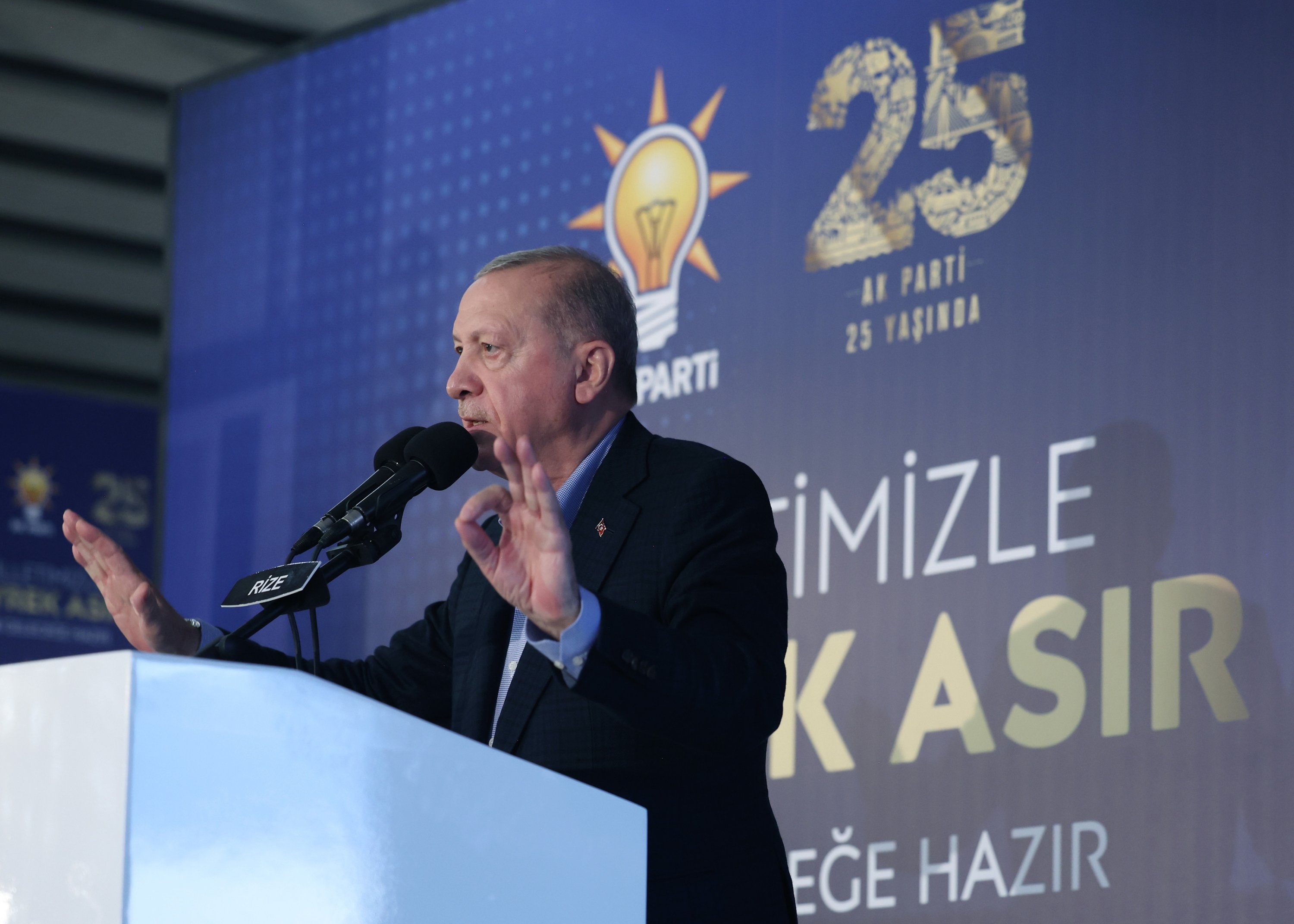
Samsun was the second stop on President Recep Tayyip Erdoğan’s Black Sea tour, which started with a visit to his hometown in the province of Rize. As he addressed a large crowd at the inauguration of a massive hospital complex Sunday, Erdoğan also touched on the anniversary of the Sept. 12, 1980, coup and described it as the source of most of the problems Türkiye faces today. The president, who has weathered multiple direct and indirect coup attempts himself, vowed that the era of coups would not return.
“During the 1980 coup, they sent people to the gallows ostensibly to restore justice,” Erdoğan said in his speech. The coup by a military junta led by Chief of General Staff Kenan Evren was justified by the same junta as a response to the political turmoil of the late 1970s, when politically motivated murders were commonplace. It was only during Erdoğan’s tenure, and long after he left his post, that Evren was tried and sentenced along with his top aide, Tahsin Şahinkaya, only to die of old age within days of the landmark verdict against the putschists.
“We lost very young people. The Sept. 12 coup inflicted deep wounds on the hearts of the nation. It also dealt a blow to Türkiye’s growth. People were condemned to economic decline and poverty,” Erdoğan recalled.
“On Nov. 3, 2002, the nation said it was enough,” Erdoğan added, referring to the first election won by his Justice and Development Party (AK Party). “The dirty hands reaching out to the people’s will are broken. The era of coups in Türkiye is over, and this nation will not allow it to return,” Erdoğan said.
The president led the nation in a successful unarmed resistance against the putschists of the Gülenist Terror Group (FETÖ) during the July 15, 2016, coup attempt. It was the first public resistance against a coup in the brief history of the Republic of Türkiye, which has been stained by multiple coups, coup attempts and ultimatums issued to elected governments by the powerful military.
“We won’t allow the people’s will to be stained again. We are authorized by the nation and will safeguard its will at all costs,” Erdoğan also said.
The National Security Council, composed of Evren and the commanders of the armed forces, assumed control of the country, dissolved Parliament and ushered in a period of sweeping political repression in September 1980.
Hundreds of people faced death sentences in military courts established after the coup.
During the period, about 650,000 people were detained, 230,000 were tried in 210,000 cases, and prosecutors sought the death penalty for more than 7,000 people.
The 1980 coup was not the last one to shake Türkiye, as military tutelage made its presence felt in Turkish politics for years to come. In 1997, it reared its ugly head again in the so-called “postmodern coup,” a bloodless attempt that forced the collapse of the government after a military ultimatum targeting Necmettin Erbakan, who was also a victim of the 1980 coup. But finally, in 2012, Türkiye managed to put the two surviving coup leaders, Kenan Evren and Tahsin Şahinkaya, on trial. Both men were too ill to attend but gave brief statements to the court through a video link from their hospital beds.
During the proceedings, Evren refused to answer questions from prosecutors, maintaining that the court had no right to put him on trial. He made a brief statement saying the military was forced to intervene and introduce a “new constitutional order to bring peace and calm.”
“The Sept. 12 movement was a historic event,” he said. “Historic events cannot be put on trial. They are examined scientifically.”
“The great Turkish nation did not deserve to live through the (1970s) events,” he testified. “We did what was right at the time, and if it happened today, we would carry out a military coup again,” he said.
Eventually, both men were sentenced to life imprisonment and stripped of their military titles. But both died in quick succession due to illnesses stemming from old age while an appeals process initiated by their lawyers was underway.