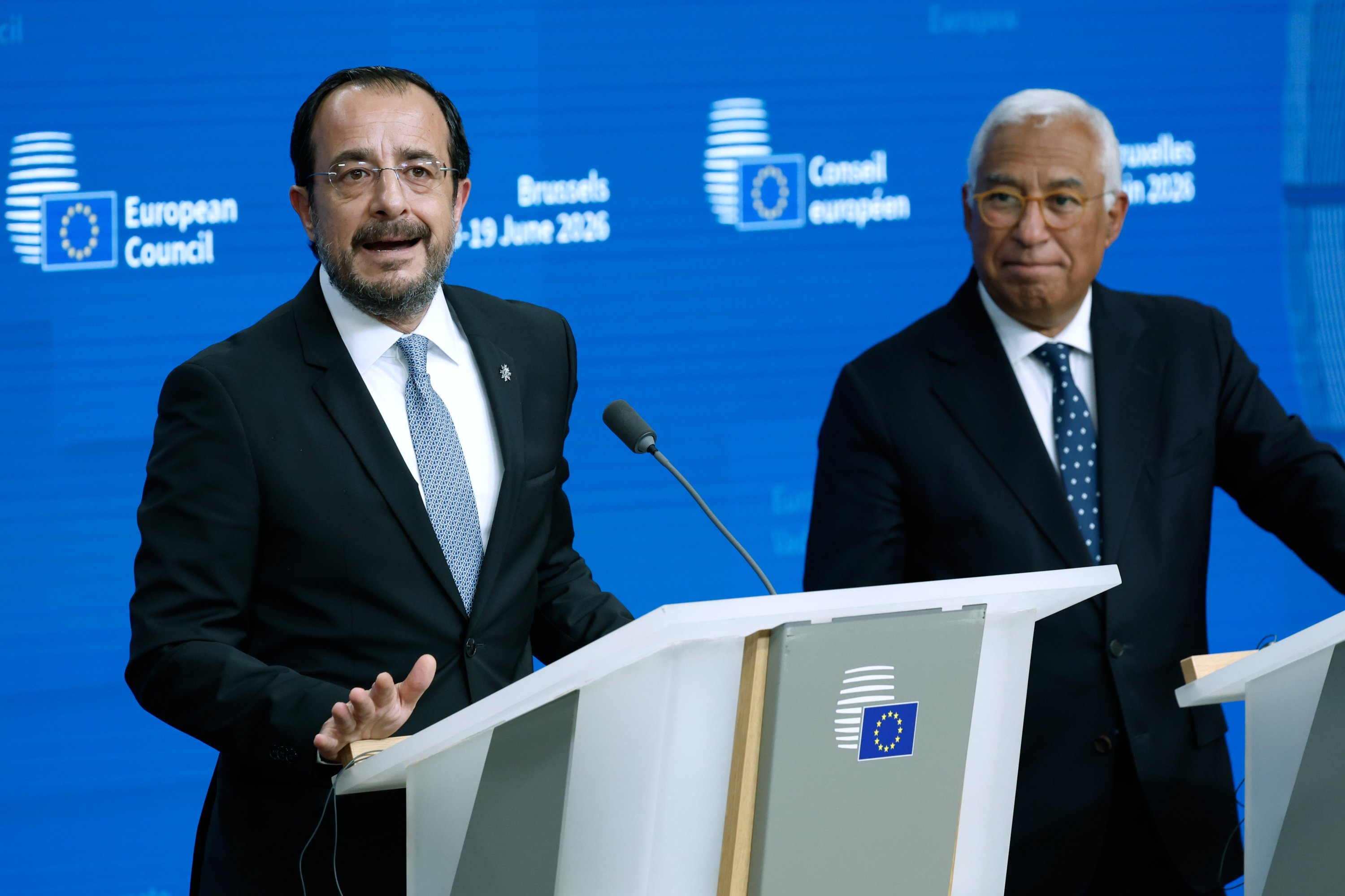
At a time when the United Nations has refocused on resolving the Cyprus question, amid U.N. Secretary-General Antonio Guterres’ anticipated visit to the island this week, the European Union is seeking a role in the process. Nevertheless, the bloc, which counts the so-called Republic of Cyprus as a member, fails to fulfill the criteria required for such a role, including objectivity, the consent and confidence of one side, and the absence of a conflict of interest, let alone having the necessary jurisdiction.
Guterres will likely make his final visit to the island before his term officially ends in January. During his two-day visit, he is expected to hold talks with representatives of the Greek Cypriot and Turkish Cypriot communities. The EU, meanwhile, has increased its activities regarding Cyprus despite having no official role in the resolution process. The EU took its first step in that direction in 2025 by appointing Johannes Hahn as its special envoy for Cyprus, describing the move as a contribution to a solution on the divided island. On July 13, European Commission President Ursula von der Leyen held a phone call with Guterres and underscored the “momentum” in efforts to resolve the Cyprus question. The same day, the EU announced Raffaele Fitto as its new special envoy for Cyprus.
The island has been mired in a decadeslong dispute between Greek and Turkish Cypriots, despite a series of diplomatic efforts by the U.N. to achieve a comprehensive settlement.
Ethnic attacks that began in the early 1960s forced Turkish Cypriots to withdraw into enclaves for their safety. In 1974, a Greek Cypriot coup aimed at the annexation of Cyprus by Greece led to Türkiye’s military intervention as a guarantor power to protect Turkish Cypriots from persecution and violence.
As a result, the Turkish Republic of Northern Cyprus (TRNC) was founded in 1983. The country is recognized only by Türkiye, which does not recognize the Greek Cypriot administration in the south.
The island has seen an on-and-off peace process, but negotiations have been stalled since 2017.
In response to a question from Anadolu Agency (AA) about how Turkish Cypriots could trust the EU as a neutral facilitator in the process, particularly after the EU failed to fulfill its pledge to integrate Turkish Cypriots more closely into the bloc and end their isolation following a 2004 referendum on a U.N. plan to reunify Cyprus as a federal state, and after failing to seek the views of the Turkish Cypriot side on the appointment of Fitto, the European Commission said Fitto would be tasked with preparing the ground for the resumption of negotiations between Greek and Turkish Cypriots. The commission said both communities in Cyprus would be included in Fitto’s mission to build trust between the two sides.
Kaja Kallas, the EU’s High Representative for Foreign Affairs and Security Policy, also announced that she had spoken by phone with Maria Angela Holguin Cuellar, the U.N. secretary-general’s personal envoy for Cyprus, on July 21, adding that “the EU’s determined support for U.N. efforts will continue.” Cuellar, who visited Brussels, also held face-to-face meetings with European Commission President Ursula von der Leyen and the EU’s new special representative for Cyprus, Raffaele Fitto, on July 22.
In a statement following the meeting, von der Leyen said she welcomed Cuellar’s efforts to find a solution within the U.N. framework and “in line with the EU’s principles, values and legislation,” adding that the EU would continue contributing to the process.
In international disputes, key criteria generally considered when a party seeks to assume the role of mediator, facilitator or official actor include impartiality, the consent and trust of the parties, the absence of a conflict of interest, and the necessary authority and capacity. One of the most significant factors preventing the EU from assuming a role in the Cyprus issue is its lack of impartiality. The Greek Cypriot administration in the south, which is a party to the dispute, is a member of the EU.
The “Republic of Cyprus” applied for full membership in the European Community on behalf of the entire island on July 4, 1990. Despite strong objections and criticism from the Turkish Cypriot side, which argued that the application was unlawful, the European Commission issued an opinion to the EU Council in 1993 that the application was eligible for consideration. Despite provisions in the 1960 Treaties stipulating that Cyprus could not join any economic or political union of which Türkiye and Greece were not both members, and that the Greek Cypriot administration did not have the authority to represent Turkish Cypriots, the EU began processing the Greek Cypriot administration’s membership application in 1993.
Full membership negotiations between the EU and Cyprus began on March 30, 1998.
Following the negotiations, the Greek Cypriot administration, which did not meet the Copenhagen criteria for EU membership, became a full member of the EU on May 1, 2004.
By admitting the Greek Cypriot administration into the bloc before a solution to the Cyprus issue had been reached, the EU itself became a party to the dispute.
With its veto power within the EU, the Greek Cypriot administration gained the ability to shape the bloc’s policies regarding Cyprus. While it began to continuously influence developments related to the process across the bloc, the EU also adopted a stance that favored and protected the Greek Cypriot administration.
For the EU to assume a role in the Cyprus issue, it must have not only impartiality but also a relationship of trust with the parties.
However, the EU has frequently taken steps that have undermined trust among Turkish Cypriots, failed to fulfill its promises and even ignored the Turkish Republic of Northern Cyprus (TRNC).
Indeed, when the Annan Plan was put before the two communities on the island in 2004, the EU and the U.S. had sent the message before the negotiations that the side voting in favor of the peace plan would be rewarded, while the side blocking it would bear the costs.
The Annan Plan could not enter into force because it was rejected by Greek Cypriots. Nevertheless, the doors to EU membership were opened to the Greek Cypriot administration.
Turkish Cypriots had been promised that their isolation would be lifted after they voted “yes” to the Annan Plan.
Following the constructive stance of Turkish Cypriots, the EU prepared the Green Line Regulation, the Financial Aid Regulation and the Direct Trade Regulation with Turkish Cypriots.
Only the Green Line Regulation and the Financial Aid Regulation could enter into force, while the Direct Trade Regulation with Turkish Cypriots could not be implemented because of a veto by Greek Cypriots.
Throughout this process, EU institutions and leaders continued to act as spokespeople for the Greek Cypriot side, while the European Parliament continued to adopt provocative resolutions on Cyprus.
The European Commission also recently ignored the TRNC and the will of Turkish Cypriots by failing to seek their views or consent even when appointing a special representative.
In response, the Turkish Cypriot Foreign Ministry said the EU’s new representative had no official status and stated: “It is absurd for a representative of an institution that disregards the inherent rights and sovereign will of the Turkish Cypriot people to claim that they can conduct equal dialogue with both sides on the island. On this occasion, we reiterate our call on the European Commission to recognize the realities on the island and once again remind it that we will not take part in any negotiation process unless our sovereign equality and equal international status are recognized.”