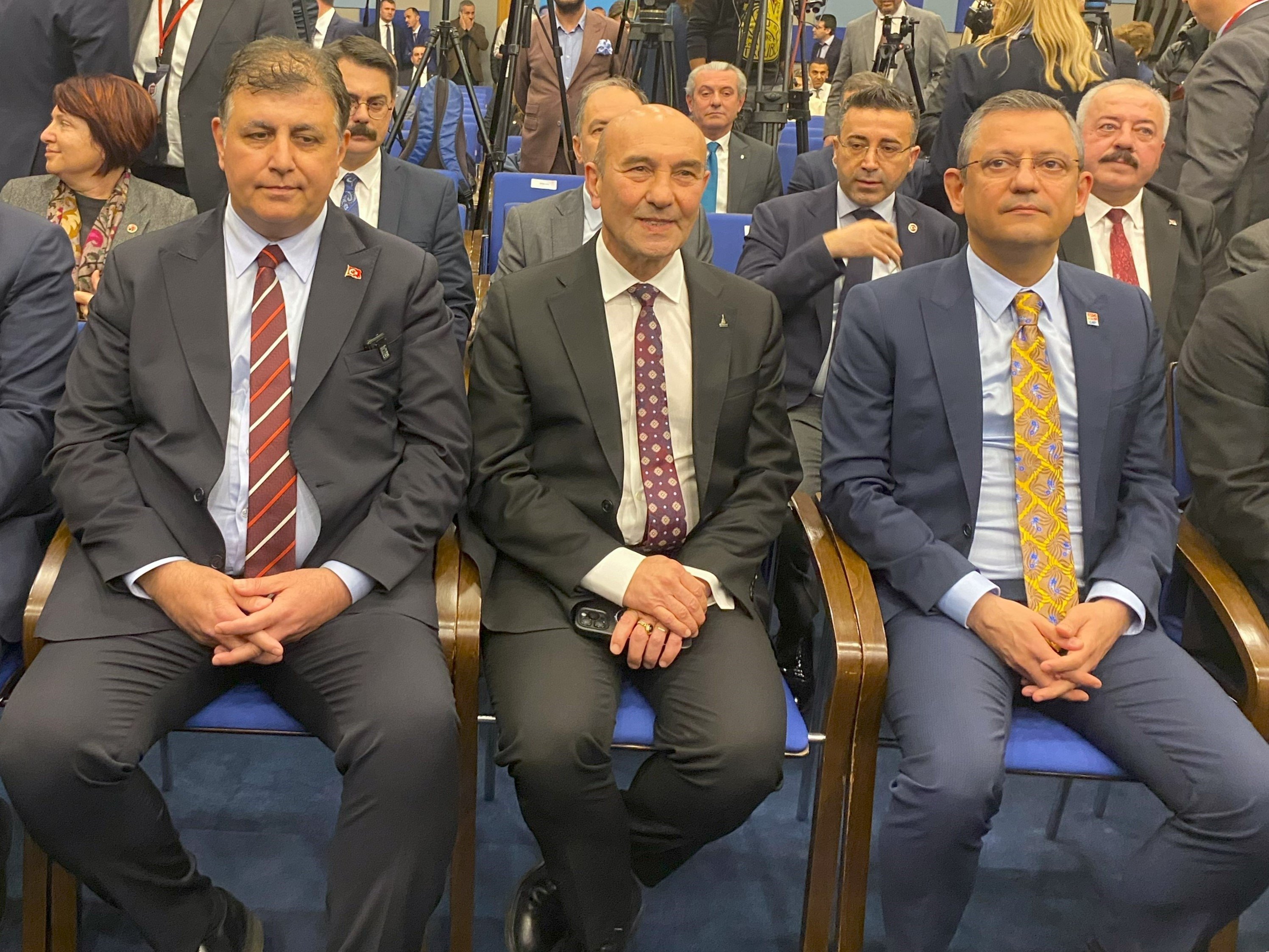
Authorities on Tuesday issued detention warrants for 157 suspects on charges of corruption in tenders and fraud in an investigation into alleged wrongdoings at Izmir Metropolitan Municipality, run by the main opposition Republican People’s Party (CHP).
Tunç Soyer, the former mayor of the city, and Şenol Aslanoğlu, incumbent chair of the CHP’s Izmir branch, were among 120 suspects detained while operations are underway to detain other suspects.
The Chief Prosecutor’s Office in Izmir announced that the investigation focused on corruption through contractors at IZBETON, a cement manufacturing subsidiary of the municipality. Among the suspects was the former manager of IZBETON. Most suspects were former staff of the municipality who served under Soyer, who ran the city between 2019 and 2024, after his 10-year tenure as mayor of Izmir’s Seferihisar district. Officials from Izmir’s district municipalities and staff of the CHP’s district branches in Izmir, Türkiye’s third-largest city, were also detained.
Izmir is a stronghold of the CHP and is currently run by the party’s mayor, Cemil Tugay – himself plagued with strike woes by labor unions protesting low pay.
Corruption allegations have spread across CHP-run municipalities since last year, leading to the detention and arrests of the party’s prominent names, including Istanbul Mayor Ekrem Imamoğlu, a future presidential candidate of the party.
President Recep Tayyip Erdoğan has labeled the scandals as “tentacles of an octopus” of wrongdoings. The party itself is at the center of allegations of vote-buying in a 2023 intra-party vote that brought its current chair, Özgür Özel, to power. A hearing on Monday over election fraud allegations was postponed to September.
In a speech on June 18, President Erdoğan criticized the CHP for several corruption cases within the party and especially the municipalities the party holds across Türkiye.
"The situation of the main opposition, which cannot break free from the control of a handful of bandits settled in Istanbul, I regret to say, does not suit our democracy or Turkish politics at all," Erdoğan said, in reference to the party’s riotous rallies to support Imamoğlu.
"A chronic shortfall of the main opposition is getting deeper in Türkiye," he warned. Pointing to the disputes and intrigues among the actors of the CHP, Erdoğan added: "We are confused, too, as to whether we are watching Türkiye's main opposition party or a soap opera full of intrigues and betrayals."
Municipalities run by the CHP are already under fire for other problems, such as astronomical prices in mass transportation and water bills.
Some 411 municipalities run by the CHP across Türkiye have racked up a total of TL 116 billion ($3.29 billion) in debts to the Social Security Institution (SGK), a report by Sabah revealed in December. Some 1,402 municipalities in Türkiye’s 81 provinces owe a combined TL 160 billion to the SGK in premium payments, with 70% of it belonging to the CHP-run administration, Sabah reported. At TL 9.8 billion, Izmir tops the list of indebted city administrations run by the CHP.
Izmir is followed by the capital Ankara at TL 8.7 billion, run by Mansur Yavaş, and Istanbul at TL 6.4 billion, formerly administered by Imamoğlu. Both mayors have governed Türkiye’s top two cities since 2019.
The debts have been accrued by municipal companies, which are considered corporate bodies directly owned by the municipality.
The municipalities, per law, have been granted the right to restructure their debts for up to 120 months, including 36 months of installments for those unable to pay.
Continued negligence of the city administrations has sparked public debate over starting a confiscation procedure, which would only cover the accounts of municipal companies.
The Social Security Ministry last year blocked the deposit and corporate accounts of the metropolitan municipalities of Istanbul, Ankara, Izmir, southern Adana and Mersin, and Istanbul’s Şişli district, due to debts to the SGK.
The ruling Justice and Development Party (AK Party) often accuses CHP-run municipalities of wasting their resources instead of improving public services and of economic incompetence. The opposition municipalities also faced criticism of nepotism following the 2024 local elections when it emerged that several mayors appointed their next of kin to top positions in city halls.