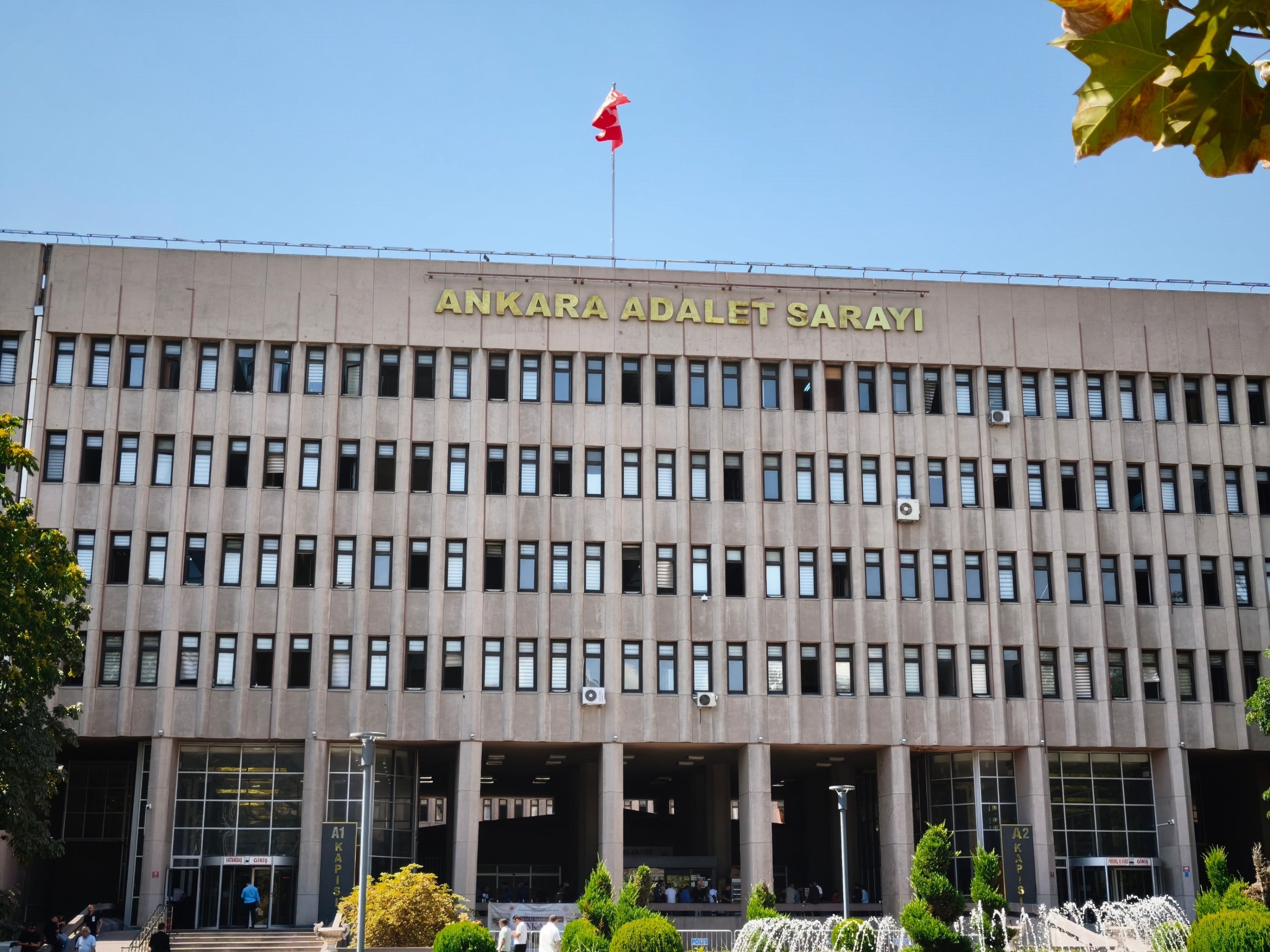
Former Interior Minister Idris Naim Şahin was released under judicial control on Tuesday after testifying in a case concerning his alleged role in helping members of the alleged Alihan Kuriş gang evade capture.
Hilmi Tuna Kuriş, the brother of Alihan Kuriş, and two other suspects were captured in southwestern Türkiye on Aug. 21 in a rental vehicle registered in Şahin’s name. The suspects, who are accused of links to the gang associated with a religious community known as “Süleymancılar,” were attempting to flee the country at the time of their capture, according to authorities.
Şahin was questioned by prosecutors in Ankara and told them that he did not know Kuriş or Erhan Yılmaz, who were captured in the vehicle driven by Mehmet Özmen, although he acknowledged that he knew the driver. He claimed that the vehicle was registered in his name but that he had last driven it in June and was unaware of who had been using it afterward. He said he had leased the vehicle from a company owned by Özmen, while public records showed that he paid an annual lease fee of TL 1,000 for the vehicle, far below standard annual fees for such vehicles.
An Ankara court released Şahin after questioning but imposed a ban on traveling abroad.
According to investigators, Mehmet Özmen, who allegedly helped facilitate Hilmi Tuna Kuriş’s movements while he was evading authorities, transferred TL 2.4 million (about $50,000) to purchase a vehicle on behalf of Alihan Kuriş’s wife, Seda Kuriş.
A Financial Crimes Investigation Board (MASAK) report dated Aug. 20 and included in the investigation also examined financial and property transactions involving Kuriş and people in his immediate circle following the 2016 death of Arif Ahmet Denizolgun, who served as a transport minister and former leader of the Süleymancılar religious community.
Investigators allege that the period following Denizolgun’s death saw a significant increase in property and financial transactions involving Kuriş and his relatives. Denizolgun’s nephew, Fatih Süleyman Denizolgun, has claimed that his uncle’s death was suspicious and called on authorities to open a new investigation into his death.
Denizolgun said in a social media post that the investigation was expanded following the detention of former Council of Judges and Prosecutors (HSK) member Ahmet Gökçen on Aug. 13, 2026. He alleged that Gökçen was a suspect in the suppression of a murder report concerning the death of his uncle at the Council of Forensic Medicine (ATK), yet continued to serve as an expert at the ATK until Aug. 13, 2026. Denizolgun said prosecutors had requested the autopsy video three times since February 2026, but the ATK reported on July 16 that the footage could not be found. He claimed that the footage was subsequently sent ahead of the exhumation procedure and that the recordings were fragmented.
An expert assessment stated that the possibility of suffocation could not be scientifically ruled out if the victim’s mouth and nose were covered while pressure was applied to the chest. According to the allegations, the deceased was reportedly suffocated with a pillow. Denizolgun also alleged that physical samples had been destroyed at the ATK.
The group known publicly as “Süleymancılar” originated as a religious movement named after 20th-century Islamic scholar Süleyman Hilmi Tunahan, Kuriş’ great-grandfather.
Initially operating through informal religious instruction in homes and mosques, the group later expanded across Türkiye through Quran courses and student dormitories, largely financed by membership contributions and donations. Over time, its activities expanded into commercial sectors including food, health care, tourism, textiles, construction and real estate.