Türkiye’s Defense Ministry on Thursday criticized Israel for its military activities in the region, accusing the Israeli government of pursuing “expansionist and aggressive” policies that threaten regional and global stability.
The ministry’s weekly press briefing was held at Baykar’s Özdemir Bayraktar National Technology Center in Istanbul, highlighting Türkiye’s growing defense and aerospace capabilities alongside developments in counterterrorism, border security and international military cooperation. Defense Ministry spokesperson Zeki Aktürk made the remarks during the ministry’s weekly press briefing.
Aktürk said the Israeli government was continuing what he described as an effort to turn the entire Middle East into an area of conflict.
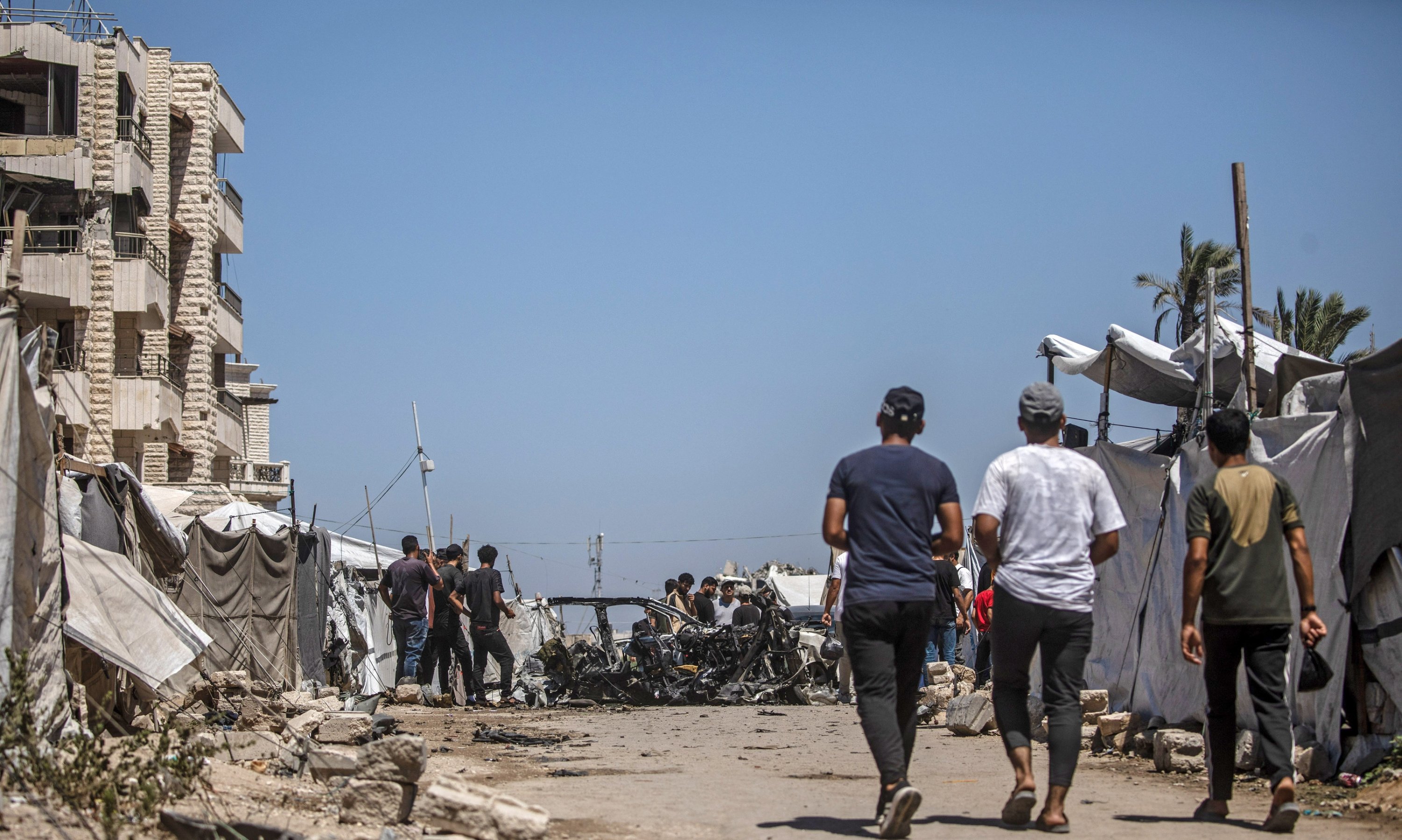
He accused Israel of violating the territorial integrity of Syria and Lebanon through its military activities while encouraging what he called “illegal settler terrorism” in Palestine.
The ministry also criticized Israel over what he described as provocative actions in Jerusalem that violate the historical and legal status of Muslim holy sites.
“Israel’s actions, which harm not only regional stability and security but also global stability and security, are increasingly undermining the region’s faith in international law,” Aktürk said.
He said Türkiye would continue its efforts to promote peace and stability in the region and press the international community to take action.
“We will continue to remind the international community that it has a shared responsibility to take concrete and effective measures against Israel’s expansionist and genocidal approach,” Aktürk stressed.
Meanwhile, an analysis published by Israel’s Channel 12 (N12) highlighted Türkiye’s growing influence in the Middle East and internationally, warning that treating Ankara as a military threat could amount to a “serious strategic mistake” for Israel.
The analysis, citing assessments by former Israeli Military Intelligence chief TamirHayman, examined Türkiye’s expanding military and political influence across the Middle East and Africa.
It said Türkiye currently maintains a military presence in at least 13 countries, operates more than 100 military facilities across the Middle East and is also active in the Red Sea and the Persian Gulf.
According to Hayman, Israel risks making a mistake by viewing Türkiye’s growing power primarily through the lens of a direct military threat or hostility.
He warned that applying Israel’s security doctrine, which places military power at the center of foreign policy, to its approach toward Türkiye could have potentially dangerous consequences.
Hayman argued that Türkiye should not be incorporated into Israel’s threat assessment or effectively turned into an enemy state.
Doing so, he said, would constitute a “serious strategic mistake” for Israel.
On Syria, the Defense Ministry said it is closely following the dissolution of the YPG terrorist group as part of efforts to preserve Syria’s territorial integrity and strengthen the principle of “one state, one army.”
It specifically rejected reports claiming that foreign elements affiliated with the YPG would leave Syria and that some would travel to Türkiye, calling the allegations untrue and urging the public to rely only on official statements concerning the process.
“Claims that foreign members of the YPG will leave Syria and that some of them will come to Türkiye do not reflect the truth,” the ministry underlined.
The ministry also provided details on the Mecca Defense Alliance established between Türkiye, Pakistan and Saudi Arabia, saying the three countries are moving to give the cooperation a more institutional structure.
Defense and foreign ministers, as well as chiefs of general staff from the three countries, met in Istanbul on Aug. 31 under the alliance framework. During the meeting, the parties discussed steps to institutionalize cooperation and agreed to establish a secretariat in Saudi Arabia under a secretary general.
The secretary-general position will rotate among the three countries, with Pakistan set to provide the first secretary-general for a three-year term, according to the ministry.
The agreement aims to increase interoperability through joint military planning, training and exercises, while strengthening cooperation in the defense industry through joint production, technology development and the sharing of expertise.
The ministry stated that the mechanisms are expected to strengthen the alliance’s defense capacity and deterrence while also contributing to regional peace and stability.