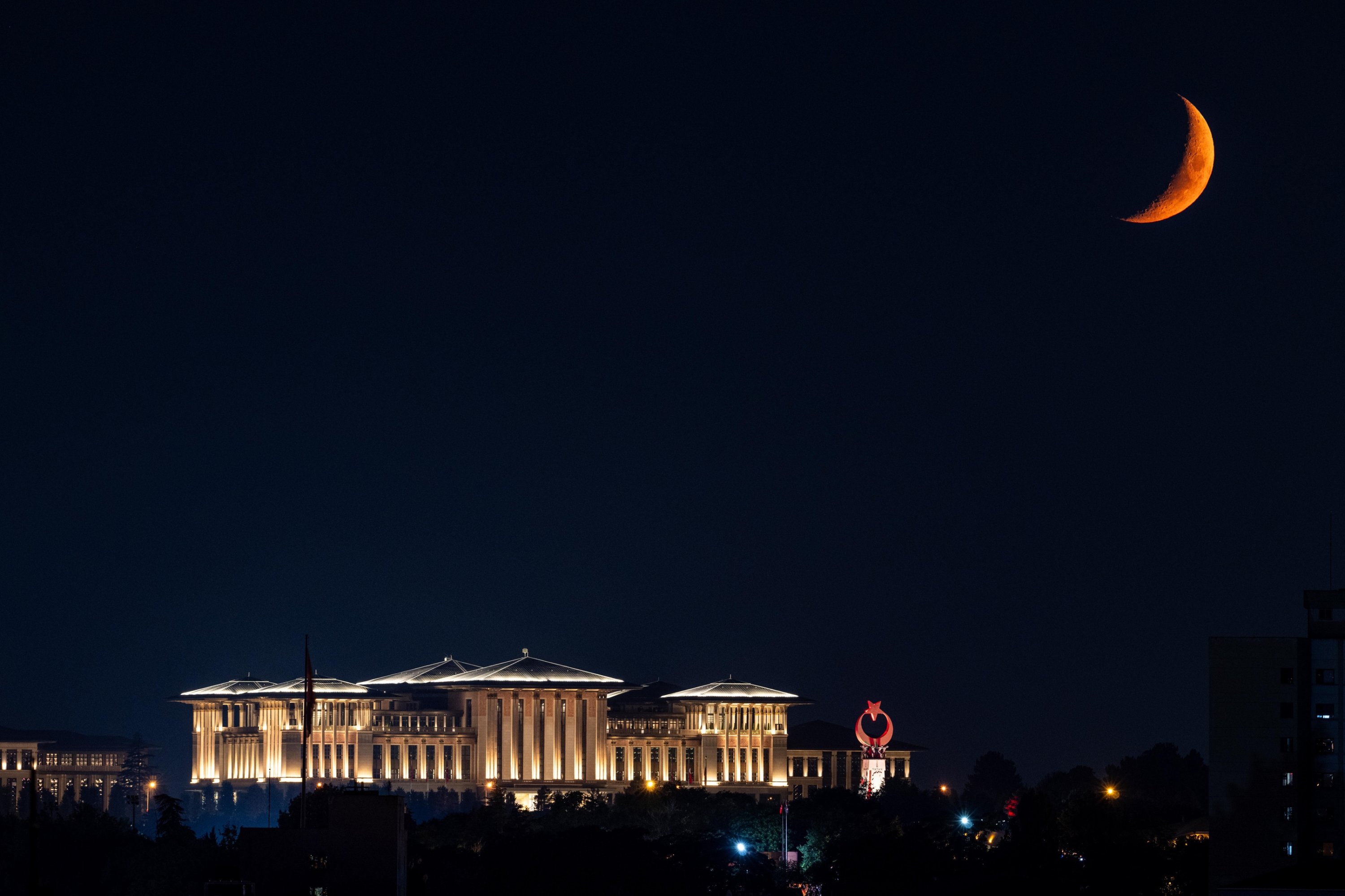
Türkiye has been a representative democracy since its first multi-party elections in 1950. Since 2018, following a referendum that abolished the former parliamentary system, the country has been governed by a president with executive powers. Under the previous system, the presidency was largely ceremonial, while an elected prime minister headed the government.
The President of the Republic of Türkiye, as the office is officially called, is elected directly by popular vote and may normally serve a maximum of two five-year terms. However, if the Grand National Assembly of Türkiye decides to renew elections by a three-fifths majority of its total membership during the president’s second term, the incumbent president may seek office for one additional term. Political parties that received at least 5% of the valid votes in the most recent legislative election are eligible to nominate a presidential candidate. The president does not have to be a member of a political party, and 100,000 signatures from eligible citizens are required to nominate an independent presidential candidate.
The president oversees a cabinet that he or she appoints and has the authority to dismiss cabinet members. The presidential cabinet currently consists of 18 ministerial posts. These include the vice president and the ministers of Justice; Family and Social Services; Labor and Social Security; Environment, Urbanization and Climate Change; Foreign Affairs; Energy and Natural Resources; Youth and Sports; Treasury and Finance; Interior; Culture and Tourism; National Education; National Defense; Health; Industry and Technology; Agriculture and Forestry; Trade; and Transport and Infrastructure.
The president is also authorized to appoint senior bureaucrats and issue presidential decrees regulating such appointments. Ministers are appointed by the president and may be selected from either within or outside parliament.
The president is responsible for implementing the Constitution, promulgating laws passed by parliament, and returning legislation to parliament for reconsideration when necessary. He or she is also authorized to submit constitutional amendments to a public referendum. As commander-in-chief, the president may authorize military operations and issue presidential decrees on matters relating to executive authority, subject to the limitations set out in the Constitution. Presidential decrees cannot regulate matters reserved exclusively for legislation, cannot override laws enacted by parliament, and are subject to review by the Constitutional Court.
Türkiye’s parliament is officially known as the Grand National Assembly of Türkiye (TBMM, its Turkish acronym). It consists of 600 members elected from constituencies across the country’s 81 provinces.
Parliament’s primary function is to enact laws. It has the authority to debate, approve, amend, or reject bills introduced by members of parliament. Political parties represented in parliament may sponsor legislation through their lawmakers, but bills are formally submitted by individual members of parliament.
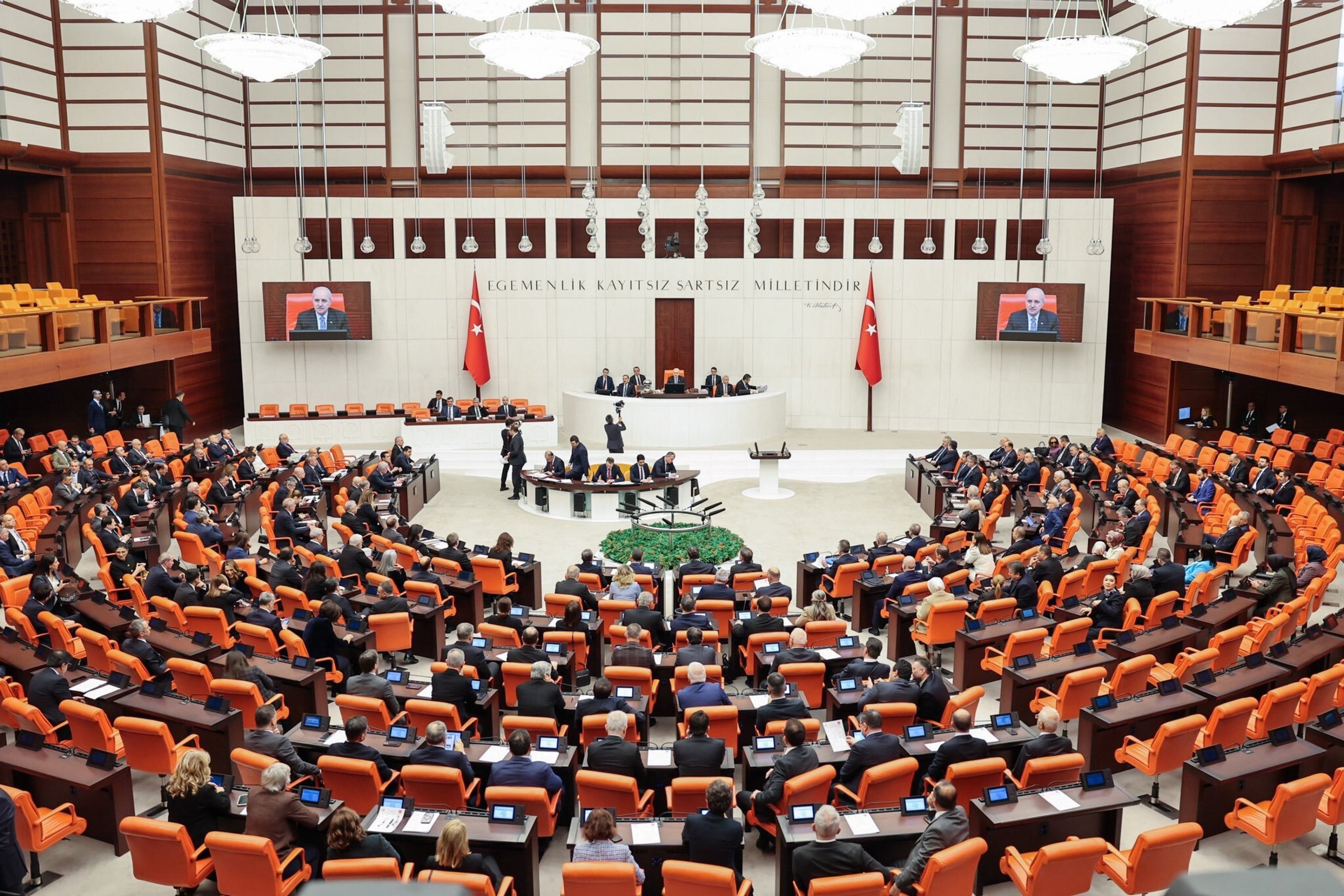
Parliament also has the power to amend the Constitution. Constitutional amendments may be proposed by at least one-third of the total number of lawmakers (200 members). Amendments approved by at least 360 votes but fewer than 400 votes must be submitted to a referendum, while amendments approved by 400 or more votes may enter into force upon presidential approval, unless the president decides to submit them to a referendum.
If the president returns a bill to parliament for reconsideration, parliament may enact it again by an absolute majority of the total membership (301 votes), after which the president must promulgate the law.
The unicameral parliament is also responsible for approving the state budget, ratifying international treaties, authorizing declarations of war in circumstances prescribed by the Constitution, and overseeing the executive through parliamentary inquiries, general debates, parliamentary investigations, and written questions. Like the president, lawmakers serve five-year terms.
Under the principle of separation of powers, an independent judiciary constitutes one of the three branches of government.
The Constitutional Court is the highest constitutional authority and is primarily responsible for constitutional review. It has the authority to rule on the constitutionality of laws, presidential decrees, and parliamentary rules of procedure and may invalidate provisions that violate the Constitution. It also decides on matters relating to parliamentary immunity and hears cases seeking the dissolution of political parties. The court may order the closure of a political party if it determines that the party has acted in violation of constitutional principles.
The Constitutional Court consists of 15 members. Parliament elects two members from candidates nominated by the Court of Accounts (Sayıştay) and one member from candidates nominated by provincial bar associations. The president appoints the remaining 12 members from candidates nominated by the Court of Cassation (Yargıtay), the Council of State (Danıştay), the Council of Higher Education (YÖK), and from among senior judges, prosecutors, attorneys, bureaucrats, and Constitutional Court rapporteur judges.
The Court of Cassation serves as the highest court of appeal for civil and criminal cases, while the Council of State is the highest administrative court. Together with lower courts throughout the country, these institutions form the backbone of Türkiye’s judicial system.
At the local level, governance consists of two distinct structures: appointed governors and elected local administrations.
The governor, or vali, is the highest state authority in a province and is appointed by the Ministry of Interior with the approval of the president. Governors are responsible for implementing government policies at the provincial level, coordinating the provincial branches of central government ministries, and maintaining public order through the supervision of law enforcement agencies.
The district governor, or kaymakam, exercises similar authority at the district (ilçe) level. Provincial and district administrations receive funding from the state budget and coordinate the delivery of public services, including education, healthcare, security, and social assistance, through local branches of central government institutions.
Mayors and members of municipal councils are elected for five-year terms in local elections held every five years. In Türkiye’s 30 metropolitan provinces, this elected authority is divided between a metropolitan mayor handling city-wide infrastructure and district mayors, who are in charge of local services. Candidates may run as independents or be nominated by political parties. Any Turkish citizen aged 18 or older may be nominated, provided he or she meets the eligibility requirements established by electoral laws.
The office of mayor is political in nature and enjoys a degree of administrative autonomy guaranteed by the Constitution. Municipalities maintain their own budgets, which are funded primarily through local revenues such as property taxes, fees, and other municipal income sources. In addition, municipalities receive allocations from the central government budget.
Municipalities are responsible for a wide range of public services, including water supply and sewage systems, road construction and maintenance, waste collection, infrastructure development, urban planning, environmental services, public transportation, parks and recreational facilities, and the inspection of businesses. These inspections are carried out by the zabıta, or municipal police, a local inspection and enforcement service responsible for enforcing municipal regulations and authorized to impose penalties and close businesses that fail to comply with municipal rules.
In addition to municipalities, Türkiye also has provincial special administrations in provinces that are not designated as metropolitan municipalities and village administrations headed by elected muhtars, who serve as the lowest tier of local government and act as intermediaries between residents and state institutions.