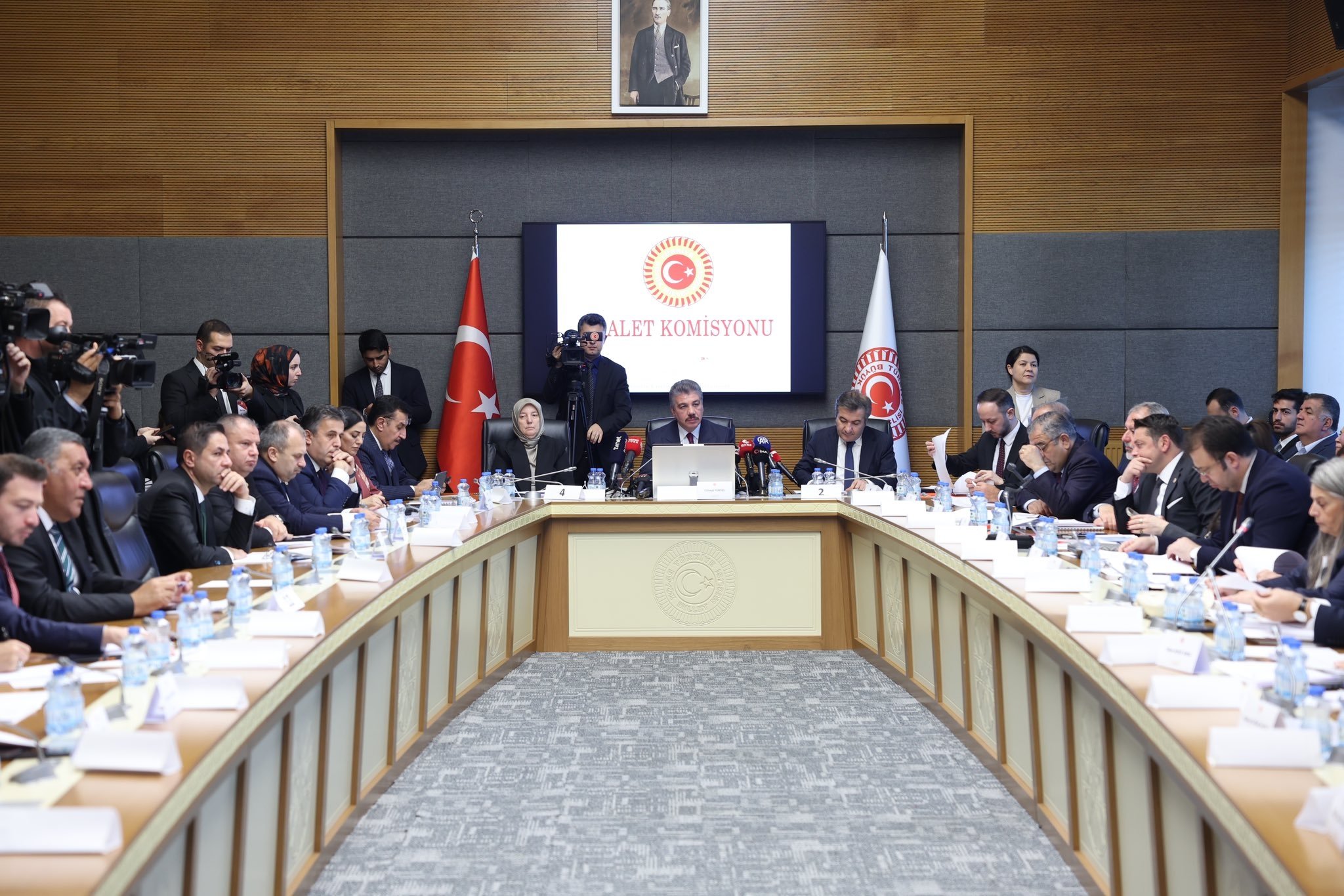
The Justice Committee of the Turkish Grand National Assembly (TBMM) approved on Friday the country’s 11th Judicial Reform Package after two days of extensive deliberations, clearing the way for the legislation to be submitted to the General Assembly.
The 38-article package, which amends 12 existing laws, was finalized after nearly 10 hours of discussion on the committee’s second day of meetings. The reform bill includes significant adjustments to criminal enforcement, procedural rules and the jurisdiction of courts across Türkiye, according to lawmakers involved in the process.
One of the most debated provisions was Article 27, known publicly as the “COVID-19 provision,” which initially envisioned expanded early release mechanisms for inmates who committed offenses before July 31, 2023. Under the original text, qualifying prisoners would benefit from an additional three years of early transition to supervised release and eligibility for open prison facilities.
The move, proposed by the ruling Justice and Development Party (AK Party), aims to expand the scope of early release regulations introduced during the COVID-19 pandemic. Laws enacted amid the pandemic enabled inmates with five years or less left in their sentence to be released on parole, and it only covered crimes committed before July 31, 2023. The purpose was to ease overcrowding in prisons, especially at a time when the pandemic claimed lives among people living in confined spaces.
With the adopted proposal, individuals convicted of intentional homicide against a spouse, former spouse, direct relatives, individuals unable to protect themselves physically or mentally, as well as women and children, were excluded from eligibility. Those convicted of sexual assault or child sexual abuse were also removed from the provision.
The early-release arrangement had initially been expected to apply to approximately 55,000 inmates, though the revised language is set to lower that number significantly. Terrorism- and organized crime-related offenses remain categorically excluded.
The committee also approved two additional measures previously passed in part: one increasing penalties for the discharge of firearms in residential or public areas, including wedding ceremonies, and another imposing harsher punishment for organized crime groups that use children as intermediaries during criminal acts.
A separate section of the package expands criminal liability for obstructing transportation services. Beyond hijacking or seizing a vehicle, preventing a vehicle from departing or forcing it to stop will now constitute a punishable offense. Under the proposal, individuals who obstruct the movement of a transport vehicle may face one to three years in prison, whereas those who divert a vehicle from its intended route may receive two to five years. Penalties increase further for acts involving maritime or rail transport, ranging from three to seven years. Blocking or diverting an aircraft will carry terms between five and 12 years.
The bill also strengthens sanctions for forming criminal organizations. The minimum and maximum prison sentences for establishing or leading such groups will rise from four to eight years to five to 10 years, provided the organization’s structure and resources are suitable for committing designated offenses.
In cases where children are used as instruments in crimes carried out on behalf of the organization, penalties for ringleaders will be increased by between 50% and 100%.
Additionally, the bill also amends the Turkish Penal Code’s “insanity” clause to ensure that individuals with partial mental impairment are both subject to criminal penalties and placed under mandatory security measures at specialized psychiatric facilities. Those ordered to receive treatment will spend a minimum of one year in institutional care for offenses requiring aggravated life imprisonment, and at least six months for crimes with statutory minimums exceeding 10 years.