Daily Sabah logo

Politics
Diplomacy Legislation War On Terror EU Affairs Elections News Analysis
TÜRKİYE
Istanbul Education Investigations Minorities Expat Corner Diaspora
World
Mid-East Europe Americas Asia Pacific Africa Syrian Crisis Islamophobia
Business
Automotive Economy Energy Finance Tourism Tech Defense Transportation News Analysis
Lifestyle
Health Environment Travel Food Fashion Science Religion History Feature Expat Corner
Arts
Cinema Music Events Portrait Reviews Performing Arts
Sports
Football Basketball Motorsports Tennis
Opinion
Columns Op-Ed Reader's Corner Editorial
PHOTO GALLERY
JOBS ABOUT US RSS PRIVACY CONTACT US
© Turkuvaz Haberleşme ve Yayıncılık 2025

Daily Sabah - Latest & Breaking News from Turkey | Istanbul

  • Politics
    • Diplomacy
    • Legislation
    • War On Terror
    • EU Affairs
    • Elections
    • News Analysis
  • TÜRKİYE
    • Istanbul
    • Education
    • Investigations
    • Minorities
    • Expat Corner
    • Diaspora
  • World
    • Mid-East
    • Europe
    • Americas
    • Asia Pacific
    • Africa
    • Syrian Crisis
    • Islamophobia
  • Business
    • Automotive
    • Economy
    • Energy
    • Finance
    • Tourism
    • Tech
    • Defense
    • Transportation
    • News Analysis
  • Lifestyle
    • Health
    • Environment
    • Travel
    • Food
    • Fashion
    • Science
    • Religion
    • History
    • Feature
    • Expat Corner
  • Arts
    • Cinema
    • Music
    • Events
    • Portrait
    • Reviews
    • Performing Arts
  • Sports
    • Football
    • Basketball
    • Motorsports
    • Tennis
  • Gallery
  • Opinion
    • Columns
    • Op-Ed
    • Reader's Corner
    • Editorial
  • TV
  • Politics
  • Diplomacy
  • Legislation
  • War On Terror
  • EU Affairs
  • Elections
  • News Analysis

Turkish Parliament approves bill to regulate social media

by DAILY SABAH WITH AGENCIES

ISTANBUL Jul 29, 2020 - 9:34 am GMT+3
Edited By Şeyma Nazlı Gürbüz
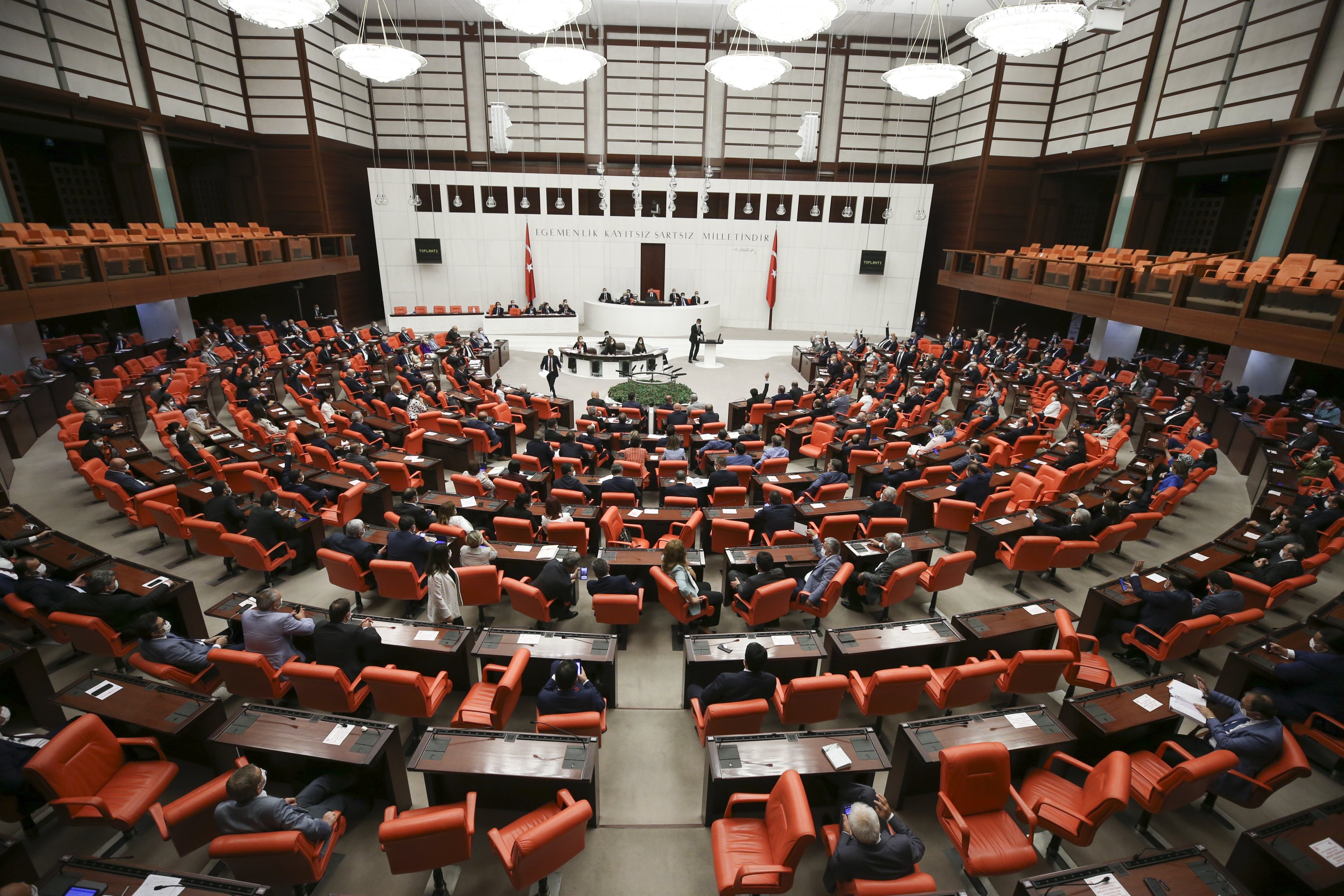
The General Assembly of the Turkish Parliament (TBMM) ratifies a social media regulation bill, Ankara, Turkey, July 29, 2020. (AA Photo)
by DAILY SABAH WITH AGENCIES Jul 29, 2020 9:34 am
Edited By Şeyma Nazlı Gürbüz

The Turkish Parliament approved a law to regulate social media content and hold social media outlets accountable for appointing representatives and paying taxes while preventing cybercrimes and protecting data

The Turkish Parliament ratified the social media regulation bill early Wednesday, compelling platforms to comply with conditions or face fines and bandwidth reduction.

The bill was passed by lawmakers of the ruling Justice and Development Party (AK Party) and the Nationalist Movement Party (MHP).

Lawmakers also approved a motion putting Parliament on recess until Oct. 1.

The government says the legislation was needed to combat cybercrime and protect users. Speaking in Parliament Wednesday morning, ruling party lawmaker Rümeysa Kadak said the law would be used to remove posts that contain cyberbullying and insults against women.

The proposal bears the names of AK Party Group Deputy Chairwoman Özlem Zengin, MHP Group Deputy Chairpersons Muhammed Levent Bülbül and Erkan Akçay and other lawmakers from the two parties.

The bill sets a formal definition of social media providers and aims to designate a responsible representative for investigations and legal proceedings relating to offenses on platforms.

It defines real or legal entities that allow users to create, monitor or share online content such as text, visual content, voice recordings and locations for social interaction as social network providers.

Foreign-based social network providers that have more than 1 million daily visitors in Turkey will assign at least one representative in the country. That person’s contact information will be included on the website in a way that is obvious and easy to access.

The representative has to be a Turkish citizen if they are not a legal entity.

The representative will be tasked with responding to individual requests to take down content violating privacy and personal rights within 48 hours or to provide grounds for rejection. The company will be held liable for damages if the content is not removed or blocked within 24 hours.

The new legislation also requires social media providers to store user data in Turkey.

Administrative fines for providers who fail to meet obligations will be raised to encourage compliance. Previously, fines were between TL 10,000 and TL 100,000 ($1,500 to $15,000), but the new amount will be between TL 1 million and TL 10 million.

Turkish leaders have long pushed for reforms and recently pressed the issue after series of insults directed at mostly the women in politics, including the family members of the politicians, were posted online.

Turkey struggles to fight fake news and defamation campaigns on social media, and the bill aims to prevent users from engaging in such activities.

In the three weeks leading up to April 6, more than 3,500 social media accounts were reviewed, 616 suspects were identified and 229 people were detained for social media posts that were determined to spread fake news and defamation campaigns, according to the Interior Ministry.

Similar examples used in Germany and France were taken into consideration as a reference while drafting the law. Germany introduced the Network Enforcement Act in 2017, obliging social networks to remove hate speech, set up an independent body to review and respond to reports of offensive content from the public, rather than the individual companies doing that themselves. Failure to remove such content within 24 hours means that the social media networks could face fines of up to 50 million euros ($56.4 million). Likewise, a provision requires platforms to send suspected criminal content directly to German police when reported by a user.

In 2015, Twitter appointed a coordinator for Turkey while ignoring calls by Ankara to set up an office in the country.

Other social media giants have also been avoiding setting up permanent offices in Turkey to avoid paying taxes. For instance, Twitter alone generates $35 million a year in advertising revenue in Turkey, none of which is taxed locally.


  • shortlink copied
  • Last Update: Jul 29, 2020 4:42 pm
    KEYWORDS
    social media turkey turkish parliament
    The Daily Sabah Newsletter
    Keep up to date with what’s happening in Turkey, it’s region and the world.
    You can unsubscribe at any time. By signing up you are agreeing to our Terms of Use and Privacy Policy. This site is protected by reCAPTCHA and the Google Privacy Policy and Terms of Service apply.
    No Image
    Winter is coming to N. Ireland: Game of Thrones tour opens its doors
    PHOTOGALLERY
    • POLITICS
    • Diplomacy
    • Legislation
    • War On Terror
    • EU Affairs
    • News Analysis
    • TÜRKİYE
    • Istanbul
    • Education
    • Investigations
    • Minorities
    • Diaspora
    • World
    • Mid-East
    • Europe
    • Americas
    • Asia Pacific
    • Africa
    • Syrian Crisis
    • İslamophobia
    • Business
    • Automotive
    • Economy
    • Energy
    • Finance
    • Tourism
    • Tech
    • Defense
    • Transportation
    • News Analysis
    • Lifestyle
    • Health
    • Environment
    • Travel
    • Food
    • Fashion
    • Science
    • Religion
    • History
    • Feature
    • Expat Corner
    • Arts
    • Cinema
    • Music
    • Events
    • Portrait
    • Performing Arts
    • Reviews
    • Sports
    • Football
    • Basketball
    • Motorsports
    • Tennis
    • Opinion
    • Columns
    • Op-Ed
    • Reader's Corner
    • Editorial
    • Photo gallery
    • DS TV
    • Jobs
    • privacy
    • about us
    • contact us
    • RSS
    © Turkuvaz Haberleşme ve Yayıncılık 2021