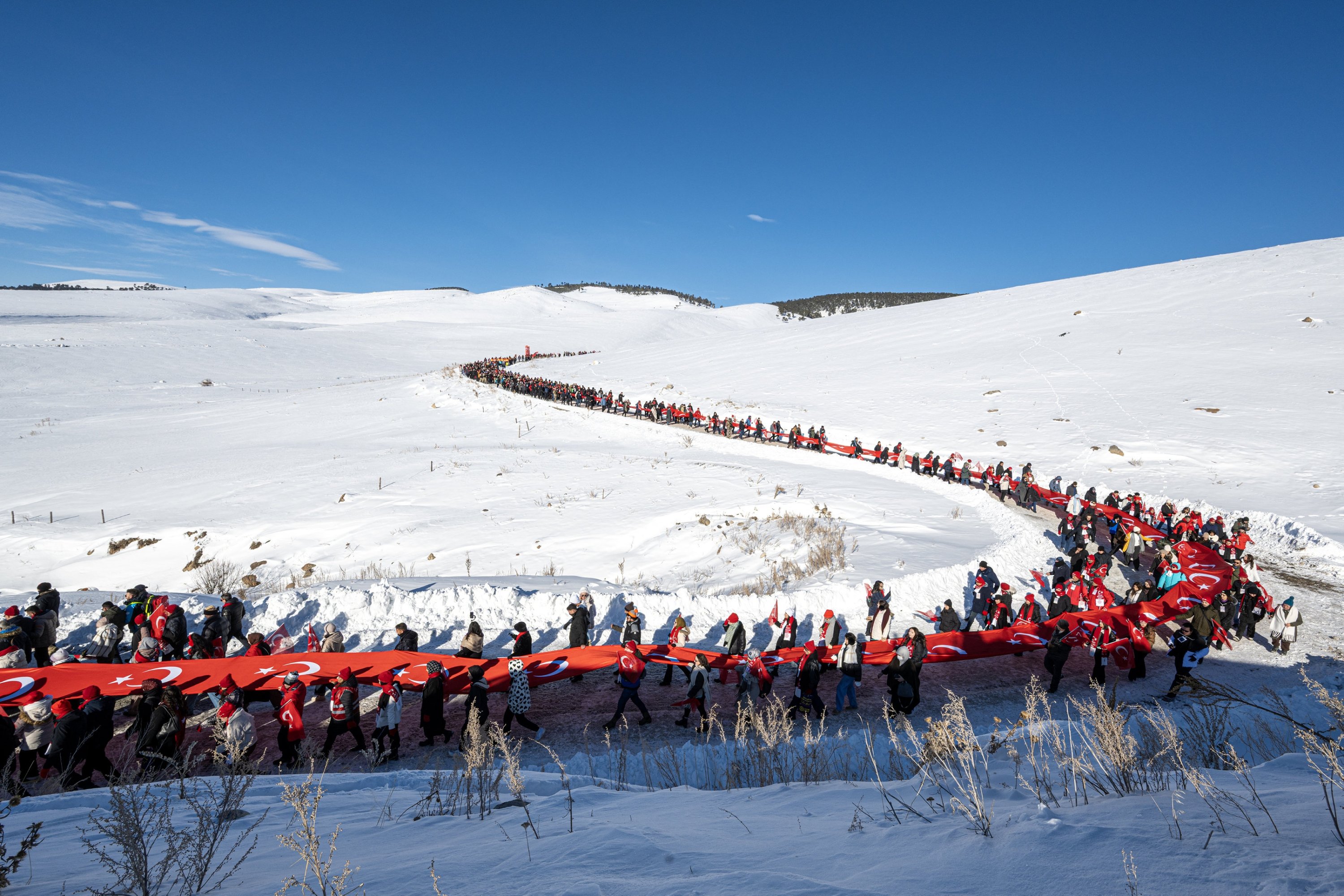
Following in the footsteps of Ottoman troops who sacrificed their lives, a large crowd gathered in the Sarıkamış district of the eastern province of Kars for a walk dedicated to the thousands who died in the campaign against invading Russian forces during World War I.
The 111th anniversary of the Sarıkamış offensive was a solemn occasion and a show of force for the Turkish military. Family and Social Services Minister Mahinur Özdemir Göktaş and Youth and Sports Minister Osman Aşkın Bak joined people from all walks of life for the 4.5-kilometer (2.5-mile) walk in the mountainous area. A 100-meter Turkish flag was carried by the participants during the event held under slogans “Türkiye Is Walking with Martyrs” and “You Left a Mark on These Lands.”
The march was held at Kızılçubuk's peak, located between the Soğanlı and Allahuekber mountains, with buses carrying participants to the area adorned with ice statues dedicated to the troops. Temperatures were minus 17 degrees Celsius (1 degree Fahrenheit), probably still warmer than the weather 111 years ago, but crowds braved the cold. Turkish Red Crescent crews served tea and soup to participants at the venue.
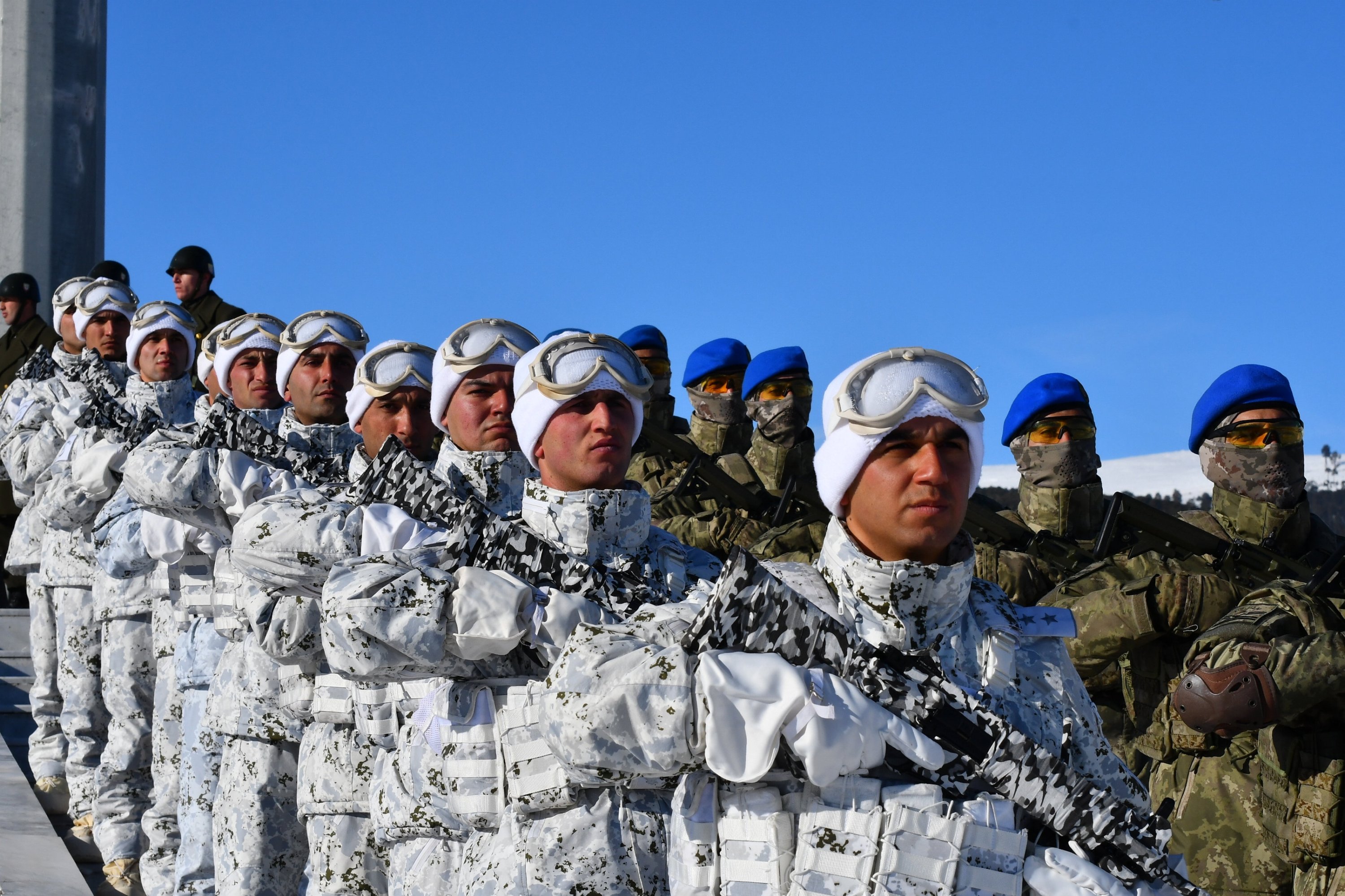
The Sarıkamış offensive was launched to repel the advance of Russian forces upon the Ottoman Empire's eastern borders during World War I. The offensive, which began in December 1914, quickly succumbed to the weather with scores of troops lost in blizzards.
After suffering tragic losses, only a few units reached Sarıkamış, which was under Russian occupation. Records from the Turkish Armed Forces (TSK) show some 60,000 soldiers died from cold, hunger and hypothermia because the soldiers weren't wearing suitable uniforms.
Despite the Ottoman defeat, the Russian command was alarmed enough to call for help from its allies, who subsequently initiated the famous Gallipoli campaign, where Ottoman forces emerged victorious.
The Gallipoli campaign paved the way for the Turkish War of Independence under the command of Mustafa Kemal Pasha, the commander at the Battle of Gallipoli who later founded the Republic of Türkiye.
Today, the Sarıkamış tragedy of the crumbling Ottoman Empire is etched in the memory of the Turkish public as one of the last patriotic sagas of early 20th-century Türkiye, apart from the Gallipoli campaign. It highlights the victory of the Turkish army that it achieved despite all odds and without defying orders.
Images from the Russian archives reveal that although Ottoman troops made some progress on the front, their forces struggled. Foreign and Turkish soldiers who survived later recalled that conditions were so severe that it was almost impossible to bury the bodies because of the frozen soil.
Despite the freezing weather, soldiers were not allowed to light fires because of safety measures. Besides, those who survived later shared that they made it through by placing flammable mushrooms in their pockets to feel warm and placing warmers under their arms and legs.
To make matters worse, the units were cut off from much-needed supplies as horse carts and gun carriages struggled to move through the storms. A total of 5,000 Ottoman soldiers went missing or were taken prisoner by the Russians throughout the campaign.
Sunday’s event began with people reciting prayers in memory of those who died and continued with speeches.
Göktaş told reporters that the event brought together youth from across the country, as well as families of those lost and Turkish veterans.
“We are marking the anniversary of a saga. Our country secured its independence the hard way. Noble soldiers died for our flag, for our homeland,” she said.
Göktaş stated that the commemoration was also a tribute to people who died for the country elsewhere, including during the Gallipoli battles and in fighting a coup attempt in 2016.
“We are working hard to keep their memories alive. Our ministry will continue standing with the legacy of those who died and convey their heroics to the young generations."
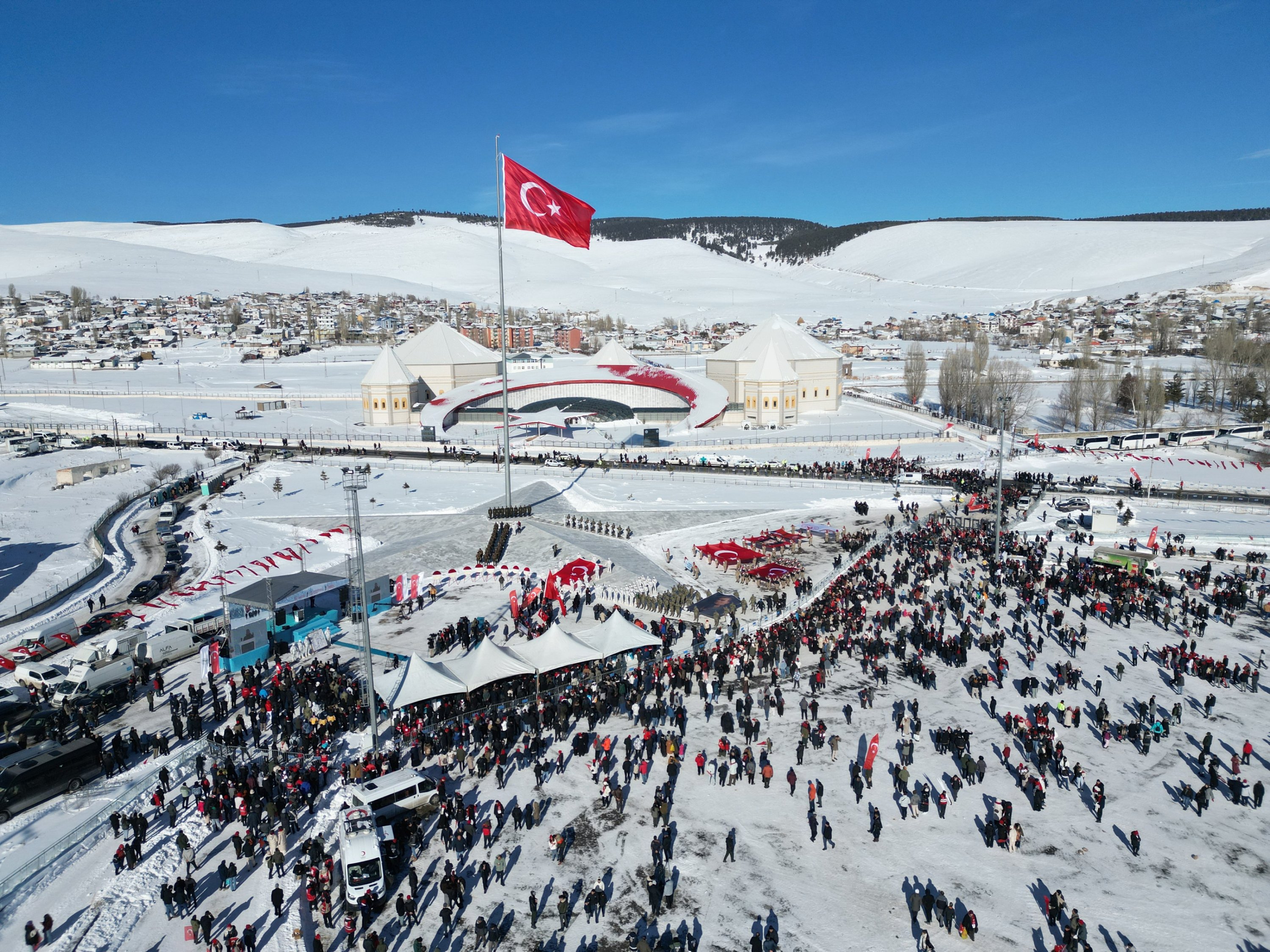
Bak said the event was an example of a lesson in sacrifice, to show the youth how Türkiye was defended at the cost of personal sacrifices 111 years ago. “We will never forget that thousands died here. Ours is a warrior nation and fought many challenges to stand strong,” he said.
Ramazan Çepni, a citizen who became a staple of annual commemoration every year wearing a T-shirt in chilling weather, told Anadolu Agency (AA) that he wanted to highlight what their ancestors were exposed to.
“It is sunnier today, but these people died in a blizzard,” he said.
Osman Köseoğlu, a former commando whose two grandfathers died in the Sarıkamış offensive, said he has been attending the event for the past 15 years.
“Soldiers who died here never considered abandoning the front,” he said.
“We have to preserve our unity to keep Türkiye great,” he added.