Muftis or Muslim clerics elected by the Turkish minority in Western Thrace complain that their posts are largely becoming dysfunctional due to Athens’ policies.
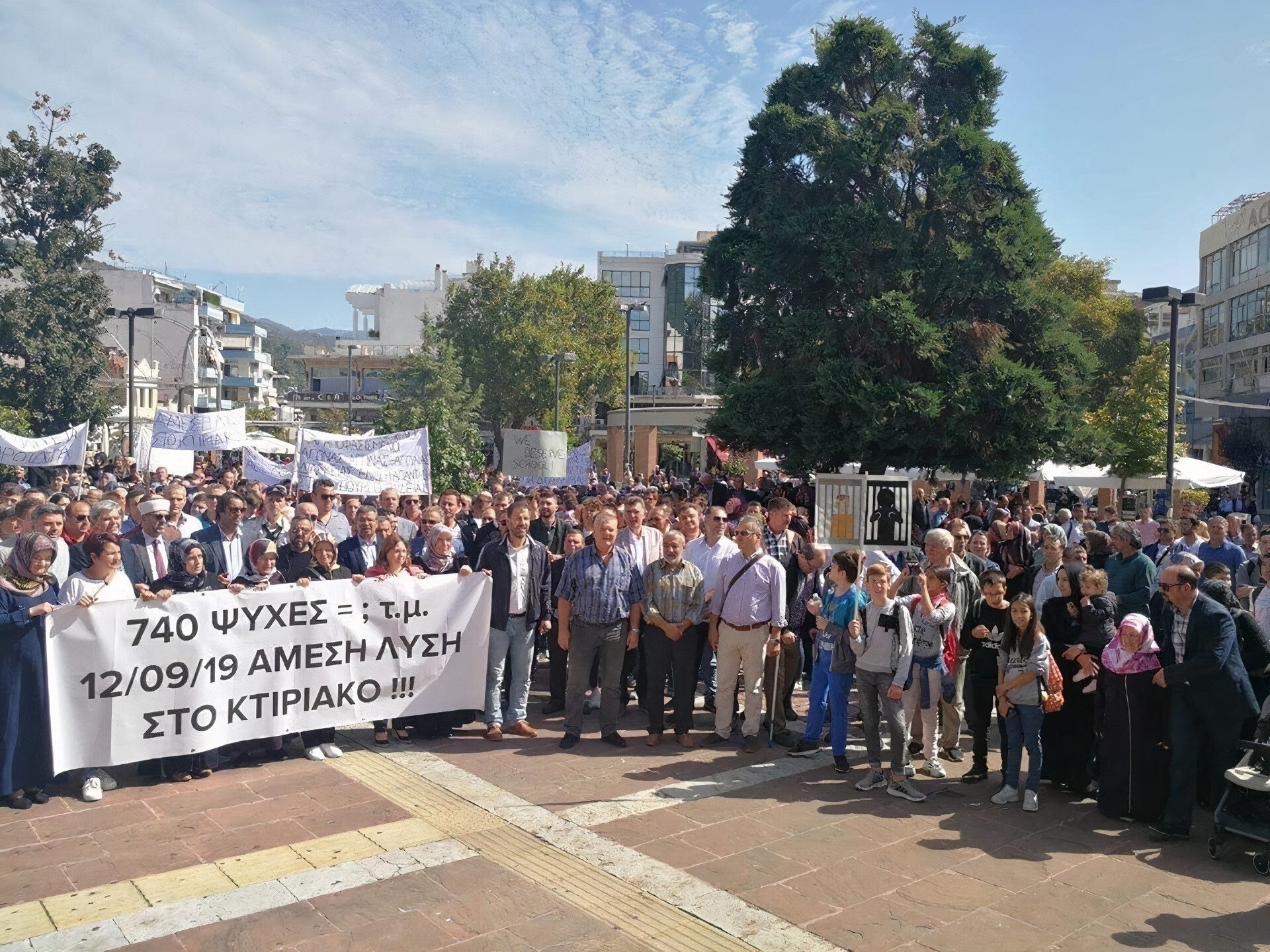
Some 150,000 Muslim Turks in Western Thrace, economically one of the poorest in Greece, have long complained about deteriorating conditions. Seeing the community as a “hostage” of its ties with Türkiye, the Greek government has committed numerous breaches of its treaty obligations and European Court of Human Rights (ECtHR) rulings over the years, including the closure of schools, the banning of Turkish-language education and refusing to legally allow the community to elect their religious leaders like muftis (Muslim clerics), which is also another treaty right.
Ibrahim Şerif, the minority’s elected mufti for Gümülcine (Komotini), told Anadolu Agency (AA) on Thursday that the state’s intervention dealt a blow to the post, which is a symbol of religious autonomy of the minority.
“It is now downgraded to the status of any public service department,” he said.
Western Thrace, near the Greek border with Bulgaria and Türkiye, has been historically home to a Turkish community, descendants of the Turkish population during Ottoman rule in the country, which ended in the early 20th century.
He stated that the post of mufti had its legal basis on the Treaty of Athens signed in 1913, after the end of the Balkan War that spelled the end of Ottoman rule.
“This is an international treaty safeguarding religious autonomy for Muslim Turks, ensuring muftis would be elected by members of the minority themselves and they have a broad jurisdiction on several matters, from marriages and divorces to inheritance issues,” he said.
He noted that the minority chose their candidates for mufti, and the local governorate used to approve them until 1949, but this practice eroded over time. He said minority rights faced further restraints, especially in the 1980s, and Greece tended to appoint officials for the minority without consulting them. He stated that muftis were deprived of jurisdiction in various fields gradually.
“They removed mufti’s authority on inheritance law in 2017, and in 2022, legal amendments completely turned mufti’s office into another office of the state,” Şerif said, giving the example of how a mufti recently appointed to Didymoteicho (Dimetoka) was sworn in into the office just “like a civil servant.”
“That appointment basically trampled upon the will of the minority. Under the current systems, muftis are only symbolic figures showing up at ceremonies,” he said.
Mustafa Trampa, elected mufti of Iskeçe (Xanthi), told Anadolu Agency (AA) that the post became dysfunctional due to practices introduced by the state of Greece and that the religious autonomy in Western Thrace was damaged.
“The minority cannot accept imposition and views exclusion of the minority’s will and unilateral moves as invalid,” he said.
Emin Şerif was appointed as mufti of Didymoteicho earlier this month and was sworn in during a ceremony attended by Minister of Education Sofia Zacharaki, prompting opposition by the minority who complain that they are not allowed to elect their own mufti.