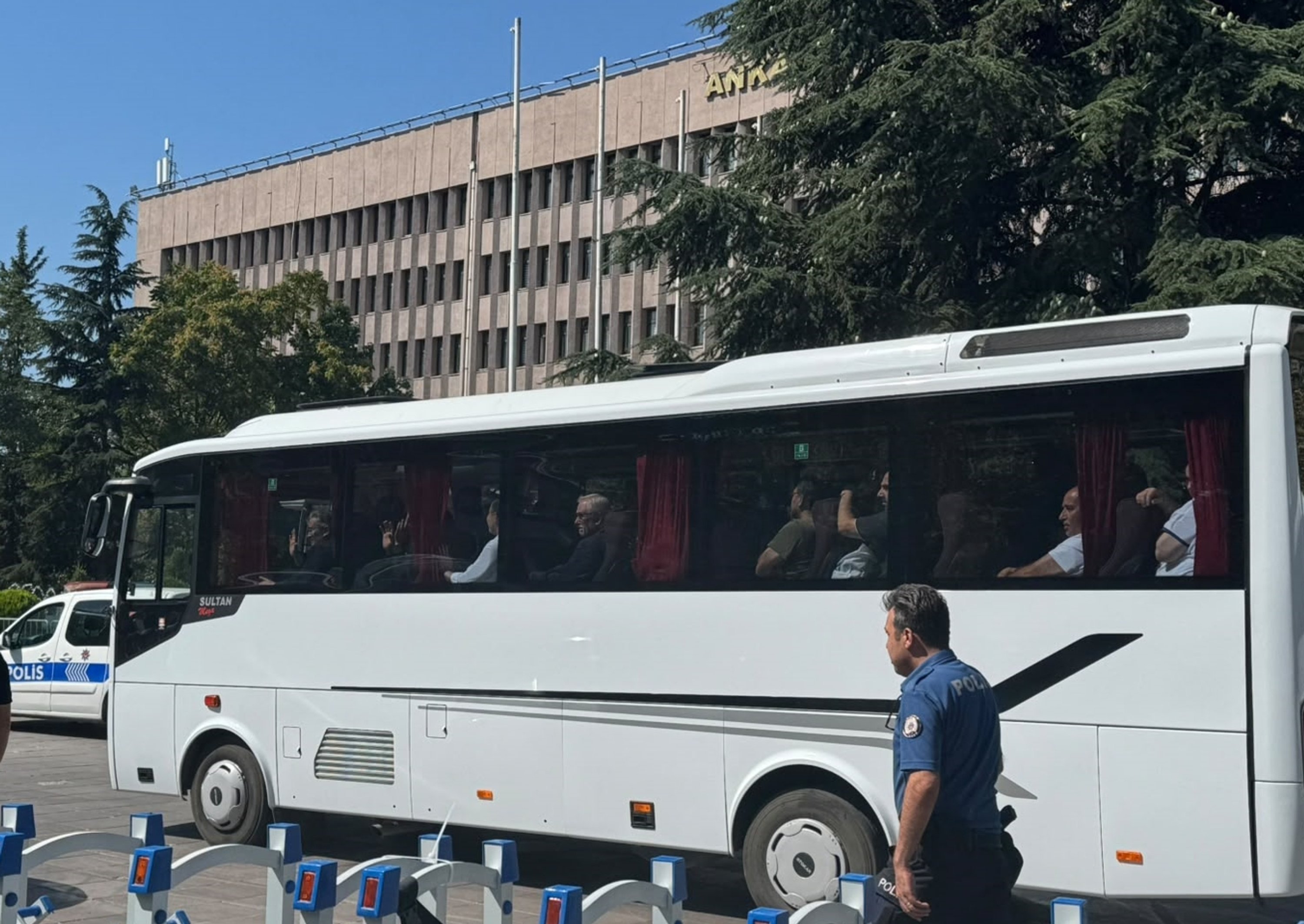
Turkish authorities detained 38 suspects in a third wave of operations targeting an alleged organized crime group led by Alihan Kuriş, judicial sources said Tuesday.
The Ankara Chief Public Prosecutor's Office issued detention warrants for 54 suspects as part of an investigation into alleged money laundering, fraud targeting public institutions and violations of tax laws.
Authorities also ordered trustees to be appointed to 11 companies and four associations linked to the investigation, according to judicial sources.
Teams from the Ankara Police Department's Financial Crimes Unit carried out simultaneous raids as part of the operation, detaining 38 suspects.
Of the remaining suspects, two were found to be abroad, and one was already in prison, while authorities continued efforts to locate 13 others.
The suspects face allegations including establishing and leading a criminal organization, membership in a criminal organization, laundering proceeds of crime, fraud against public institutions and violations of Türkiye's Tax Procedure Law.
The latest raids follow a second-wave operation targeting the group in Istanbul, Konya, Mersin and Muğla, in which 12 suspects were detained.
Hilmi Tuna Kuriş, the brother of Alihan Kuriş, was previously captured in the southwestern resort town of Marmaris.
The investigation has also focused on alleged financial transactions involving individuals linked to the Kuriş family.
According to investigators, Mehmet Özmen, who allegedly helped facilitate Hilmi Tuna Kuriş' movements while he was evading authorities, transferred TL 2.4 million (about $50,000) to purchase a vehicle on behalf of Alihan Kuriş' wife, Seda Kuriş.
A Financial Crimes Investigation Board (MASAK) report dated Aug. 20 and included in the investigation also examined financial and property transactions involving Kuriş and people in his immediate circle following the 2016 death of Arif Ahmet Denizolgun, who served as a transport minister and former leader of the Süleymancılar religious community.
Investigators allege that the period following Denizolgun's death saw a significant increase in property and financial transactions involving Kuriş and his relatives.
The group known publicly as “Süleymancılar” originated as a religious movement named after 20th-century Islamic scholar Süleyman Hilmi Tunahan, Kuriş’ great-grandfather.
Initially operating through informal religious instruction in homes and mosques, the group later expanded across Türkiye through Quran courses and student dormitories, largely financed by membership contributions and donations. Over time, its activities expanded into commercial sectors including food, health care, tourism, textiles, construction and real estate.
The investigation remains ongoing.