The deaths of hundreds of civilians in a strike on a Gaza hospital as clashes between Israel and Palestine continue has once again raised the question of the relevance and functionality of international organizations.
Hundreds of people were killed in the attack – children and health workers, which Palestinian officials say was an Israeli strike. Israel, however, has denied responsibility, instead blaming the Palestinian Islamic Jihad. Hospitals and medical personnel are protected under international humanitarian law.
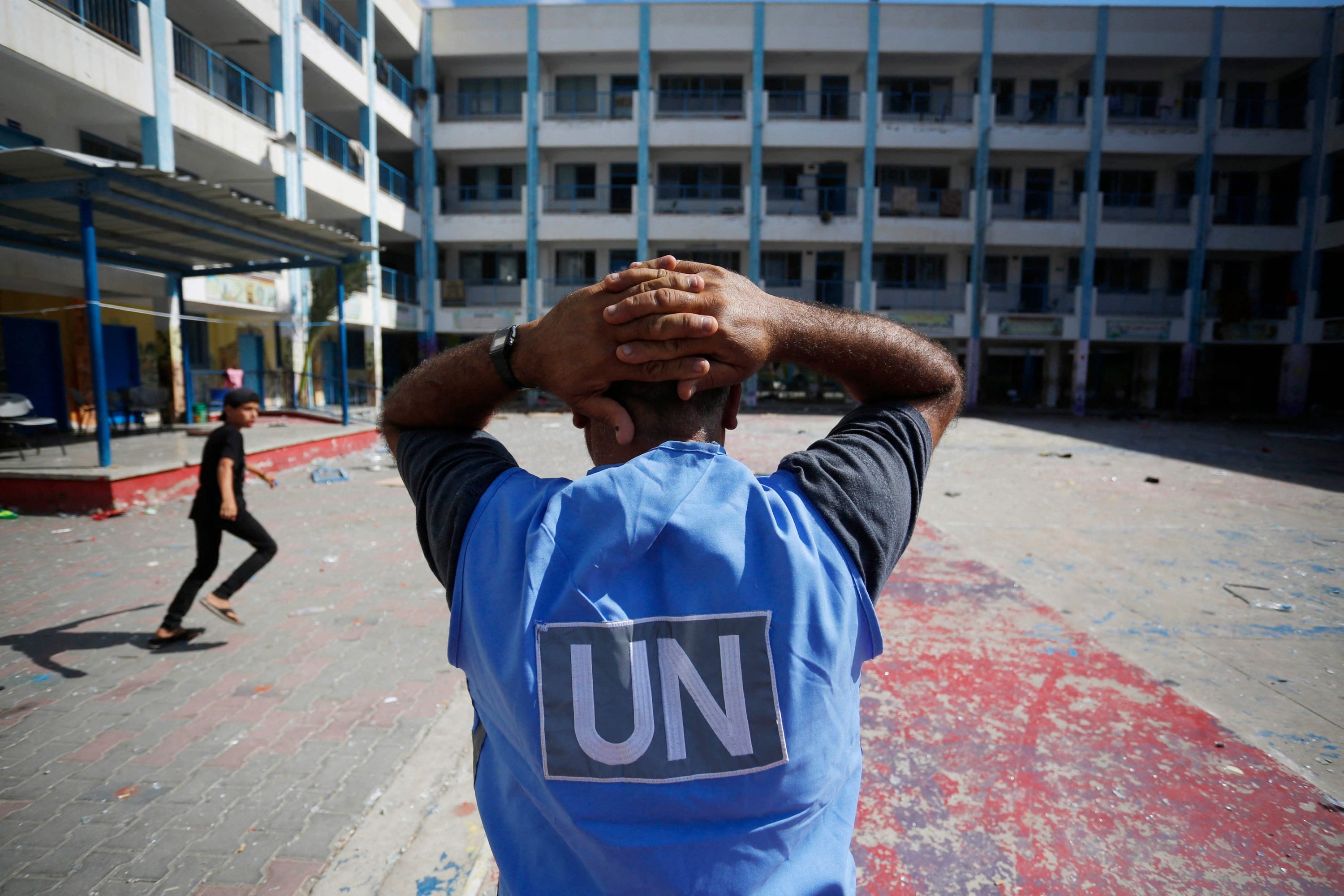
U.N. Secretary-General Antonio Guterres on Tuesday condemned the hospital attack. He called on Hamas to release hostages and Israel to allow the flow of humanitarian aid as well as an immediate cease-fire. However, apart from voicing being “horrified” at the situation of Al-Ahli Baptist Hospital, the U.N. chief failed to provide a road map or statement on how the conflict could be resolved and what the body’s reactions would be toward war and humanitarian crimes committed during the almost two weeks now that have passed since the Hamas attack on Israel and continued with Tel Aviv’s retaliation strikes. Concrete actions are needed to prevent similar attacks on civilians and civilian infrastructure.
The main problem of international organizations has always been the tension between their legal powers, the political context within which they operate and the interests of individual states. These global institutions are in a delicate relationship with state sovereignty. Yet, some of them have the power to enforce their decisions, such as the U.N. Security Council, which has a military component and can act and intervene in major issues. Yet the Security Council, as it has been since its founding, is paralyzed by internal disagreements. The five permanent members, namely China, France, Russia, the U.K. and the U.S., hold veto power over resolutions. The fact that the P5 does not include any member of the African continent or any member to represent the Muslim world has often been a critique voiced by Türkiye and President Recep Tayyip Erdoğan, who advocates for reform in the body that would represent the political realities of our day.
The Palestinian issue has been on the agenda of the U.N. for decades with no concrete progress. In 2012, Palestine was granted non-member observer state status in the U.N. However, there was no complete membership due to the questions and disagreements about its statehood. The Security Council adopted Resolution 2334 in 2017, which condemns “all measures aimed at altering the demographic composition, character and status of the Palestinian Territory occupied since 1967, including East Jerusalem, including, among other things, the construction and expansion of settlements, transfer of Israeli settlers, confiscation of land, demolition of homes and displacement of Palestinian civilians, in violation of international humanitarian law and relevant resolutions,” similarly did nothing to stop illegal settlements that are continuing today.
Tuesday’s attack on Al-Ahli Baptist Hospital should be a wake-up call to international organizations as an opportunity to get rid of their powerless image and act.
Erdoğan on Wednesday slammed the UNSC, which could not pass a resolution for a humanitarian pause in the conflict between Palestinian and Israeli forces to allow aid to reach civilians in Gaza.
The U.S. vetoed a UNSC resolution on the same day calling for a “humanitarian pause” in the raging Israel-Hamas conflict. The U.S. was the only vote against it, but as one of the body’s five permanent members, its vote counts as a veto. The vote comes also after the Security Council on Monday rejected a Russian resolution condemning spiraling violence in the Middle East.
The fact that even vital humanitarian aid could not be sent to Gaza 12 days after the beginning of the conflict and no humanitarian cease-fire was achieved speaks for itself, displaying the failure of the international community and its institutions.
The International Criminal Court (ICC) has been another organization to disappoint. The founding charter of the court, the Rome Statute, grants it jurisdiction over the crimes of genocide and war crimes – which includes attacks against hospitals, crimes against humanity and the crime of aggression. It must be remembered that the ICC can prosecute when no domestic legal system is capable of it or when a state fails to realize this obligation. Even though Israel is not a member, the court’s chief prosecutor can launch an investigation without the case being referred to by any state or the UNSC. Nevertheless, Prosecutor Karim Khan has been too silent so far. One has to remember that words in themselves have power, especially if they come from an authority. The chief prosecutor has the chance to fix the reputation of the court by stepping up efforts, showing diplomatic maneuver despite possible political implications, not refraining from difficult investigations in difficult zones, being more autonomous from states, taking up new cases or investigations that might be opposed by some of the great powers even for the sake of being a voice of justice to the wronged parties.
Launching an initiative for Gaza would be a step toward being appreciated by the international community. The ICC has to work hand in hand with the UNSC to operate efficiently and respond. It would be a positive message at a time when states outside Europe and the U.S. increasingly question global institution’s instrumentality. The West’s double standards since the beginning of the Palestinian question are already an issue of grievance. This is especially true for the Muslim world, which tries to respond through its own global institution, the Organisation of Islamic Cooperation (OIC), which met in an emergency session in Saudi Arabia’s Jeddah on Wednesday. Moreover, the Islamic world is comparing the West’s reaction to the current Mideast conflict to its response to the Russia-Ukraine war, during which the U.N. acted and many Western officials did not refrain from openly calling several incidents war crimes.