The notorious al-Hol camp in Syria’s Hassakeh is most associated with the detention of families of Daesh members. But the camp traces its history back to the U.S. occupation in Iraq. Nowadays, it is in the spotlight after the U.S.-backed terrorist group YPG ceded its control to Syrian security forces.
The camp located near the Syrian-Iraqi border is home to thousands of war victims. Residents complain that everyone staying in the camp was unfairly branded as “terrorists” and await security checks by the Syrian government to end for returning home.
Al-Hol was originally established to host refugees fleeing the U.S. occupation of Iraq in 2003. During the Syrian civil war, the YPG, which declared a self-styled autonomy in Hassakeh and in its vicinity, captured the camp in 2017. Since then, captured Daesh terrorists, their families and so-called “foreign fighters” of Daesh were also held in al-Hol, alongside Iraqi and Syrian families who fled the war in Iraq and Syria’s civil war that ended in late 2024.
For the YPG, the camp provided a useful excuse for its claims to legitimacy, painting it as the major group fighting Daesh in Syria. After the fall of the Baathist regime, the new administration urged the YPG repeatedly to hand over the control of the camp, but the terrorist group refused.
The Syrian army’s advances towards YPG-controlled areas in recent weeks forced the group to abandon it. Earlier this month, the army took control of parts of Hassakeh, including al-Hol. The exact figures are not known, but it is believed that more than 20,000 people, mostly women and children, reside in the camp where the UNHCR provides services. Syrian and Iraqi families make up a large portion of the population, and some 6,000 women and children from 40 countries are also estimated to live in the camp.
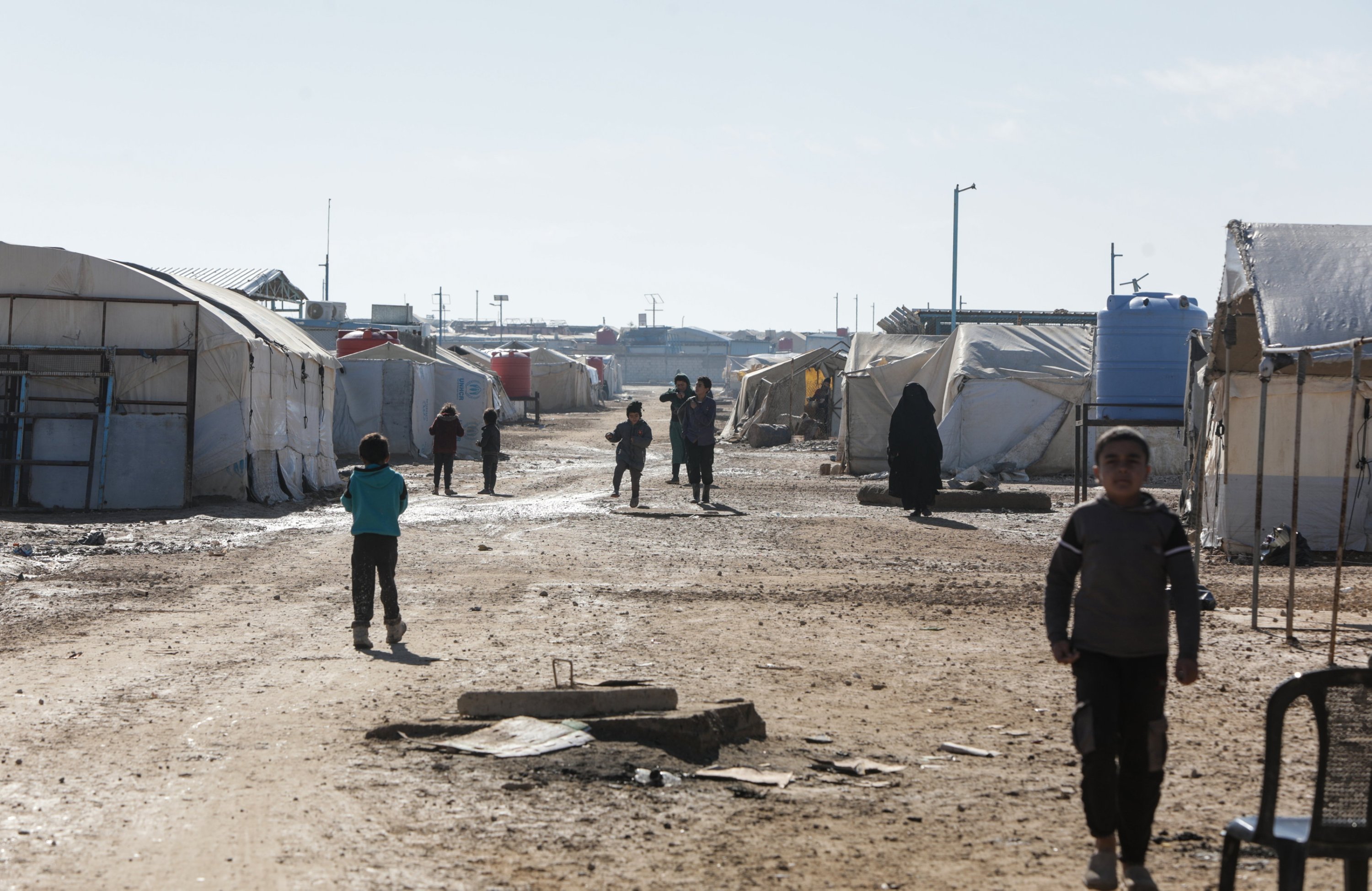
Surrounded by barbed wire and fences, the camp’s security is maintained by checkpoints and patrolling armored vehicles. Syrian security forces also deployed riot police at the main entrance of the camp. Inside, the camp is no different than those in conflict-ridden areas.
As winter sets in, shoddy roads are covered with mud. Several buildings inside used for “administration” of the camp by the YPG are a charred shadow of themselves after residents set them on fire after the YPG terrorists withdrew. Elsewhere, long lines formed outside a clinic. Syrian national Adnan Yarbu was among them, cradling the corpse of his infant son, looking for help for his burial.
The camp is row after row of white tents, while a “shopping street” of tin shacks is near the entrance. Residents are an assorted bunch of people, but children stand out most with few clothes they have amid harsh winter.
Fadi al-Qasim, a Syrian Foreign Ministry official in charge of al-Hol, told Anadolu Agency (AA) on Saturday that they were providing residents with basic needs, including water, bread, health services and fuel for heating needs.
“The conditions are dire, especially in winter,” he said. Al-Qasim stated that they were working to determine the exact number of people in the camp and improve services in al-Hol.
Fifty-year-old Muhammad Carrari, originally a resident of Syria’s Deir el-Zour, took shelter in the camp during the Syrian civil war. “We are glad that the Syrian government took this place back. We used to be treated like prisoners here. (Under YPG control), there was oppression, humiliation. We hope the government will help these families to leave the camp,” he said.
Ahmed Mahmoud Dik, a man from Syria’s Homs who spent the past seven years in a tent with his family, made a living by selling cellphone accessories. He recounted how the YPG discriminated against all in the camp.
“We are simple people. We have nothing to do with terrorists, as the YPG tried to paint us. They took photos of people by placing rifles next to them, to portray them as terrorists. They say this place is a ticking time bomb,” he said.
Dik said they were looking forward to leaving the camp. “My son grew up here, and he is now 5. We have no schools here,” he lamented.
He said many children died in al-Hol because the YPG would not allow sick children to leave for treatment. “Al-Hol was a place for the YPG to run its propaganda. We fled Assad’s attacks and fell into the hands of the YPG. They imprisoned men for a while. Everyone was in prison, from people from the Free Syrian Army to members of Al-Nusra Front,” he recalled.
Dik says they cheered the end of the Baathist regime in December 2024, but their oppression under the YPG prolonged in al-Hol. “They used to open fire on people randomly,” he said.
“When we heard YPG left, we walked to the entrance. Nobody was there. People cheered, but they were also angry. So, they burned all the checkpoints, buildings (used by the YPG) here,” he said.