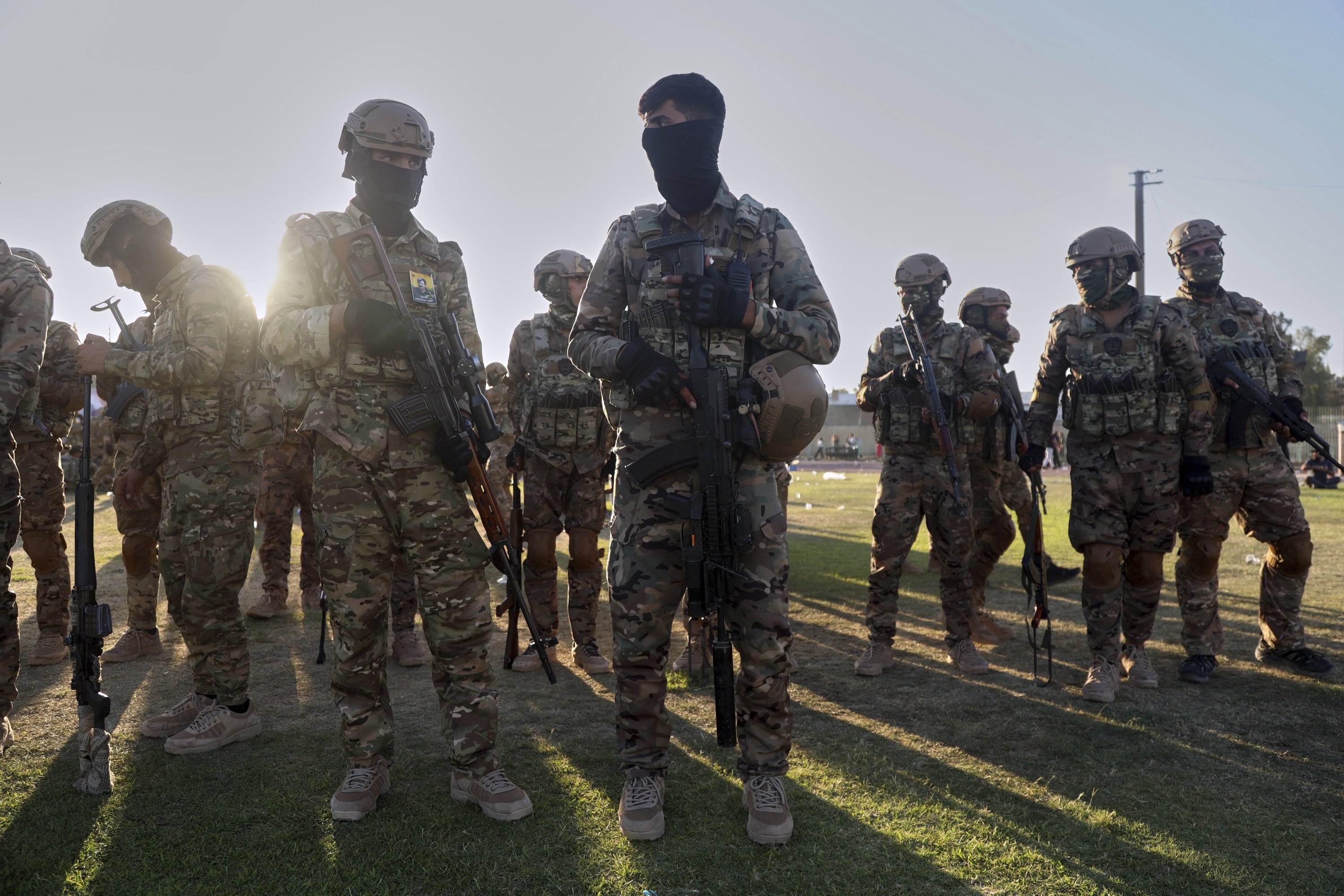
As the U.S.-backed terrorist group YPG was holding talks in Damascus on the March integration deal on Sunday, prominent tribes of post-Assad Syria convened in Deir al-Zour. Leaders of the tribes affirmed the unity of Syria and rejected the self-styled autonomy declared by the Syrian wing of the PKK terrorist group.
The meeting was organized by the Al-Jazira association of tribes, named after the historic region which now covers a large area in northeastern Syria, including Hasakah, where the YPG claims to have autonomy for Syria’s Kurds.
The participants of the meeting said in speeches that the YPG displaced people from Raqqa to Deir al-Zour and vowed to form a united stand against the group’s calls for decentralization, reports in the Syrian media said. Subhi al-Hamoud, one of the organizers, told Syrian media outlet Enab Baladi that their main goal was to maintain a united vision for Syria and underlined that Syria’s strength lies in the cohesion of its social fabric, now “threatened by separatist, federalist agendas.”
The YPG’s insistence on maintaining self-styled autonomy in the northeast after the fall of the Assad regime in 2024 is viewed as an obstacle to a March 10 agreement the group signed with the new administration in Damascus. Terrorist group’s leader Ferhat Abdi Şahin held talks with Syrian officials in Damascus on Sunday for integrating the YPG into the security forces of the new Syria, per the 2025 deal. Yet, Syrian state media said no tangible results were achieved.
The YPG said in a statement that a delegation from its leadership Abdi, met government officials in Damascus and details would be published later. Damascus did not issue an official statement about the meeting. But state television, citing a government source, reported that it "did not produce tangible results on speeding up the implementation of the agreement on the ground." It said the sides agreed to hold further meetings.
The YPG controls large swathes of Syria's oil-rich north and northeast, with the support of a U.S.-led international coalition. The U.S. claims the support is required as it views the YPG as an actor to help defeat the terrorist group Daesh.
Şahin has repeatedly called for decentralization in Syria, which was repeatedly rejected by Damascus. Tensions between the YPG and the government have occasionally erupted into clashes, most recently in Aleppo city last month.
In December, a YPG official told the Agence France-Presse (AFP) on condition of anonymity that Damascus had proposed splitting the YPG-led forces into three divisions and a number of brigades, including one for women.
Türkiye, an important ally of Syria's new leaders, sees the presence of the YPG on its border as a security threat and has publicly called for them to be integrated into the state.
Last month, Foreign Minister Hakan Fidan urged the YPG not to be an obstacle to Syria's stability and warned that patience with the YPG was running out.
Türkiye, which shares a 900-kilometer (550-mile) border with Syria, has launched successive offensives to push the YPG from its frontier.