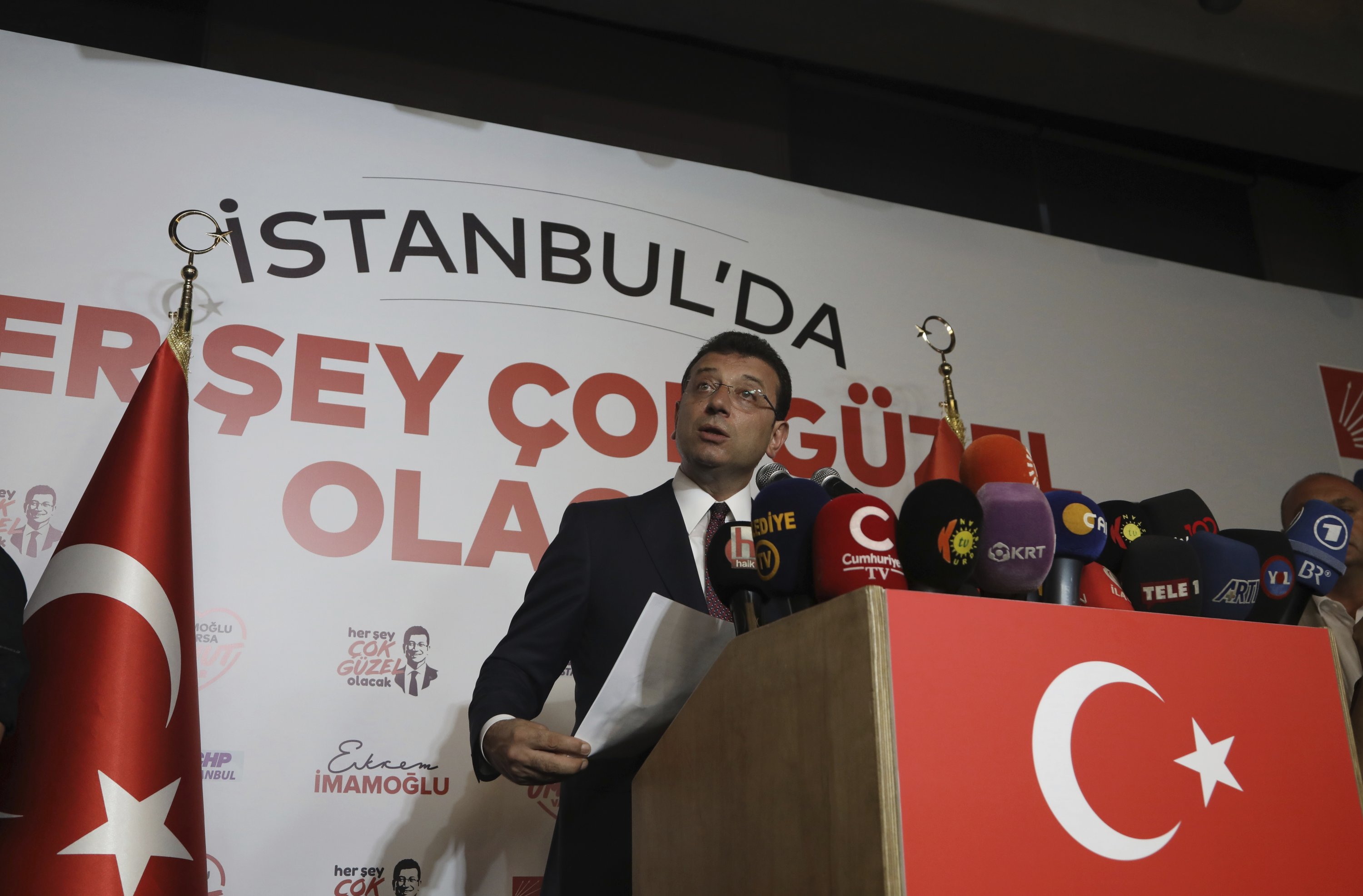
An Ankara court on Wednesday sentenced former Istanbul Mayor Ekrem Imamoğlu and eight other defendants to two years and one month in prison over voting irregularities at the main opposition Republican People's Party's (CHP) 2023 leadership congress, while also ordering restrictions on their political rights.
The Ankara 26th Criminal Court of First Instance delivered its verdict at the 10th hearing of the case concerning alleged manipulation of the party's 38th Ordinary Congress, where Özgür Özel defeated former CHP leader Kemal Kılıçdaroğlu.
The court convicted Imamoğlu, former Beşiktaş Mayor Rıza Akpolat, CHP Istanbul Provincial Chair Özgür Çelik, Nihat Yeşiltaş, Baki Aydöner, Erkan Aydın, Mehmet Kılınçarslan, Metin Güzelkaya and Serhat Can Eş of interfering with the voting process.
Three other defendants, Cemil Tugay, Hüseyin Yaşar and Özgen Nama, were acquitted.
The court also ordered the application of Article 53 of the Turkish Penal Code, which provides for restrictions on certain civil and political rights, including electoral rights, subject to applicable legal conditions.
According to the prosecution, several defendants acted together to secure Özel's victory by offering financial benefits and employment opportunities to delegates and their relatives.
The investigation stemmed from the legal complaints of CHP delegates who told investigators that they were offered bribes ranging from cash and houses to prominent jobs in municipalities the party runs. Kılıçdaroğlu, who has insisted since then that he had been “backstabbed,” maintains his open-ended claims that the said election had been “shady.”
Some delegates who voted in the CHP intraparty election on Nov. 4-6, 2023, were paid sums ranging from $5,000 to $30,000, Erhan Çakır, a former CHP member, told the media back then. It was the CHP’s Istanbul mayor, Imamoğlu, who paid them to force at least 150 delegates to switch sides against Kılıçdaroğlu, Çakır alleged.
Prosecutors alleged that relatives of 24 delegates were hired by municipalities across seven districts and that shopping cards worth TL 1.5 million (approximately $30,000) were distributed to influence voting.
The prosecution argued that these benefits undermined delegates' independent decision-making and compromised the integrity of the leadership election.