Türkiye’s National Intelligence Academy released a comprehensive report on Friday, warning that the international system is undergoing a rare, multilayered transformation marked by intensifying interstate rivalry, disruptive technologies and widening geopolitical fault lines.
The report, titled “The Transformation of Geopolitical Competition, New Challenges and Türkiye,” argues that the prevailing security paradigm shaped by low-intensity conflicts and counterterrorism in the post-9/11 era is giving way to a harsher phase of strategic competition among states. Conventional military power, it says, is once again central but now deeply intertwined with advanced technologies that are reshaping the character of warfare and global politics.
According to the academy, the shift extends beyond military capabilities to decision-making mechanisms, alliance structures and the overall distribution of global power. Uncertainty, the report notes, is no longer merely a risk to be managed but a variable that directly shapes international competition. Strategic foresight capacity has become one of the core determinants of a state’s security and foreign policy performance.
As the first quarter of the 21st century draws to a close, the report describes the international system as experiencing a historic rupture. The strategic frameworks that dominated after the Sept. 11 attacks, focused largely on terrorism and asymmetric threats, are being replaced by a more rigid geometry of interstate rivalry. While the emerging landscape bears similarities to Cold War-era discipline, it is distinguished by what the report calls "hyperwar technologies."
Armored brigades, airborne divisions, ballistic missiles and cyber-electronic warfare networks are cited as key elements of a battlefield once again centered on conventional force. At the same time, cloud-based combat networks, robotic warfare, algorithmic operations and artificial intelligence are redefining the nature of conflict. The technological transformation, the report says, is expanding the arenas of geopolitical competition into space, cyberspace and critical supply chains.
The war between Russia and Ukraine is presented as a turning point, illustrating both renewed great power competition and the democratization of strategic technologies. Satellite imagery, once limited to state intelligence services, has become routine data within open-source intelligence networks and think tanks.
Targeting data obtained through combat drones has been disseminated widely on social media, contributing to what the report describes as a new war epistemology.
Many of these drones, it notes, are commercially available or produced by startup-level firms, underscoring how advanced capabilities are no longer monopolized by major powers. The report also assesses Russia’s defense spending, arguing that Moscow has maintained its military expenditures at a sustainable level through state capitalism.
Since 2022, Russia’s defense outlays have shown resilience, signaling the durability of its war economy. Some analyses cited in the report suggest that Russia retains sufficient military-industrial capacity to open a second front if necessary.
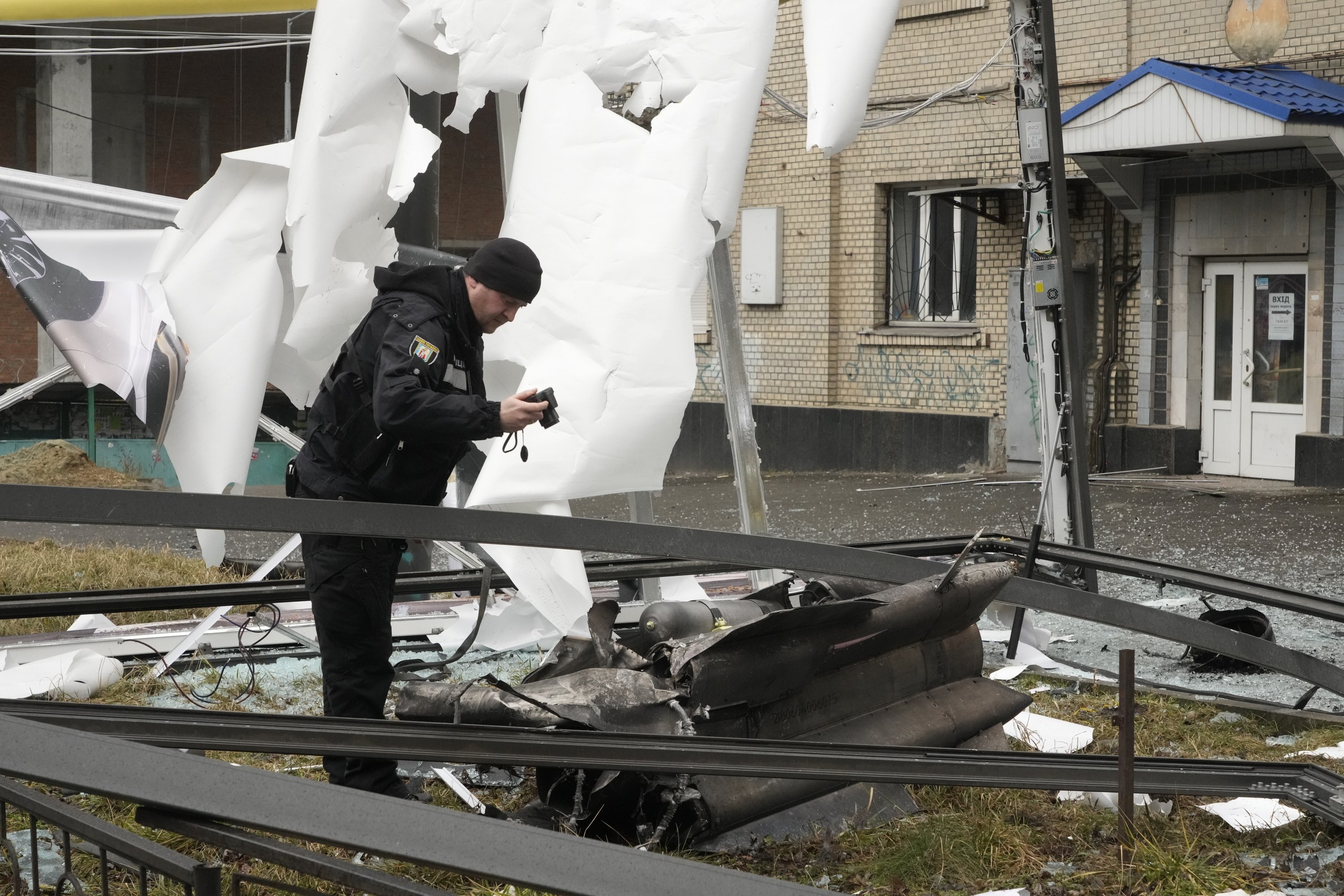
Ukraine marked four years since Russia's assault on Feb. 24, 2022, a war that has shattered towns, uprooted millions and killed large numbers on both sides.
Moscow occupies close to a fifth of Ukrainian territory and continues to grind forward, especially in the eastern Donbas region, despite heavy losses and repeated Ukrainian strikes on logistics.
Russia has launched many thousands of drones and missiles at Ukraine since its full-scale invasion began four years ago. Most recently, it has targeted power and heating infrastructure during Ukraine's coldest winter of the war.
Beyond Eastern Europe, the report highlights shifting global fault lines. In the Asia-Pacific, mounting tensions are seen as complicating the strategic balance. A potential conflict around Taiwan could carry an economic cost exceeding $10 trillion, according to estimates referenced in the document. The United States is described as recalibrating its strategic priorities toward dominance in the Western Hemisphere and deterrence consolidation in the Asia-Pacific.
Europe, meanwhile, would require hundreds of billions of dollars in additional defense spending to build an independent military capacity, the report says. In scenarios where the U.S. reduces its role in European defense, the procurement budget needed to sustain conventional forces could exceed $1 trillion.
The document also draws attention to what it calls the "CRINK Axis" – China, Russia, Iran and North Korea –characterizing it not as a traditional alliance but as a flexible security ecosystem. In the Middle East, unresolved nuclear issues and ballistic missile inventories continue to fuel tensions between Iran and Israel. A possible Iran-Israel war, the report warns, could trigger a global economic crisis through disruptions in hydrocarbon markets and generate significant migration flows.
Against this backdrop, the academy assesses Türkiye’s position as comparatively resilient. Due to its geopolitical location and its exposure to multiple crises over the past two decades, Türkiye is said to have felt the effects of global uncertainty early. This experience, the report argues, has enabled the country to develop a strong capacity for resilience while preserving internal stability.
It notes that traditional allies have not provided the expected level of contribution in security and defense over the past decade, accelerating Türkiye’s efforts to strengthen autonomous capabilities. Expanded capacities in defense, intelligence, security and diplomacy are described as positioning the country to navigate the evolving geopolitical atmosphere more effectively.
If Türkiye can leverage its strengths and reinforce institutional capacity to manage risks, the report concludes, it is likely to remain stable and influential amid continuing crises and global uncertainty.