Türkiye officially began passport-controlled border crossings with Syria on Wednesday, allowing Turkish citizens and Syrians with multiple citizenships to travel through most land gates, marking a key step in the normalization process following Syria’s liberation last December.
According to an Interior Ministry statement posted on the Turkish social media platform NSosyal, Turkish citizens and Syrian nationals who have obtained multiple citizenships will be able to enter and exit Syria through Türkiye's land border gates, except for those located in the Operation Peace Spring Zone.
The move coincides with a significant increase in voluntary returns of Syrians from Türkiye.
The Migration Directorate reported last week that 411,649 Syrians have safely and voluntarily returned to Syria since the fall of longtime dictator Bashar Assad on Dec. 8.
Since 2016, the total number of voluntary returns has reached 1,151,652, while the number of Syrians under temporary protection in Türkiye currently stands at 2,543,711.
Türkiye has been home to millions of Syrian refugees since the civil war broke out in that country in 2011. When the Assad regime collapsed due to an opposition push last December, refugees started eyeing quick returns. Türkiye eased restrictions on its border crossings with its southern neighbor after the fall of the regime, but the number of returnees initially fluctuated between 1,300 and 1,400 people daily.
Authorities were expecting a surge in returns when the schools started their summer recess in June, and the projections proved true. After June 20, daily crossings reached 2,500.
At one point, numbers receded due to the Iran-Israel conflict that threatened to push the region into another episode of turmoil, but following a fragile cease-fire between the two countries, crossings increased again.
The border gates have a capacity that allows for the crossing of 3,000 people daily, as they undergo comprehensive checks before traveling into Syria.
Türkiye expects more Syrians will return home in the coming months, near the end of summer, with the return of Syrians working as seasonal laborers in fields and orchards across Türkiye, from Mersin and Antalya to provinces of Burdur and Isparta.
Voluntary returns are closely coordinated by the Migration Directorate and relevant institutions, with every step, from registration to transportation planning, handled by authorities.
Syrians wishing to return can schedule appointments through the provincial directorate of migration management in their city of residence via the website randevu.goc.gov.tr. Applicants receive a voluntary return form, a travel permit to the departure city, and, if necessary, a letter of consent.
Once documents are completed, returnees proceed to the Voluntary Return Coordination Centers and board buses to the land border crossings in Hatay’s Cilvegözü, Yayladağı, Zeytindalı, Kilis’ Öncüpınar, Çobanbey, Gaziantep’s Karkamış and Şanlıurfa’s Akçakale districts.
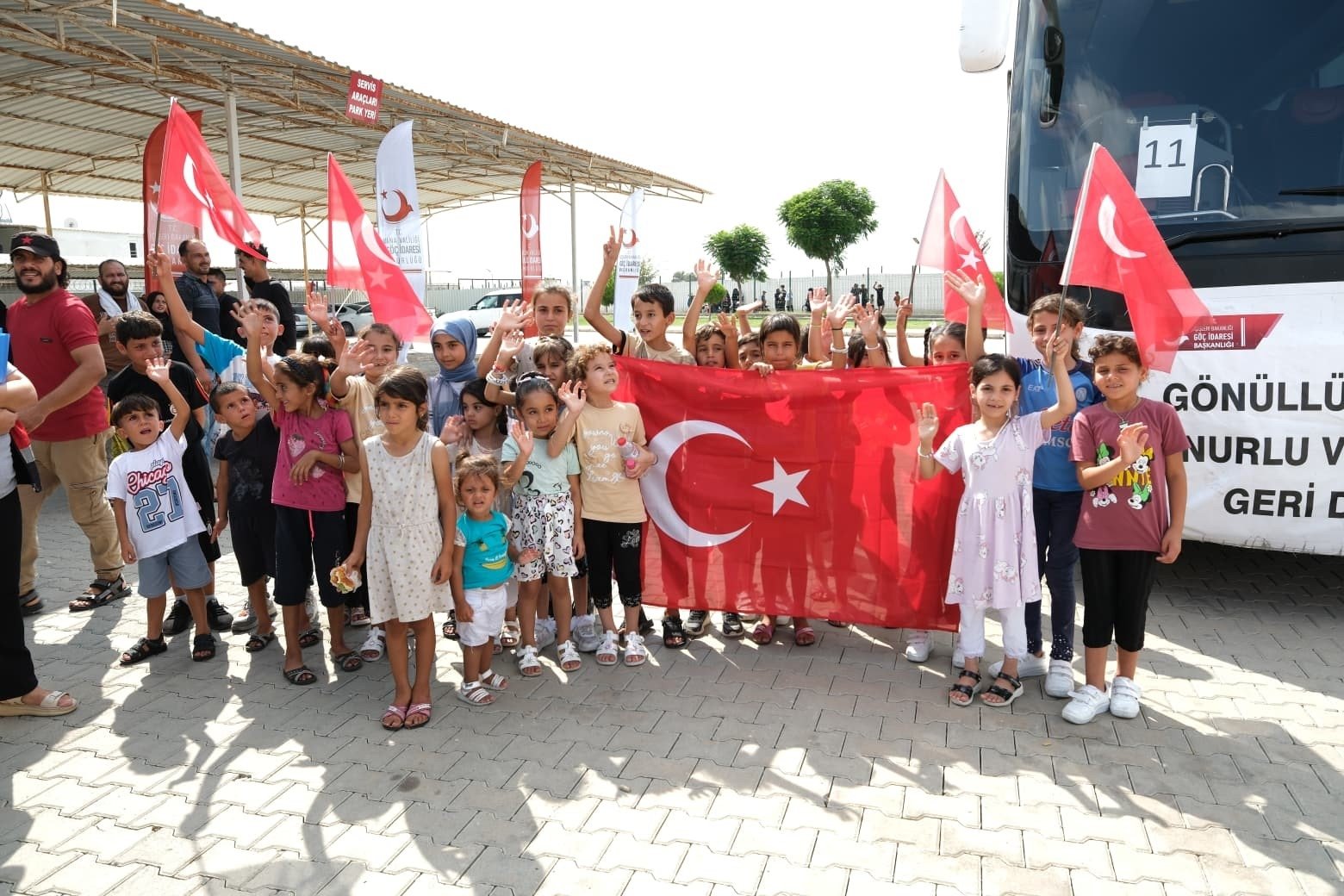
Syrian children are carefully processed, provided with gifts and allowed to cross after fingerprinting and customs checks. Returns are also monitored by the United Nations High Commissioner for Refugees (UNHCR) to ensure safety and compliance.
Bashar Assad, Syria's leader for nearly 25 years, fled to Russia on Dec. 8, ending the Baath Party regime, which had been in power since 1963. A new transitional administration led by interim President Ahmad al-Sharaa was formed in January.