Four hundred eighty-eight years after the Battle of Preveza, Türkiye is becoming a force to reckon with in terms of naval might, thanks to its growing local defense industry. On Sunday, the country celebrated the anniversary of the Ottoman victory against the Holy League of European forces off the coast of Greece.
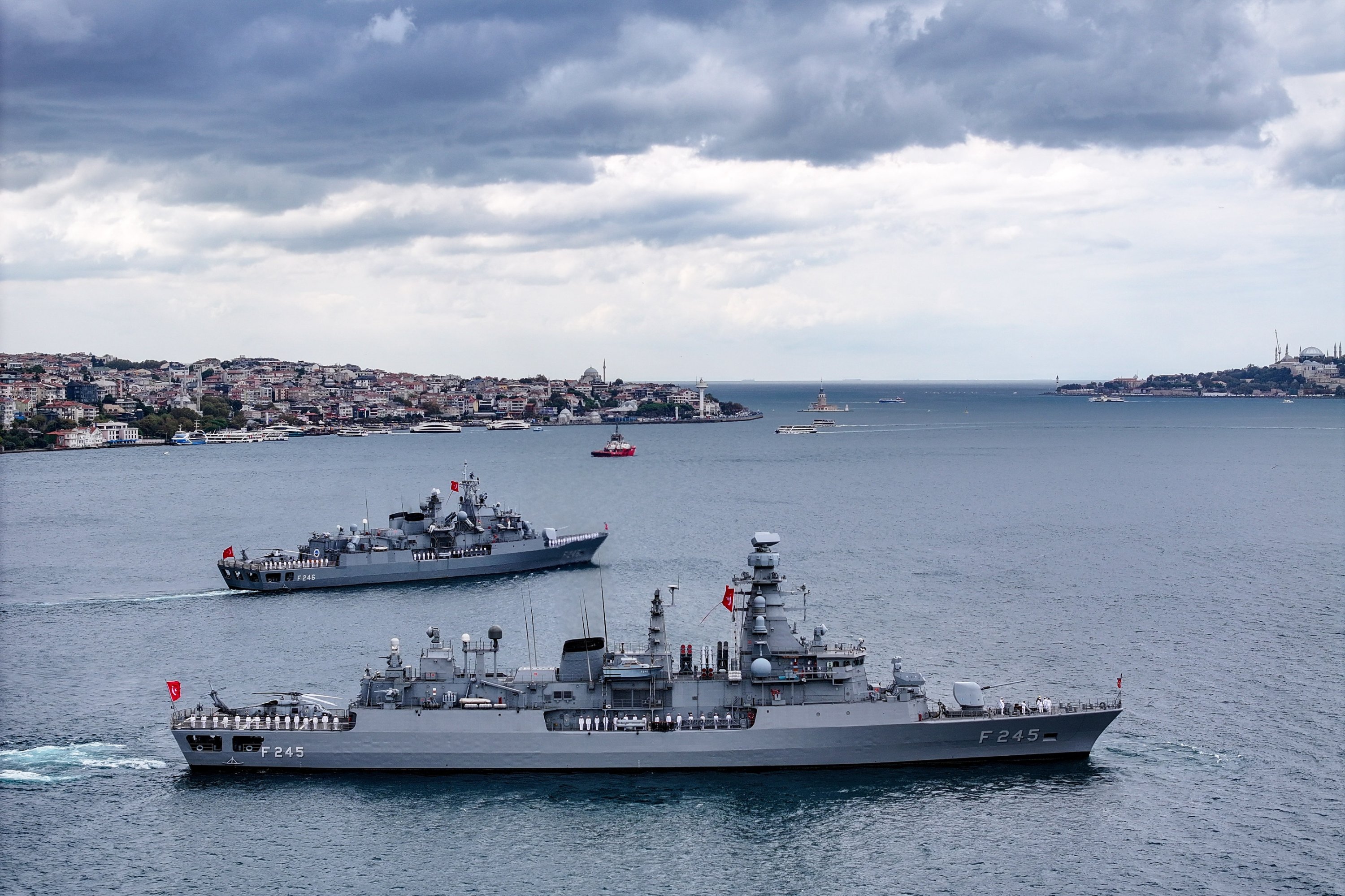
On the occasion, which is also celebrated as Turkish Naval Forces Day, the navy’s 15 vessels paraded across the Bosporus amid cheers. Turkish naval commanders and local authorities joined citizens in saluting the ships before a visit to the tomb of Barbaros Hayreddin Pasha, the legendary Ottoman admiral who led the victory at Preveza and was buried in Beşiktaş overlooking the Bosporus.
In a message on the occasion, the National Defense Ministry said the Turkish navy demonstrated its power 488 years ago to the world and today continues accomplishing tasks “without fear and heroically, to protect our maritime rights and interests.”
“We remember with gratitude Barbaros Hayreddin Pasha, our revered ancestors, our commander-in-chief Mustafa Kemal Atatürk, all martyrs and veterans,” the ministry said in a statement.
Alparslan Bayraktar, the minister of energy and natural resources, also issued a message on the occasion, noting that Türkiye continued “accomplishing new sagas in the Blue Homeland,” referring to Türkiye’s maritime borders concept. Bayraktar said that the victory in 1538 inspired Türkiye’s energy independence struggle in the Blue Homeland. Türkiye has developed a new energy fleet in recent years, including new seismic research vessels named after Barbaros and other respected admirals of the Ottoman navy. Bayraktar said that, with six drill ships and two seismic research ships, Türkiye now had the world’s fourth-largest energy fleet.
The Battle of Preveza was the culmination of a struggle across the Mediterranean in the 16th century between the rapidly expanding Ottoman Empire and the Holy League, formed by Pope Paul III as an alliance of the Papal States, the Republic of Venice, the Knights of Malta and Spain. It was requested by the Republic of Venice, which had lost several islands to the Ottoman navy in the Mediterranean, and convinced others to confront what they perceived as a threat to their commercial and military interests in the Mediterranean.
The Ottoman navy was led by Barbaros Hayreddin Pasha, while Genoese admiral Andrea Doria led the Holy League’s combat forces.
Doria laid siege to Preveza Castle first before retreating to Corfu, which was controlled by Venice, when the Ottoman navy arrived. Ottoman forces prompted the Holy League navy to fight in the open sea in the Gulf of Arta, in the Ionian Sea. Although outnumbered, the Ottoman forces successfully engaged with the Holy League navy, which consisted of 262 ships. Weather conditions also played a role in limiting the maneuvers of Doria’s forces, which were mostly composed of sailing ships, allowing Barbaros’ more mobile galleys to launch attacks easily. Doria eventually gave in, fleeing in the dark after many ships he commanded were sunk by the Ottomans.