Türkiye’s Defense Ministry on Friday confirmed a third ballistic missile fired from Iran was shot down, saying Ankara was asking Tehran for clarification.
"A ballistic munition launched from Iran and entering Turkish airspace was neutralized by NATO air and missile defense assets deployed in the Eastern Mediterranean," the ministry said in a statement.
It assured all necessary measures were being taken and said Ankara was in touch with Tehran to clarify “all aspects of the incident.”
NATO has again intercepted an Iranian ballistic missile heading toward Türkiye, the alliance’s spokesperson Allison Hart said separately.
"NATO remains vigilant and stands firm in its defense of all allies," Hart said.
There was no immediate comment from Iran, but it has so far repeatedly rejected deliberately targeting Türkiye amid its war with the U.S. and Israel.
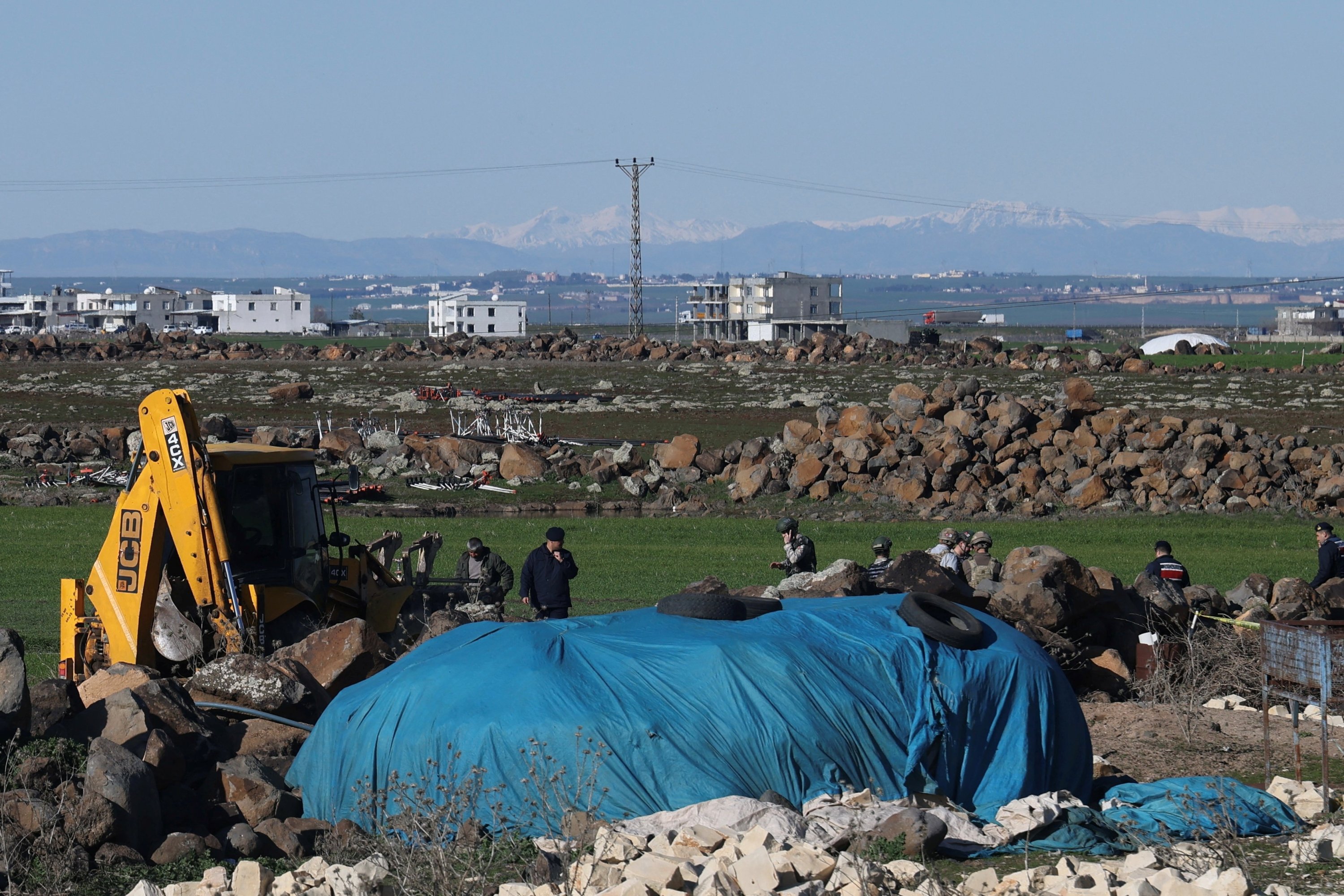
A Turkish security source said there had been no casualties in the incident and no reports of any debris falling from the interception.
It was not immediately clear what was targeted, while Turkish media reported warning alarms sounded earlier on Friday around the Incirlik Air Base in southern Adana province, which also houses U.S. personnel.
Residents of Adana, which lies 10 kilometers (6 miles) from the base, were woken up at 3:25 a.m. (12:25 a.m. GMT) by sirens, which sounded for around five minutes, according to the Ekonomim business news website.
It said a red alert sounded at the base.
Several people posted mobile phone footage on social media of a fast-moving object that appeared to be on fire moving through the night sky as police and ambulance sirens wailed through the streets, it said.
Defense news platform SavunmaSanayiST said the objects were "believed to be fragments from a third ballistic missile" or from the interceptor, which had entered the atmosphere and burnt up before falling to the ground.
NATO had on Monday confirmed shooting down a second ballistic missile fired from Iran. The announcement came shortly after Washington said it was closing down its consulate in Adana, urging all American citizens to leave southeastern Türkiye.
Later that day, Iranian President Masoud Pezeshkian phoned President Recep Tayyip Erdoğan and denied the missile had been fired from Iran.
Since the U.S.-Israeli war against Iran started, Tehran has launched strikes across the Middle East. Türkiye had appeared to have been spared.
The missiles increasingly pose a test for NATO member Ankara and the alliance. Türkiye, NATO's second-largest army and Iran's neighbor, has warned Tehran against any more attacks. It also protested to Tehran after every incident, while saying it does not want to be dragged into the war.
The Incirlik Air Base is an important NATO facility that has been used by U.S. troops for decades, but which also hosts military personnel, including from Spain and Poland, the base's official website says.
U.S. troops are also stationed at Kürecik, another Turkish base in the central Malatya province, which houses an early-warning radar system that NATO describes as a "key element" of its missile shield, and which can detect Iranian missile launches.
Although Ankara has categorically denied that the radar data has ever been used to help Israel, its presence has rattled Tehran.
On Tuesday, Türkiye said a Patriot missile defense system was being deployed in Malatya as NATO "strengthened its air and missile defense measures."
In remarks to Turkish media earlier on Friday, the Iranian ambassador to Türkiye said the missile incident also raised questions for Tehran, proposing a joint technical investigation and suggesting the possibility of “third-party” involvement.
“We suggested forming a technical team to study the issue more closely,” Ambassador Mohammad Hassan Habibollahzadeh said in Ankara. “For us as well, it raises questions: How could something like this happen?”
Habibollahzadeh said Iran believes the launches may have involved “third elements” seeking to damage relations between the two neighboring countries.
“We respect Türkiye’s national sovereignty,” he said, adding that Iranian authorities, including the armed forces and foreign ministry, had denied intentionally launching any missile toward Türkiye.
The envoy thanked Erdoğan and Foreign Minister Hakan Fidan for what he described as efforts to help reduce tensions.
Habibollahzadeh also said Iran considers itself to be acting in self-defense following attacks by the U.S. and Israel.