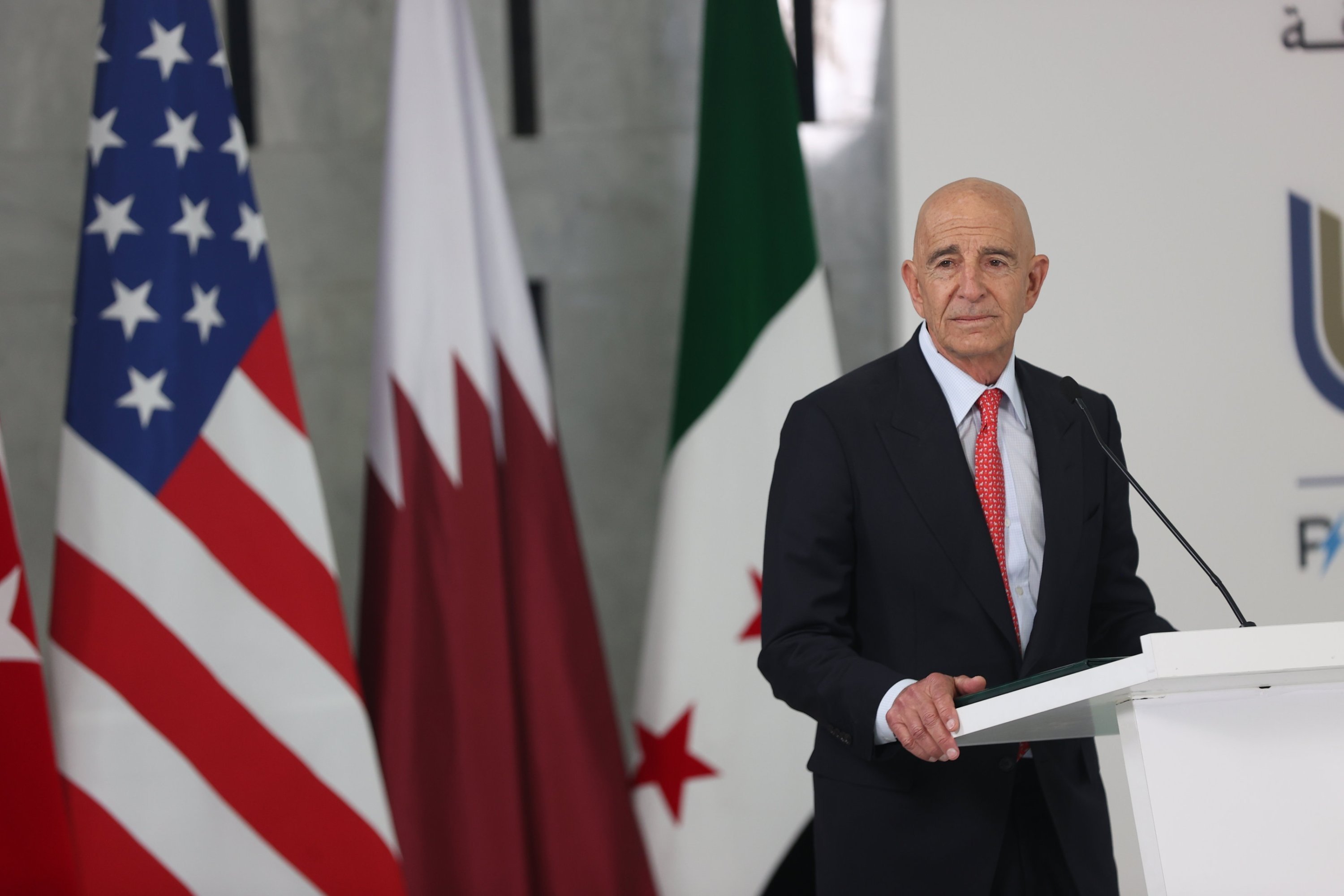
U.S. Ambassador to Türkiye and Special Envoy for Syria Tom Barrack stated on Wednesday that Türkiye must forgo operating or retaining the Russian S-400 air defense system to rejoin the F-35 fighter jet program.
In a post shared on his X account, Barrack reiterated that discussions between Washington and Ankara over the issue are ongoing. However, he emphasized that U.S. law imposes clear conditions for Türkiye’s reinstatement into the program.
“Under U.S. law, Türkiye must not possess or operate the S-400 air defense system to rejoin the F-35 program,” Barrack said, referring to the Russian-made system whose acquisition led to Türkiye’s removal from the program in 2019.
Barrack highlighted what he described as meaningful progress in recent talks between the two governments. He attributed the improved diplomatic atmosphere to the rapport between the two leaders. “The positive relationship between President Donald Trump and President Recep Tayyip Erdoğan has fostered a new climate of cooperation, enabling the most productive discussions we have had on this issue in the past 10 years,” he wrote.
The ambassador suggested that these diplomatic efforts may soon yield results. “Our hope is that the ongoing negotiations will produce a milestone in the coming months that addresses the security needs of both the United States and Türkiye,” he added.
The dispute over the S-400 and Türkiye’s removal from the F-35 consortium has long been a central point of tension between the NATO allies, with Ankara insisting its purchase of the Russian system does not pose a threat to the alliance’s defense architecture. Washington, however, maintains that the system is incompatible with NATO platforms and risks compromising sensitive F-35 technology.
Türkiye was removed from the U.S.-led multinational program building and buying the F-35 jets in 2019, and Washington imposed Countering America's Adversaries Through Sanctions Act (CAATSA) sanctions following its purchase of Russian-made S-400 missile defense systems.
While it has been excluded from receiving F-35s, Türkiye has been looking elsewhere to bolster its air force, including Eurofighter Typhoons and U.S.-made F-16s. It is developing its own fifth-generation Kaan fighter jet, which is expected to enter service in 2028.
In May, Erdoğan expressed confidence that the sanctions would quickly be ended, and his meeting last month with U.S. President Donald Trump further cemented those hopes.
On the other hand, in October, Türkiye and Britain signed an 8 billion pound ($10.7 billion) deal for the purchase of 20 Eurofighter Typhoon jets, further boosting bilateral defense cooperation between the two NATO allies during British Prime Minister Keir Starmer's visit to Ankara.