As Türkiye seeks to end PKK terrorism once and for all, memories of a vicious massacre committed by the terrorist group 33 years ago remain fresh.
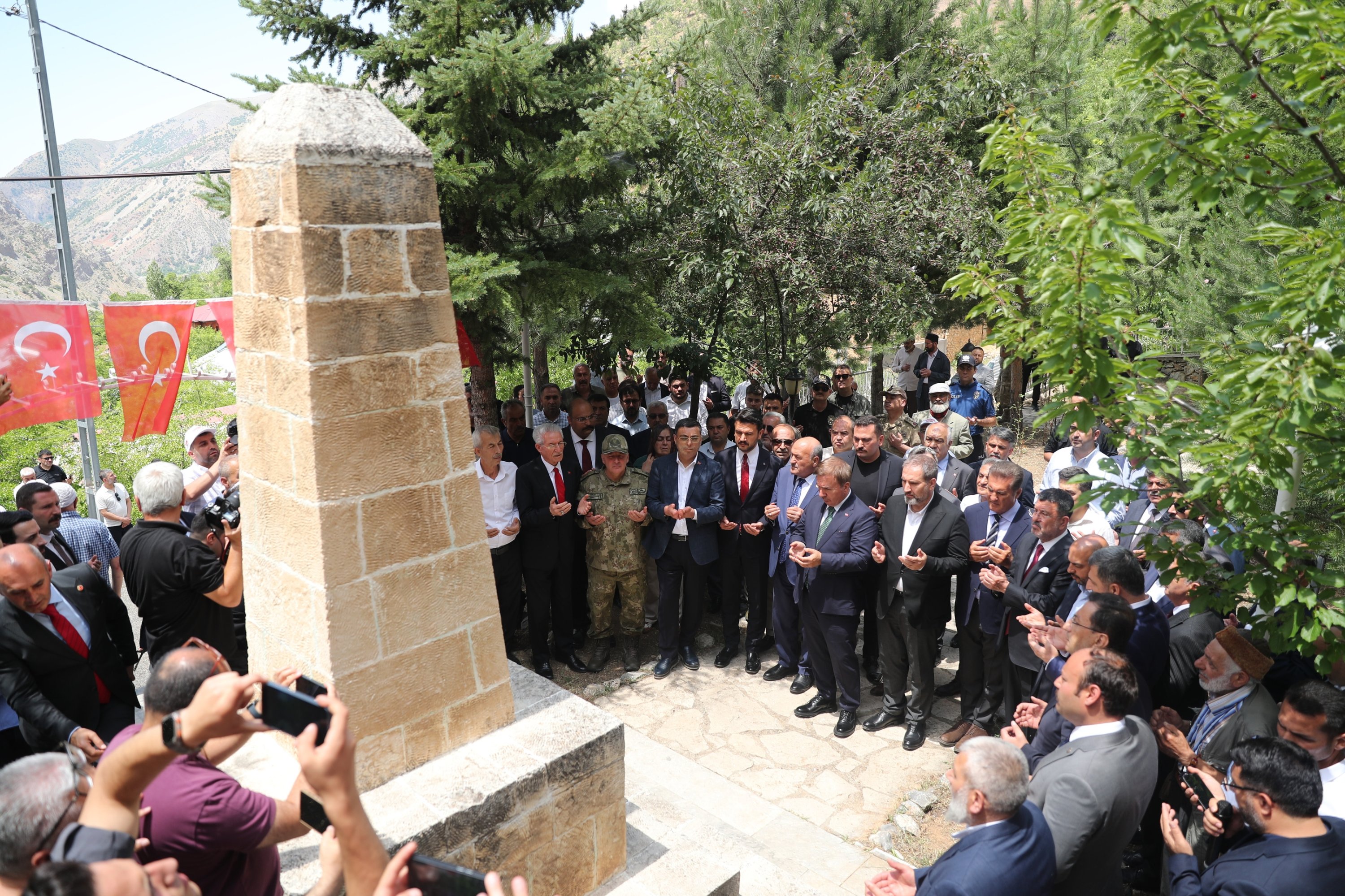
On Sunday, families of victims, local officials and representatives of political parties convened in the Başbağlar village of the Erzincan province on the anniversary of the incident where 33 civilians were killed by PKK.
The massacre was allegedly an act of retaliation by the PKK over the July 2, 1993, deaths of people in a riot in nearby Sivas. The mob arson targeting Madımak Hotel, where several intellectuals and members of the Alevi community gathered for an event, was one of the darkest episodes of the decade marked by shady murders and PKK attacks.
“It is appropriate not to separate Başbağlar and Madımak and deem it as one pain of the nation,” Mustafa Şen, deputy chair of the ruling Justice and Development Party (AK Party), said at the commemoration ceremony in the village. The AK Party and its ally, the Nationalist Movement Party (MHP), oversee the “terror-free Türkiye” initiative nowadays. The initiative aims for the dissolution of the PKK. The PKK announced it would join the initiative and declared its dissolution last year. Parliament is expected to implement new laws offering leniency in sentencing of PKK members once the full disarmament is confirmed.
On Sunday, mourners visited a monument for victims and laid flowers as a large crowd waving Turkish flags watched. A minute of silence was observed for victims before the participants recited prayers. Officials then read out messages of condolences by politicians and President Recep Tayyip Erdoğan.
Speaking at the ceremony, Erzincan Governor Hamza Aydoğdu said that the massacre was etched into the memory of the nation. Aydoğdu said the seeds of strife were sown years ago. “On July 5, 1993, Türkiye witnessed something beyond description. Thirty-three people were lost and they left behind unfinished prayers, incomplete dreams, quiet houses and sad orphans behind. Yet, those left behind stood strong,” he said.
Şen cited the terror-free Türkiye initiative in a speech at the ceremony and said they were willing to do everything to ensure that terrorism would never come back. “It has not been easy. What we are supposed to do is not to discriminate between the suffering of people, not to politicize the incidents and not to have political efforts feeding upon terrorism,” he said. Veli Ağbaba, a lawmaker for the main opposition Republican People’s Party (CHP), said Başbağlar was the “common pain” of the country. “Those who died in Madımak and Başbağlar were our brothers and sisters. Their murderers are no different than each other. Those massacres aimed to divide people but the nation did not allow it to happen,” he hailed.
Ali Akpınar, mukhtar of the village, said their suffering still continued but they convened at the ceremony not to vent out rage but to highlight the truth, to “keep the revered memory of our martyrs, to continue our pursuit of justice.”
The victims of the Başbağlar massacre were shot execution-style by a group of terrorists who stormed the village on July 5, 1993, three days after the Madımak riot killed 37 people in the central city of Sivas. Villagers would later testify that the assailants told them at the time that it was in retaliation for the Sivas massacre.
Today, it is viewed as a plot by the "deep state" to pit Sunnis against Alevis. Başbağlar was a Sunni-majority village.
Both attacks were proceeded by the slaughter of 33 unarmed conscripts in the eastern city of Bingöl by the PKK on May 24, 1993, just a few months after the death of Eşref Bitlis, a gendarmerie general who was killed in a suspicious helicopter crash.