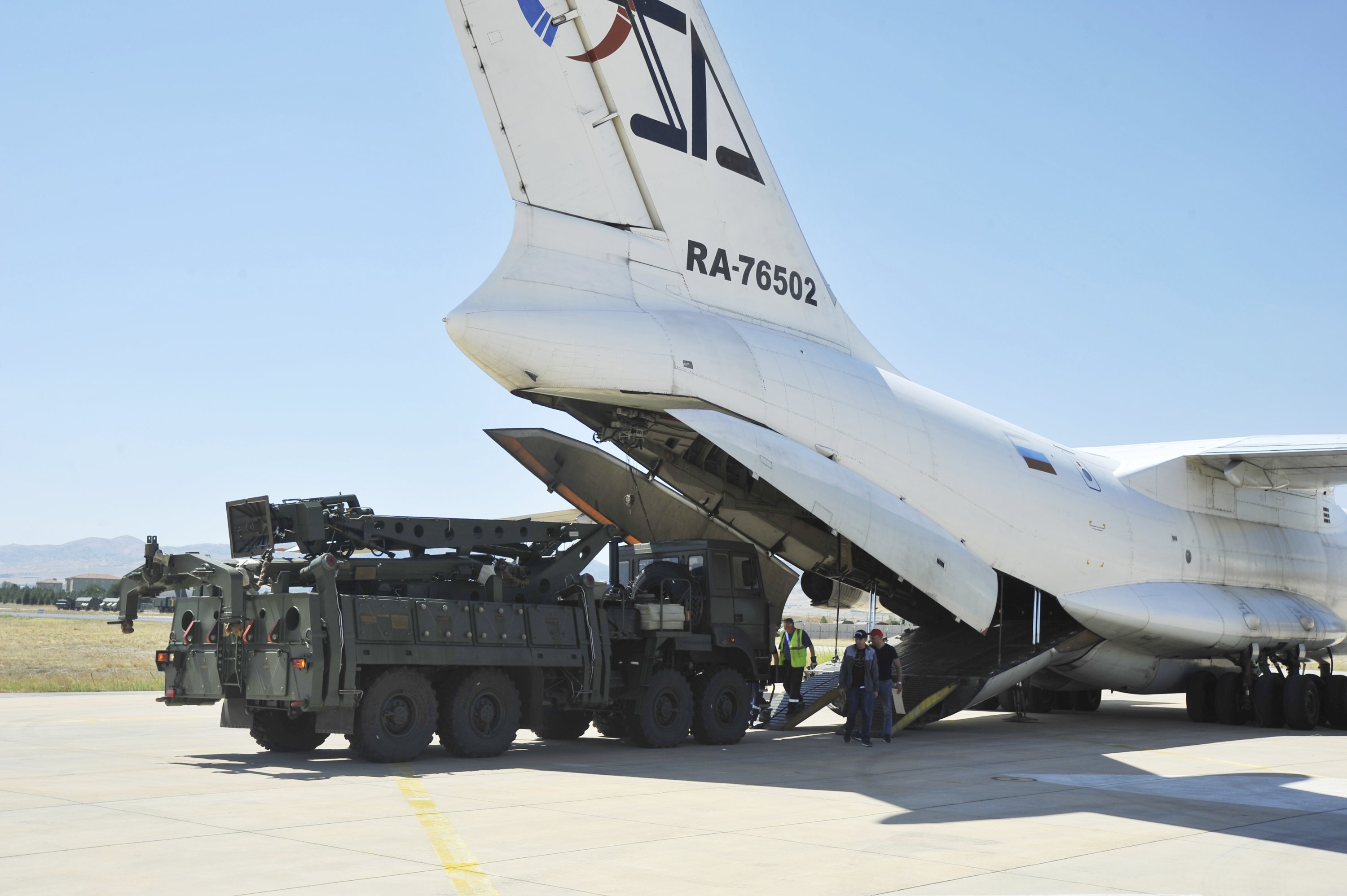
Türkiye and the United States are holding talks on lifting U.S. sanctions and clearing the path for Ankara’s return to the F-35 fighter jet program, but Türkiye’s position on retaining its Russian-made S-400 air defense systems remains unchanged, the Defense Ministry said Friday.
The NATO allies have been at loggerheads since 2020 when Washington removed Ankara from Lockheed Martin's fighter jet programme and imposed sanctions over Türkiye's acquisition of the S-400s, which Washington calls a security threat.
Türkiye says that move was unjust. Both sides have said they hope the CAATSA sanctions and U.S. laws can be overcome in the U.S.
It's President Donald Trump's second term, so it could be possible for Türkiye to both buy the jets and return to the manufacturing programme. U.S. Ambassador to Ankara Tom Barrack said on Wednesday that discussions continue on the issue, but noted U.S. law would not permit Türkiye to operate or possess the S-400 system if it wants to return to the F-35 programme.
Addressing Barrack's comments at a press briefing, the Turkish Defense Ministry said: "There have been no new developments regarding the S-400 air defense systems, which has been put on the agenda in recent days."
Türkiye's diplomatic discussions with the U.S. continue "on lifting sanctions and obstacles to the F-35 procurement and readmitting our country to the programme," it said.
"Addressing the process regarding the F-35 project within the spirit of alliance, through mutual dialogue and constructive consultation, will contribute positively to bilateral relations," the ministry added.
Foreign Minister Hakan Fidan told Reuters last week he believed Türkiye and the U.S. would find a way to remove American sanctions "very soon."
Washington says the S-400s pose a threat to its F-35 fighter jets and to NATO's broader defense systems. Türkiye rejects that and says the S-400s will not be integrated into NATO.
On the procurement of Eurofighter Typhoon jets, the ministry said Ankara plans to acquire 12 aircraft each from Qatar and Oman as an interim measure until newly produced jets from the United Kingdom are delivered.
The Qatari aircraft will be transferred after the contract is signed, while the Omani jets will arrive following planned modernization work.
The ministry also commented on developments in Syria and the March 10 agreement with the YPG, the Syrian offshoot of the PKK terrorist group.
It said the YPG’s refusal to integrate into the Syrian army, despite the terms of the deal, continued to undermine efforts to stabilize the region.
Some countries were “encouraging” the group to resist integration and disarmament, it said, adding that Türkiye expects YPG members to join the Syrian army individually, not as a unit, and that attempts by the group “to buy time” would not succeed.
Responding to recent images circulating online that alleged Turkish forces were preparing for a new operation in Syria, the ministry said the footage showed routine troop rotations. “What should be followed here is not the Turkish military’s movements, but rather the situation of the YPG and the activities of the Syrian army,” it said.
The ministry added that four PKK terrorists surrendered between Dec. 4 and 12.
Rear Adm. Zeki Aktürk, the ministry spokesperson, separately said Turkish forces continued search-and-clear operations on both sides of the border, including the destruction of caves, shelters, mines and improvised explosives.
He said the total length of tunnels destroyed in Syria had reached 732 kilometers (454.84 miles), including 4 kilometers recently uncovered in Manbij.