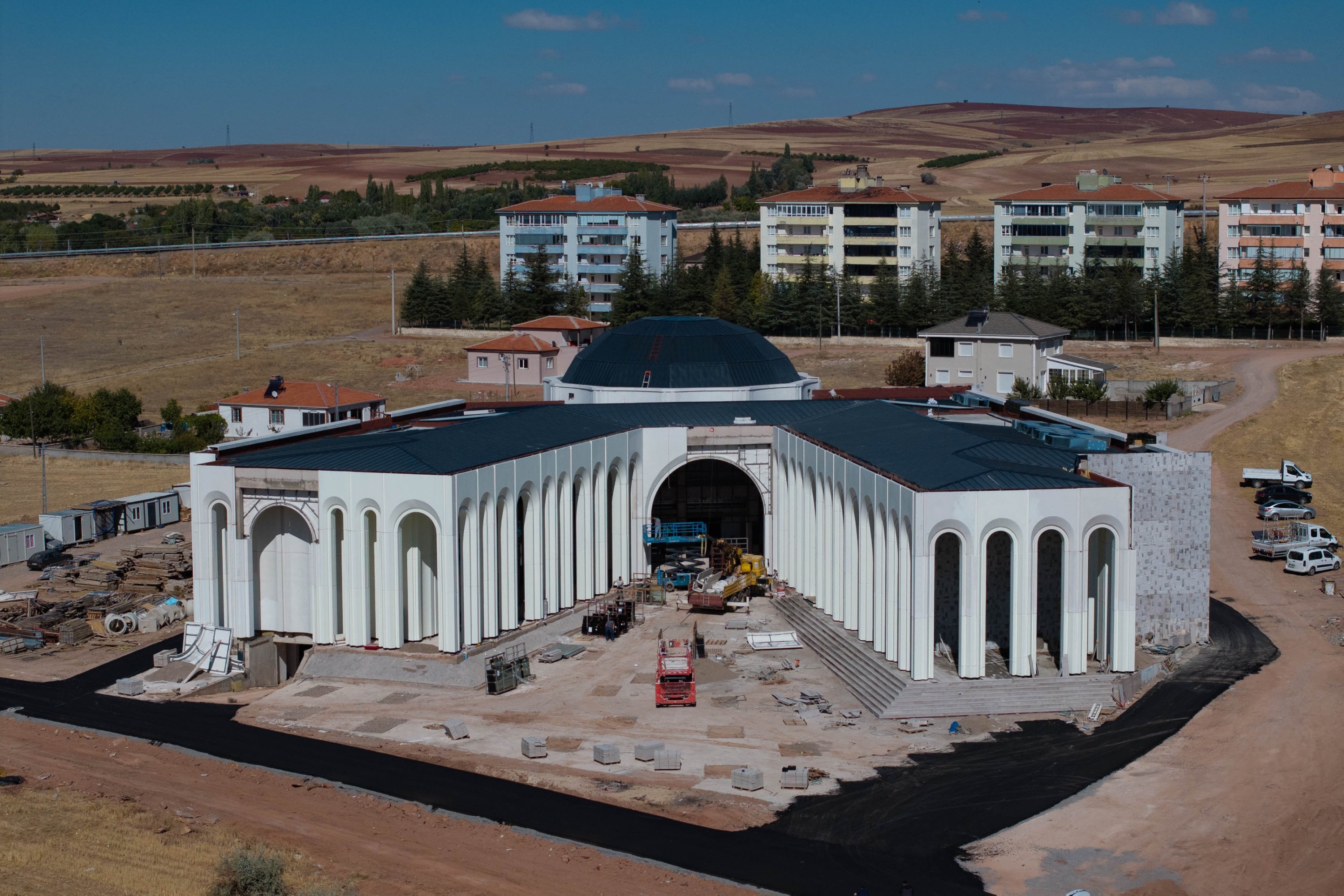
Rising atop a vast land at the heart of Alevi faith in Anatolia, the Horasan Erenleri Cemevi Complex will open on Oct. 11. Apart from its sheer size, the venue is famous for its unlikely benefactor: Devlet Bahçeli, head of the Nationalist Movement Party (MHP).
Bahçeli donated the land where the complex is being built by the Horasan Erenleri Federation of Associations, a major body of associations representing the Alevis of Türkiye.
The nationalist leader, who hails from a prominent family in southern Türkiye, bought the plot in central Nevşehir Province’s Hacıbektaş district 15 years ago. After a MHP rally in Mersin in 2022, which was attended by representatives of the federation, Bahçeli decided to donate the land to the federation.
Hacıbektaş is a significant center for Alevis, as it houses the tomb of the eponymous 13th-century mystic, a revered figure within the community whose teachings are widely respected.
The MHP and Alevis have a bitter history, with some members of the community blaming hardline nationalists for a notorious massacre targeting Alevi neighborhoods in 1978. The community’s traditional alignment with MHP’s main rival, the Republican People’s Party (CHP), deepened the gap, although the nationalist party has been more embracing toward Alevis, particularly for their Turkmen roots. Bahçeli, a Turkmen himself, has been more vocal in his embrace of Alevis in recent years. His Alevi rhetoric took another turn when he recently suggested that Türkiye may have a Kurdish and an Alevi vice-president in the future, as he emphasized national unity of the country.
MHP Deputy Chair Yaşar Yıldırım told Anadolu Agency (AA) on Monday that Bahçeli was rushing for the completion of the construction of the complex in Hacıbektaş. “We presented him with an invitation to the opening of the complex and he was very delighted,” Yıldırım said.
Yıldırım said the complex comprised three floors with a spacious “cem” hall where adherents of the faith can perform the semah ceremony. On the ceiling are motifs representing a “seven-storey heaven” and around it are four doors that represent metaphorical doors in the faith. Yıldırım said every motif in the venue was meticulously planned and Alevi dedes contributed to the project with their views. He noted that the complex’s opening date was the day of the death of Hacı Bektaş-ı Veli.
The Alevi faith is defined as a combination of Shiite Islam, the Bektashi Sufi order and Anatolian folk culture rather than as a separate religion. In Türkiye, Alevis comprise a large community with approximately 20 million followers, although official figures are unavailable.
The community has long raised concerns over the public recognition of their identity, the legal status of cemevis and education issues, including the right for Alevi students to opt out of compulsory religion classes. Currently, cemevis are classified as foundations under the Interior and Culture and Tourism Ministries, rather than as official houses of worship, which limits their access to state funding available to mosques, churches and synagogues of recognized religious minorities.