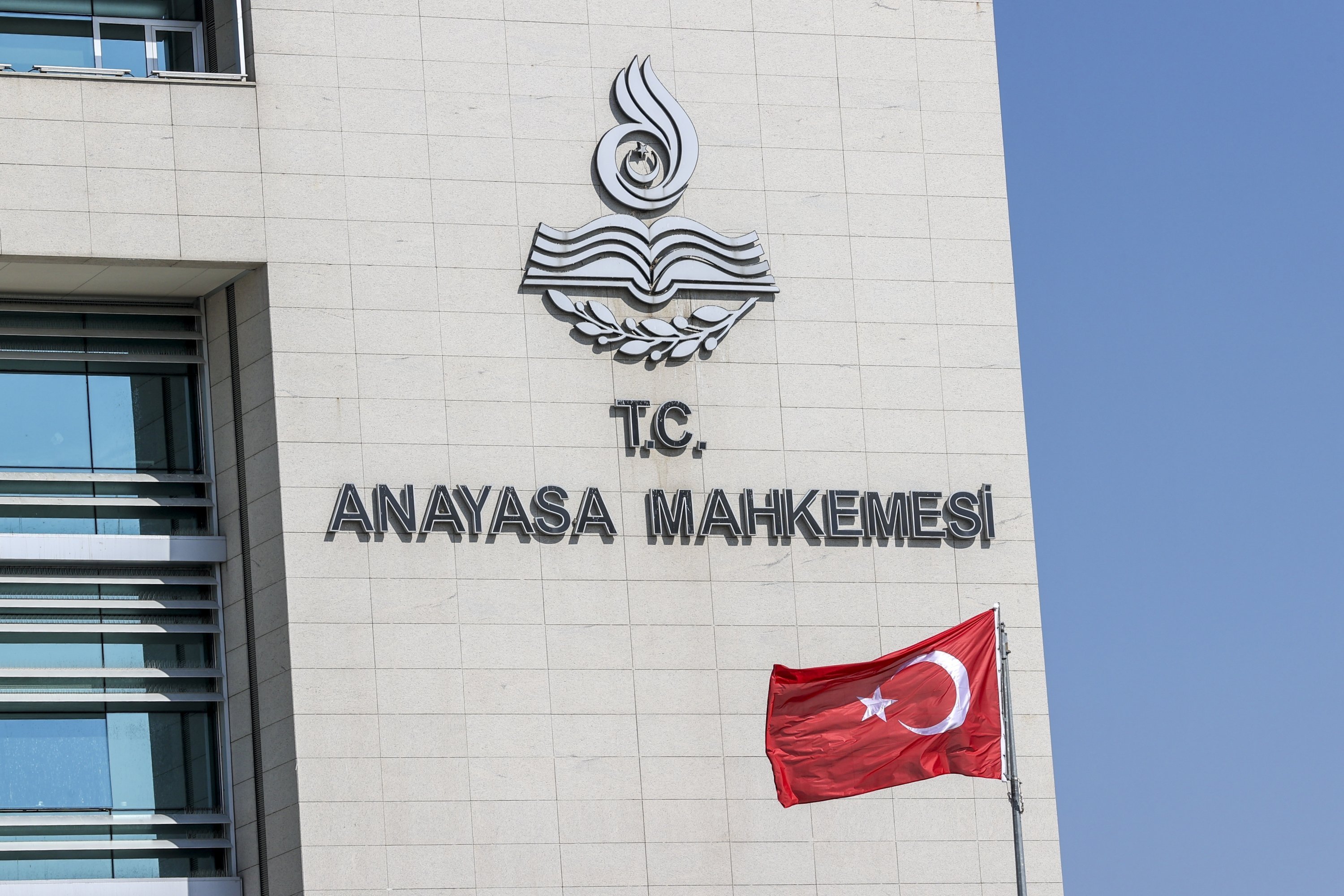
Since the founding of the Republic of Türkiye, constitutional design has served as the backbone of the country’s legal system. The current Constitution, adopted in 1982, has been repeatedly amended over the decades – most notably in 2017, when a national referendum paved the way for the country's transition from a parliamentary model to an executive presidential system.
Navigating the 175-article charter can be complex for international observers. Here is a clear guide to the foundational provisions, historical turning points and ongoing reform efforts shaping Türkiye’s legal framework today.
The opening section of the Constitution defines the permanent identity of the state. Under Article 4, the first three articles cannot be amended, nor can an amendment to them be proposed.
Article 1: Defines Türkiye as a republic.
Article 2: Establishes the country as a democratic, secular and social state governed by the rule of law, respecting human rights and loyal to Atatürk nationalism.
Article 3: Affirms the indivisible integrity of the state with its territory and nation. It designates Turkish as the official language, Ankara as the capital, and establishes the national flag and anthem.
Article 4: Protects the provisions of Articles 1, 2 and 3 from amendment and prohibits proposals to amend them.
State Sovereignty and Separation of Powers (Articles 6–9)
The Constitution establishes how state authority is exercised and divided among the branches of government.
Article 6: Declares that sovereignty belongs unconditionally to the nation and may be exercised only through the authorized organs established by the Constitution.
Article 7: Vests legislative power in the Turkish Parliament (TBMM), which exercises this authority on behalf of the nation.
Article 8: Assigns executive power and responsibility to the president, who exercises it in accordance with the Constitution and the law.
Article 9: States that judicial power is exercised by independent and impartial courts on behalf of the Turkish nation.
Article 11 establishes the Constitution as the highest binding legal authority in Türkiye.
Article 11: States that the provisions of the Constitution are fundamental legal rules binding upon the legislative, executive and judicial organs, administrative authorities, and other institutions and individuals. Laws cannot be contrary to the Constitution.
The Constitution establishes the principle of equality before the law and defines both the nature of fundamental rights and the conditions under which they may be restricted.
Article 10: Guarantees equality before the law without discrimination, including on grounds of language, race, color, sex, political opinion, philosophical belief, religion or sect. It also requires the state to ensure that equality between men and women exists in practice.
Articles 12 & 13: Establish that everyone possesses inherent, inviolable and inalienable fundamental rights and freedoms, while recognizing that these rights also carry duties and responsibilities toward society, family and others. Article 13 provides that fundamental rights and freedoms may be restricted only by law, without infringing upon their essence and only on grounds specified in the relevant constitutional provisions. Any restriction must comply with the Constitution, the requirements of a democratic society and the secular republic, as well as the principle of proportionality.
Two provisions frequently cited in legal and political debates concern citizenship and Türkiye's international obligations.
Article 66: Defines Turkish citizenship, stating that everyone bound to the Turkish state through the bond of citizenship is a Turk.
Article 90: Provides that international agreements duly put into effect have the force of law. In cases of conflict between domestic legislation and international agreements concerning fundamental rights and freedoms, the provisions of the international agreement prevail.
Following the 2017 constitutional amendments, executive authority was vested in the presidency and the office of prime minister was abolished.
Article 101: Specifies that the president is directly elected for a five-year term and may serve a maximum of two terms. Presidential candidates may be nominated by political party groups, political parties that individually or jointly received at least 5% of valid votes in the previous parliamentary election, or at least 100,000 eligible voters.
Article 104: Outlines presidential duties and powers. As head of state, the president exercises executive authority, appoints vice presidents and ministers, may issue presidential decrees within constitutional limits, ratifies and promulgates international treaties, determines national security policies and takes necessary measures to safeguard national security. The president also ensures the implementation of the Constitution and the regular and harmonious functioning of state organs.
Article 116: Addresses the renewal of presidential and parliamentary elections. Parliament may decide to renew elections with a three-fifths majority of its total membership, while the president may also decide to renew elections. In either case, presidential and parliamentary elections are held together. If Parliament decides to renew elections during a president's second term, the incumbent may run for president once more.
Legislative authority rests with the unicameral Turkish Parliament.
Article 75: Sets parliamentary composition at 600 members.
Article 77: Provides that parliamentary and presidential elections are held every five years on the same day.
Article 87: Entrusts Parliament with enacting, amending and repealing laws, debating and adopting budget and final account bills, approving the ratification of international treaties, and deciding on declarations of war in cases permitted under international law, among other constitutional powers.
Article 98: Details parliamentary oversight mechanisms, including parliamentary inquiries, general debates, parliamentary investigations and written questions. Written questions may be submitted by lawmakers to vice presidents and ministers.
Judicial authority is exercised by independent and impartial courts on behalf of the Turkish nation.
Article 138: Establishes judicial independence. Judges rule according to the Constitution, laws and their conscientious convictions, and no state organ, authority or individual may issue orders, instructions, recommendations or suggestions to courts or judges concerning the exercise of judicial power.
Articles 146 & 148: Govern the Constitutional Court. The court consists of 15 members, with three elected by Parliament and 12 selected by the president through procedures established by the Constitution. The court reviews the constitutionality of laws and presidential decrees and performs other duties assigned by the Constitution. Individuals may also apply directly to the court over alleged violations by public authorities of fundamental rights and freedoms protected by the Constitution and falling within the scope of the European Convention on Human Rights after ordinary legal remedies have been exhausted.
Türkiye’s constitutional history has been directly altered by political crises and military interventions, resulting in new charters or significant changes to the country's constitutional order.
On May 27, 1960, the military overthrew the elected Democrat Party government led by Prime Minister Adnan Menderes, suspended the 1924 Constitution and dissolved Parliament. A military administration ruled until a Constituent Assembly drafted the 1961 Constitution. Approved by referendum, the new charter introduced a bicameral Parliament and established the Constitutional Court. Menderes, who served as prime minister from 1950 until the coup, was executed in September 1961 following a trial by a military-appointed court.
On March 12, 1971, military commanders issued a memorandum that led to the resignation of Prime Minister Süleyman Demirel. While the 1961 Constitution remained in force, subsequent constitutional amendments curtailed some civil liberties and strengthened state authority during a period marked by political violence and martial law.
The most extensive constitutional disruption occurred on Sept. 12, 1980, when the military seized power, dissolved Parliament and suspended the existing constitutional order. Political parties were subsequently banned, and an appointed Consultative Assembly took part in drafting a new constitution.
The 1982 Constitution was approved in a national referendum and remains Türkiye's current charter, although it has undergone numerous amendments under civilian governments over the following decades.
A major overhaul of Türkiye's system of government came with the 2017 constitutional referendum, which approved the transition from the parliamentary system to the presidential system.
The amendments abolished the office of prime minister, vested executive authority in the president, revised parliamentary oversight mechanisms and reshaped the relationship between the executive and legislative branches. The new system took full effect following the presidential and parliamentary elections in 2018.
Türkiye's administrative system distinguishes between the central government's provincial organization and elected local administrations.
Governors (vali) at the provincial level and district governors (kaymakam) represent the central administration in the provinces and districts, respectively.
Article 127, meanwhile, governs local administrations, defining them as public entities established to meet the common local needs of residents in provinces, municipalities and villages, with decision-making bodies elected by voters.
Mayors and municipal councils are elected by voters, while Türkiye's metropolitan municipality system divides certain responsibilities between metropolitan municipalities and district municipalities.
Article 127 also grants the central administration powers of administrative tutelage (idari vesayet) over local governments within the principles and procedures prescribed by law. This oversight is intended to ensure that local services are carried out in accordance with the principle of administrative integrity, secure uniform public service, safeguard the public interest and meet local needs appropriately.
Despite numerous amendments over the decades, replacing the 1982 Constitution with a new civilian-drafted charter remains a prominent issue in Türkiye's political debate.
President Recep Tayyip Erdoğan and Parliament Speaker Numan Kurtulmuş have repeatedly advocated for a new civilian constitution, arguing that the existing charter retains the legacy of the military rule under which it was drafted despite extensive subsequent amendments.
Kurtulmuş said in August 2026 that Türkiye's political climate and level of dialogue had matured sufficiently for work toward a new civilian constitution, describing such a charter as a longstanding objective.
Any constitutional amendment must follow the procedure established by Article 175. A proposal must first be submitted in writing by at least one-third of Parliament's total membership, or 200 lawmakers, and must be debated twice in the General Assembly.
Approval requires at least a three-fifths majority, or 360 of Parliament's 600 members, in a secret ballot.
A constitutional amendment adopted with between 360 and 399 votes must be submitted to a referendum if the president does not return it to Parliament for reconsideration.
An amendment receiving at least a two-thirds majority, or 400 votes, may take effect without a referendum after the constitutional process is completed, although the president retains the authority to submit such an amendment to a referendum.
With constitutional change requiring broad parliamentary support, efforts to draft an entirely new charter depend heavily on negotiations and political consensus across party lines.