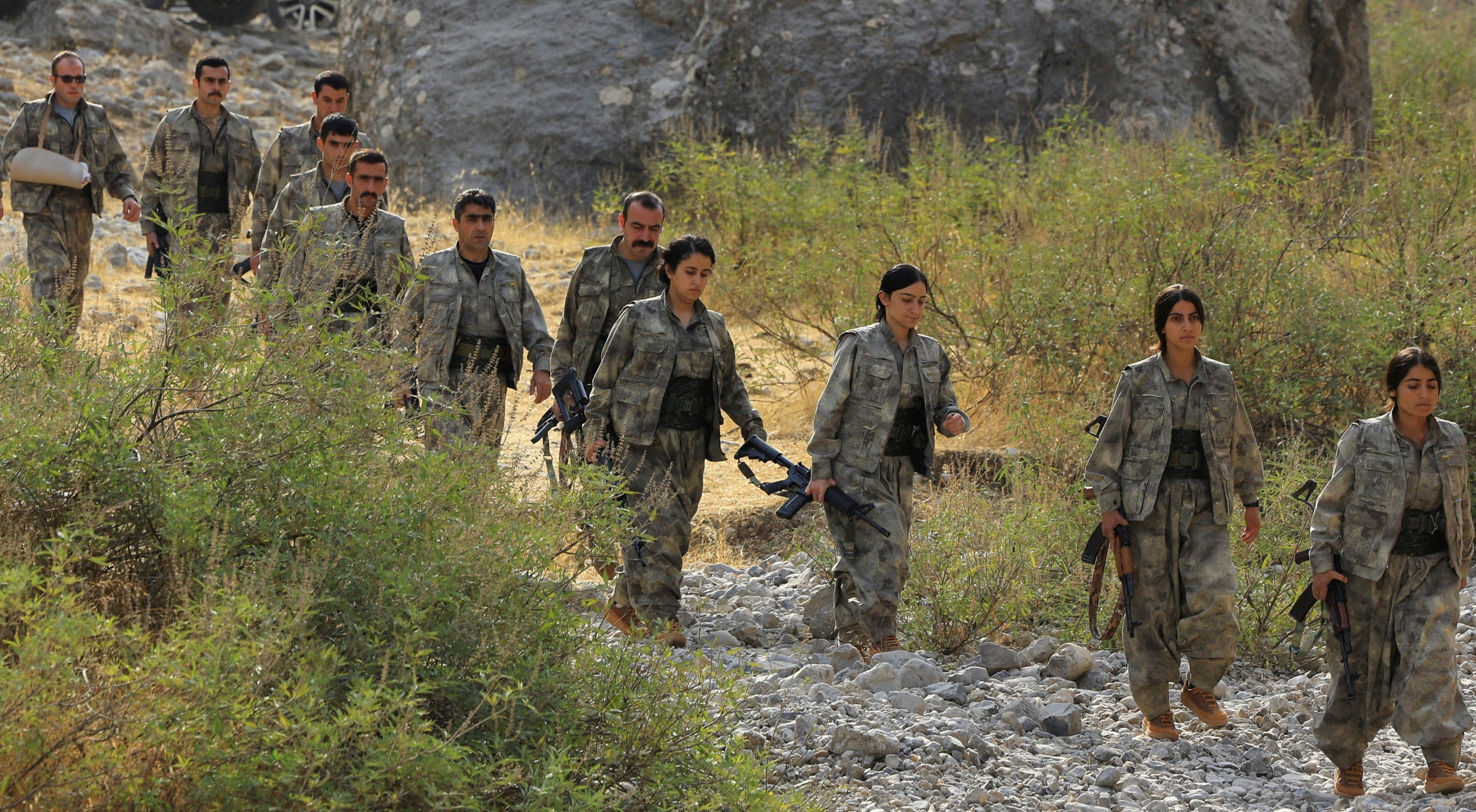
Türkiye’s ruling Justice and Development Party (AK Party) has submitted to Parliament a detailed report outlining a government-backed initiative aimed at ending decades of PKK terrorism, Turkish media reported Friday.
The report, prepared as part of the “terror-free Türkiye” initiative, was expanded from 53 to 60 pages after revisions requested by President Recep Tayyip Erdoğan. It does not prioritize any “right to hope” for Abdullah Öcalan, the imprisoned leader of the PKK terrorists, and stresses that the PKK’s Syrian offshoot, the YPG, must comply with a March 10 agreement to integrate into Syria’s central administration.
The initiative was launched by Nationalist Movement Party (MHP) leader Devlet Bahçeli, a key government ally, and centers on the complete disarmament of the PKK, which is designated as a terrorist organization by Türkiye, the United States and the European Union.
The PKK has carried out a violent campaign since 1984 that has killed tens of thousands of people, targeting civilians and security forces under the pretext of establishing a self-styled Kurdish state in southeastern Türkiye. Its attacks have also extended into neighboring Iraq and Syria.
Although disarming the PKK remains politically sensitive, opinion polls indicate broad public support. Critics argue the process undermines justice for victims of terrorism and frame it as a bargaining effort with the PKK. Turkish authorities reject those claims, insisting that no negotiations are taking place.
The report proposes legal steps within Türkiye’s criminal law system to facilitate the integration of former PKK members should the organization fully dissolve. It suggests that a special legal framework could be created for a terrorist organization that has laid down its arms.
Addressing the “right of hope” concept first raised by Bahçeli, the report clarifies that it does not imply the release of convicts and is limited to reviewing incarceration conditions. It further notes that those convicted of terrorism and sentenced to aggravated life imprisonment are not eligible for parole.
A separate section focuses on the YPG, which Ankara considers an extension of the PKK. The report states that the group must adhere to the March 10 agreement it signed with Syria’s post-Assad administration, which calls for its forces to be integrated into the national army.
The YPG controls a self-declared autonomous region in northeastern Syria and has expressed reluctance to fully implement the deal, instead floating decentralization proposals. Turkish officials see full integration as critical to reducing security threats along Türkiye’s southern border.
During the Syrian civil war, Türkiye carried out cross-border operations that pushed YPG forces away from its frontier, curbed attacks on border towns and helped opposition forces regain control of much of northern Syria.
In the post-Assad period, the YPG, which received U.S. backing under the banner of fighting the Daesh terrorist group, seeks to retain control of its so-called “Rojava autonomous administration,” while Damascus aims to rebuild a unified state.
Foreign Minister Hakan Fidan warned Thursday that patience is wearing thin, amid reports Ankara is considering an end-of-year deadline for YPG integration.
“They should comply with the deal,” Fidan told TRT World. “We don’t favor resorting to military force, but the patience of the relevant actors is running out.”
The report has also triggered a series of political consultations. AK Party and Peoples' Equality and Democracy Party (DEM Party) officials are set to meet this weekend, followed by talks Monday between a DEM Party delegation and the main opposition Republican People’s Party (CHP).
The CHP has submitted its own report to Parliament, drawing criticism from the MHP. Deputy Chairperson Feti Yıldız said it offered little beyond political rhetoric and stressed that such processes require responsibility.
Earlier, the DEM Party’s Imralı delegation met with Bahçeli, with both sides describing the talks as constructive and signaling that the initiative has entered a second phase focused on establishing a legal framework.