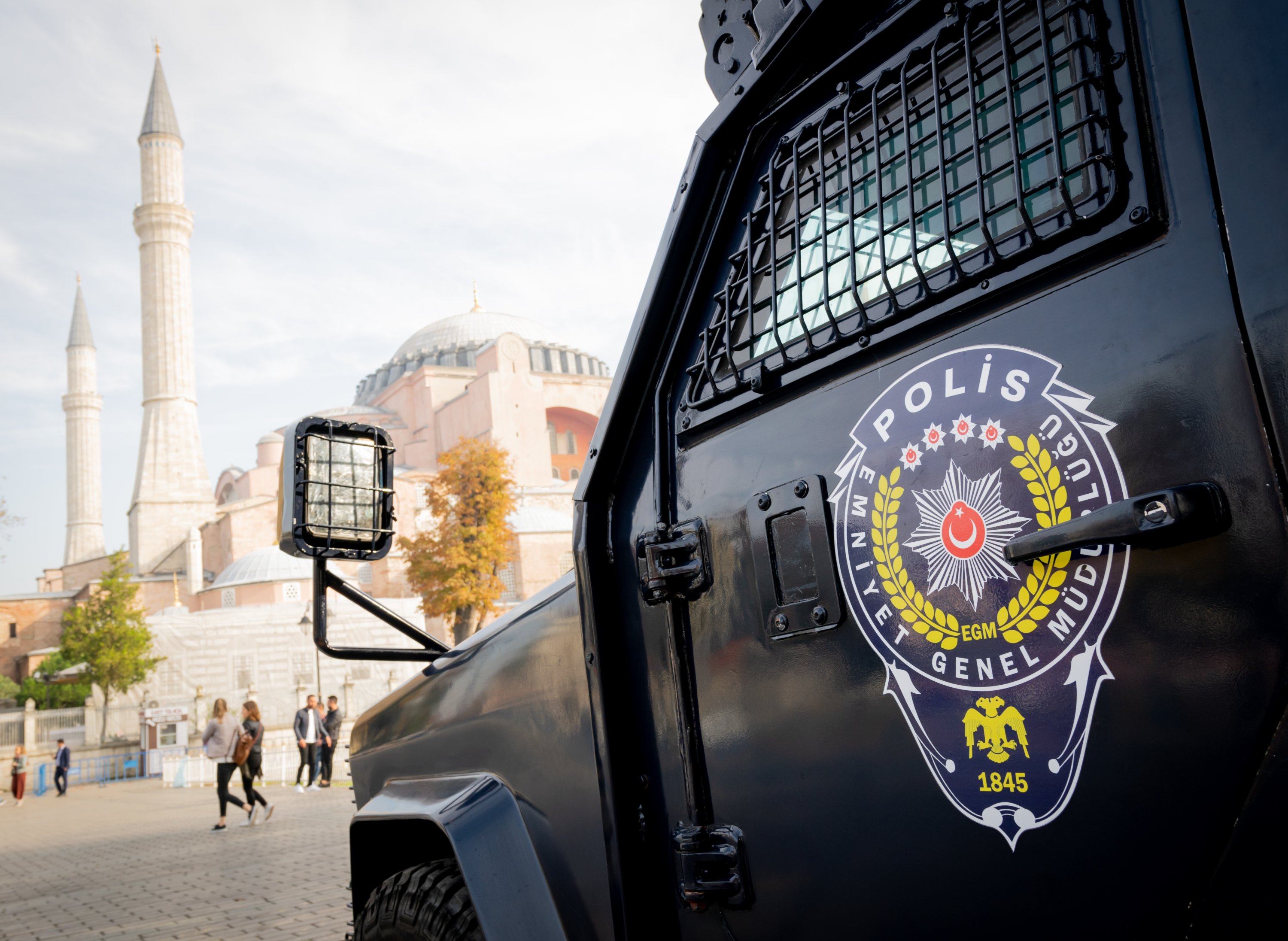
Turkish authorities arrested one suspect and imposed judicial supervision on 21 others following counterterrorism operations targeting the Revolutionary People’s Liberation Party/Front (DHKP-C) in western Türkiye, officials said on Monday.
The coordinated operations, led by the Izmir Chief Public Prosecutor’s Office, were carried out in Izmir and the neighboring province of Aydın. Police detained a total of 27 suspects on allegations of involvement in the armed terrorist organization and disseminating its propaganda.
According to prosecutors, four suspects were released after completing procedures at police headquarters. Of the remaining suspects referred to the courthouse, one was released following questioning by prosecutors, while another was formally arrested by a court. Judicial control measures including travel restrictions and mandatory reporting to authorities were imposed on 21 suspects. Five others were released without charges.
The suspects’ police procedures were completed before they were transferred to judicial authorities, the statement said.
The operations were conducted on Dec. 23 by teams from the Izmir Police Department’s counterterrorism and intelligence branches. Officers simultaneously raided multiple addresses identified as being linked to individuals suspected of operating on behalf of DHKP-C or engaging in propaganda activities for the group.
During searches of the premises, police seized a large quantity of digital materials and organizational publications, along with a hunting rifle, 12 shotgun cartridges and 26 handgun bullets, officials said. The seized materials are being examined as part of the ongoing investigation.
Authorities said the investigation remains open and additional legal action could follow based on the analysis of the evidence collected.
The DHKP-C is an offshoot of an extremist Marxist-Leninist movement that emerged in the 1970s and was formally established in the 1990s after splintering from a broader coalition of far-left organizations. The group has been responsible for a series of violent attacks over the decades, including the assassination of two politicians and several intelligence officials in 1980.
While the organization maintained a relatively low profile for years, it resurfaced with high-profile attacks in the past decade. In 2013, a DHKP-C militant carried out a suicide bombing at the U.S. Embassy compound in Ankara, killing a Turkish security guard. Two years later, DHKP-C members took a prosecutor hostage at an Istanbul courthouse and killed him during a standoff with police.
The group attempted a similar attack at the same courthouse last year, but police officers stationed outside the building thwarted the operation, killing two attackers before they could enter.
DHKP-C has also claimed responsibility for nonlethal rocket attacks in 2013 targeting the headquarters of the ruling Justice and Development Party, the Turkish National Police and a Justice Ministry building in Ankara.
The group is designated as a terrorist organization by Türkiye, the United States and the European Union, and advocates a far-left ideology.