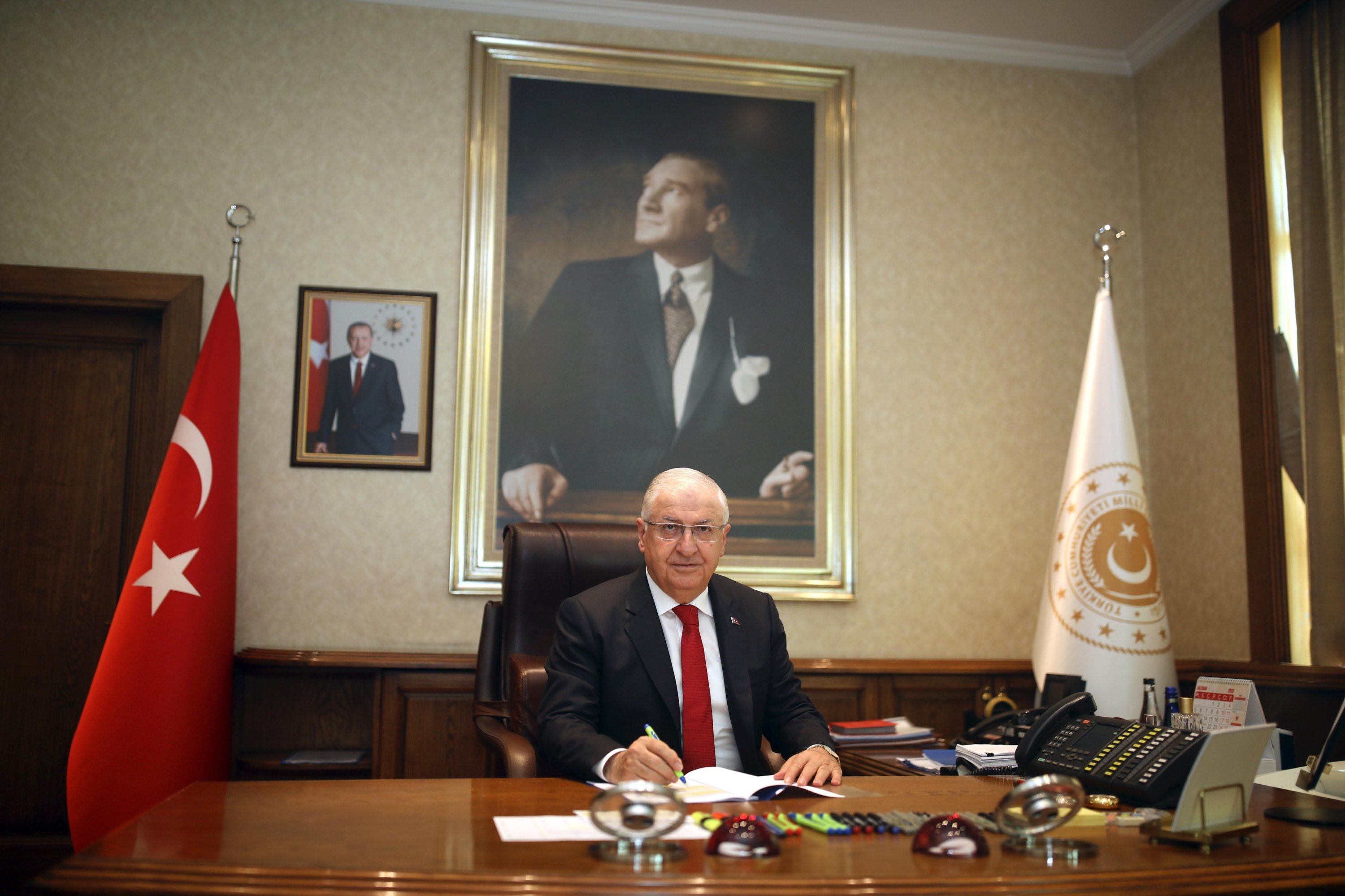
Türkiye will not allow the PKK terrorist group or its offshoots to continue their terrorist activities or maintain a foothold in the region, Defense Minister Yaşar Güler said Wednesday, as he said PKK/YPG-dominated SDF in Syria must fully comply with their obligations under the March 10 agreement.
Speaking on Wednesday, Güler said it is indispensable for the SDF to promptly and fully meet its commitments under the March 10 agreement, describing compliance as a prerequisite for the success of the process.
“From now on, it is an indispensable requirement for the success of the process that the SDF fulfills all of its obligations under the March 10 agreement without delay,” the defense chief said.
He also underlined that Türkiye will not tolerate continued activities or fait accompli attempts by terrorist organizations in the region, including the PKK, YPG and SDF.
“We will not allow any terrorist organization, particularly the PKK, YPG and SDF, to continue its activities in the region or create any fait accompli,” he said.
According to a statement shared by the Defense Ministry, Güler visited the Artillery and Missile School in the Polatlı district of Ankara on the final day of the year, accompanied by Chief of General Staff Selçuk Bayraktaroğlu, Navy Commander Ercüment Tatlıoğlu, Air Force Commander Ziya Cemal Kadıoğlu and Land Forces Commander Metin Tokel.
Güler carried out inspections and audits at the facility and addressed Turkish troops, while President Recep Tayyip Erdoğan also spoke to soldiers by phone, conveying his New Year’s greetings.
On March 10, the Syrian Presidency announced an agreement to integrate the YPG into state institutions, stressing the country’s territorial integrity and rejecting any separatist agenda.
Since the ouster of Bashar Assad last year after 24 years in power, the Syrian government has stepped up security measures. Assad fled to Russia in December, marking the end of the Baath Party’s rule since 1963. A transitional administration, headed by President Ahmad al-Sharaa, took office in January.
With U.S. support under the pretext of fighting Daesh, the YPG seized large swaths of northern and eastern Syria during the civil war, occupying key oil, water and agricultural resources. Turkish cross-border operations have since reduced their grip, but the group remains entrenched in several areas.
Under the March deal, the YPG would merge with the new Syrian national army. The agreement, which is expected to be implemented by the end of the year, would also bring all border crossings with Iraq and Türkiye, as well as airports and oil fields in the northeast, under the central government’s control. Detention centers housing thousands of Daesh members, now guarded by the YPG, would also come under government control.
However, the YPG’s insistence on entering the army as one bloc has stalled the process, and there have been scattered outbreaks of violence. The group has also been making statements calling for autonomy and thus endangering the territorial integrity of Syria.
Ankara views the YPG as an extension of the PKK terrorist group, which recently announced its dissolution and began a disarmament process that will end 40 years of bloodshed in Türkiye. The YPG insists it is not a party to the disarmament.
Türkiye, which developed cordial ties with the transitional government, has pledged to continue supporting Syria’s political unity and territorial integrity, providing training and technical support upon request from Damascus to strengthen its fight against terrorist groups. President Recep Tayyip Erdoğan has vowed that Türkiye “will not allow terrorists to drag Syria back into chaos and instability.”
Ankara is closely monitoring the integration of the YPG into the Syrian army. Turkish officials have said earlier that this development will be decisive for Syria’s long-term security architecture.
The YPG’s push for decentralization and symbolic changes, such as altering the country’s name, is widely seen by Türkiye as part of a broader effort to entrench separatist control in Syria’s north.