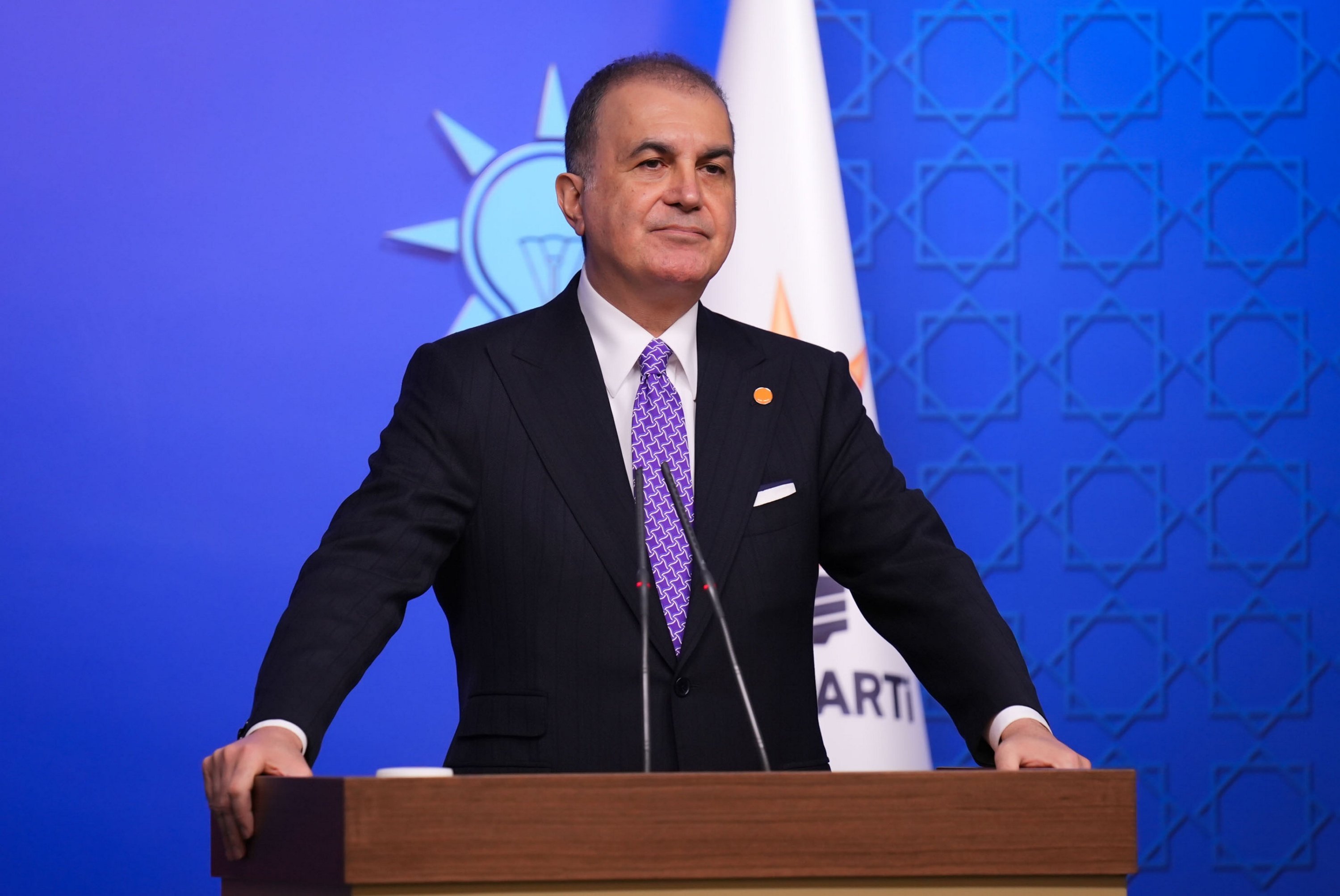
The ruling Justice and Development Party (AK Party) spokesman Ömer Çelik said Türkiye’s primary focus in its new national strategy is ensuring that the PKK and all of its extensions permanently lay down arms, stressing that the state has adopted a consistent, coordinated and nationally driven approach to achieving a terror-free future.
Speaking during a live broadcast on Habertürk TV, Çelik said Türkiye has entered “a new phase shaped by national will,” noting that past decades saw multiple attempts to end terrorism, but the current process is built on strengthened domestic unity and clear political determination.
“We have tried many processes at different times,” he said. “But after the call to strengthen the internal front and Mr. Bahçeli’s historic stance, Türkiye launched a new process through its own national lens. With the president’s directives to state institutions, this has become a state policy. I often repeat: ‘Let us not lose our focus.’ Our focus is the disarmament and dissolution of the PKK and all of its extensions.”
Çelik said that once weapons are laid down, the parliamentary commission established for this purpose will provide the legal guidance needed for subsequent steps. “The commission will serve as a compass for the legal framework once armed structures end,” he said.
He said a parliamentary commission was established to ensure national ownership of the process and to guide future steps once weapons are abandoned. “If someone calls for ending terrorism and takes the initiative for peace, it is natural for the commission to evaluate it,” Çelik said, referring to the commission’s visit to İmralı prison.
On the path toward disarmament, Çelik said any declaration by the PKK must be verified by state institutions such as the National Intelligence Organization (MIT) and the Turkish Armed Forces (TSK).
“Disbandment is not rhetoric. It is not about changing a name or signboard. It means ending its existence entirely,” he said, adding that the group’s armed structures operate across four main areas under the KCK umbrella.
Çelik also warned that several foreign actors, including some allies, have attempted to obstruct disarmament efforts. He cited the capture of a militant who had previously fought for Daesh, later joined the PKK and simultaneously worked with the intelligence service of a Western country.
“Türkiye sees everything clearly. We remain active on the ground,” he said.
Addressing the commission’s visit to Imralı Prison, Çelik noted that parliamentary committees regularly visit prisons. “Such meetings take place when needed. If someone calls for an end to terrorism and takes initiative, it is natural for the commission to assess it,” he said.
He added that President Erdoğan regularly prioritizes a “terror-free Türkiye” in internal party meetings, underscoring the government’s continued commitment to resolving the issue.
Çelik also said Türkiye launched a formal investigation into the armed guards accompanying Kurdistan Democratic Party (KDP) leader Masoud Barzani during his recent visit to Türkiye’s southeastern Şırnak province. Describing the scene as “unpleasant,” Çelik said that the Interior Ministry had already initiated a probe into the matter. “Barzani does not hold an active official position. Türkiye is fully capable of ensuring his security,” he said.