Doubling down on the terrorist group’s separatist ambitions, YPG leader Ferhat Abdi Şahin has renewed his calls for a decentralized Syria and the removal of “Arab” from the country’s official name.
In an interview with the Istanbul-based Yeni Yaşam newspaper, Şahin argued that the “Syrian Arab Republic” title, in use since 1961, “does not reflect the reality” of the multiethnic nation and should have the word “Arab” removed.
“Syria does not belong only to Arabs. Such radical changes must be made in Syria,” he said.
“(Syria) cannot be centralized and totalitarian like it was during the Baath regime. It must be a decentralized Syria. All provinces in Syria must be able to govern themselves through local governments,” Şahin claimed.
Just last week, Şahin told local media the YPG “defends the slogan ‘one army, one government, one state,’” echoing Damascus’ calls for full national unity.
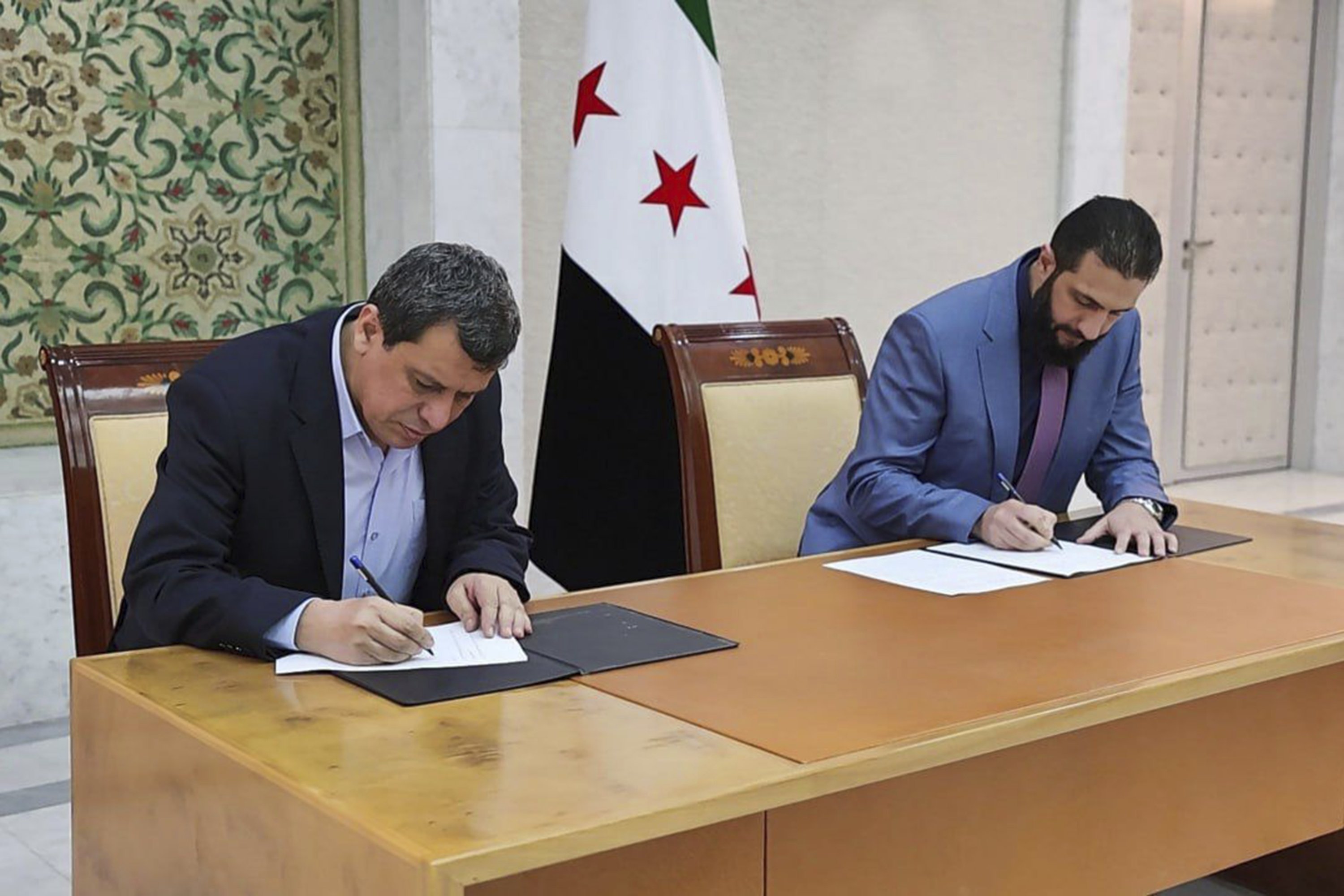
The shift in tone comes as the group continues to negotiate with Syria’s interim government over the implementation of a March 10 agreement recognizing Damascus’ sovereignty.
Under the deal, signed by Syrian interim President Ahmed al-Sharaa, the YPG pledged to recognize Damascus’ sovereignty and transfer airports, oil fields and border crossings under its control to the central government by the end of the year.
However, the agreement stops short of outlining how the YPG’s armed wing, the Syrian Democratic Forces (SDF), will be integrated into Syria’s army, a key sticking point. Damascus insists fighters join individually, while the YPG demands entry as a bloc, an issue that threatens to stall the process.
The YPG is the Syrian offshoot of the PKK, which has waged a decadeslong terror campaign in Türkiye and is designated a terrorist group by the United States, the European Union and Türkiye.
With U.S. support under the pretext of fighting Daesh, the YPG seized large swaths of northern and eastern Syria during the civil war. Turkish cross-border operations have since reduced its territorial grip, but it still holds key oil, water and agricultural resources in the northeast.
Washington has recently acknowledged the group’s ties to the PKK, with Tom Barrack, U.S. ambassador to Ankara and special representative for Syria, claiming the U.S. has no obligation to support “the formation of an independent state by the so-called SDF.”
Last month, Barrack also dismissed federalism as a workable model in Syria.
"The problem is that in all these countries (Iraq and Syria), federalism does not work and that a state within a state cannot be established,” Barrack said.
The U.S. envoy has urged Damascus to maintain “one homeland, one nation, one army, one government,” accusing the YPG of being reluctant to fully commit to national unity.
Şahin, however, claimed that a decentralized structure is essential for stability.
“(Barrack) understands that Syria cannot be governed by one person ... I hope he has concluded that a decentralized Syria is necessary,” Şahin said.
The YPG’s push for decentralization and symbolic changes, such as altering the country’s name, is widely seen by Türkiye as part of a broader effort to entrench separatist control in Syria’s north.
Ankara has long opposed the YPG’s presence along its border, warning it will “intervene” if the group does not comply with the March 10 deal and disarm as the PKK did.
As part of the landmark terror-free Türkiye initiative, the PKK announced in May it would disband and renounce armed conflict, ending four decades of violence.