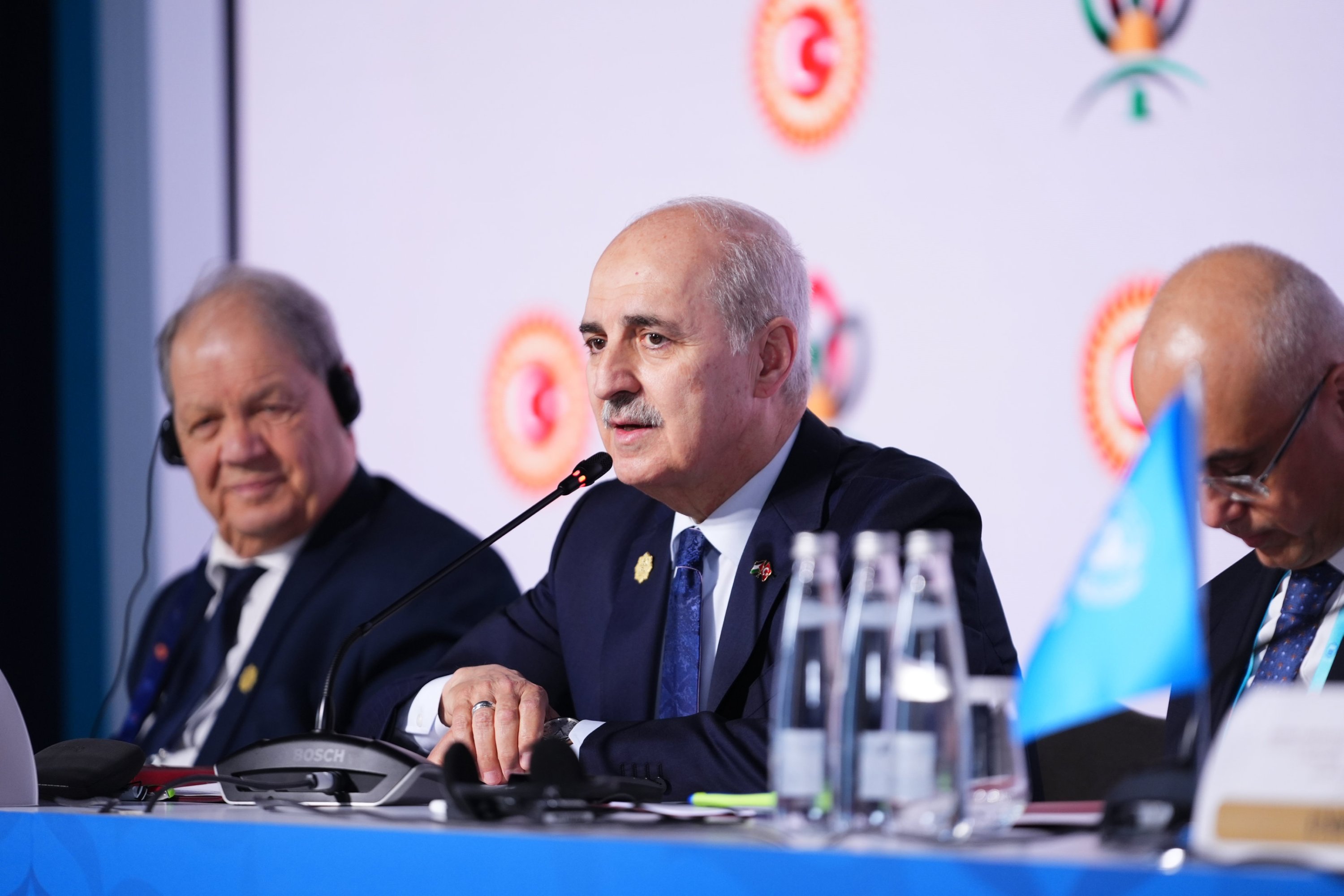
Parliament Speaker Numan Kurtulmuş said Wednesday that women disproportionately suffer the consequences of wars, migration and poverty, urging stronger female representation in political decision-making to build lasting peace.
Speaking at the Women Parliamentarians Forum held on the sidelines of the 152nd General Assembly of the Inter-Parliamentary Union in Istanbul, Kurtulmuş said that in nearly every conflict zone around the world, women and children pay the highest price.
“From Gaza to other regions facing instability, the heaviest toll of what has reached the level of crimes against humanity is being borne by women and children,” he said, describing the humanitarian situation in Gaza as particularly severe.
Kurtulmuş said the current global landscape goes beyond ordinary crises, pointing instead to a deeper breakdown in the international system. He argued that multilateral mechanisms are losing effectiveness, while international law is increasingly applied selectively and global institutions are facing a decline in credibility.
He added that large-scale migration, poverty and social deprivation around the world also disproportionately affect women, many of whom are displaced or left without adequate protection. According to Kurtulmuş, these conditions are exacerbated by shrinking diplomatic channels and increasing pressure on human dignity.
The Turkish official also pointed to the underrepresentation of women in peace negotiations and political platforms, warning that this gap undermines the sustainability of peace efforts.
“This is not only a matter of representation,” he said. “It is a structural deficiency that delays the socialization of peace and weakens its permanence.”
Kurtulmuş stressed that empowering women should not be seen as a narrow issue of equality but as a broader requirement for democratic quality, inclusive governance and sustainable development. He said women’s participation in legislative, oversight and budgeting processes is essential for building more resilient and balanced societies.
He noted that global challenges such as economic downturns, conflict, income inequality and limited access to education deepen existing disparities for women. Addressing these issues, he said, is critical not only for social justice but also for long-term stability.
Kurtulmuş also highlighted violence against women as one of the most pressing aspects of the issue, calling for comprehensive responses grounded in legal, moral and political responsibility.
“Determination in combating violence against women is one of the clearest indicators of a society’s level of civilization,” he said.
He added that Türkiye considers women’s empowerment, family protection and social cohesion as strategic priorities, outlining ongoing efforts across education, employment and social support systems.
Kurtulmuş concluded by emphasizing that, beyond providing opportunities, governments must ensure fair conditions where women’s knowledge, experience and leadership can fully contribute to public life.