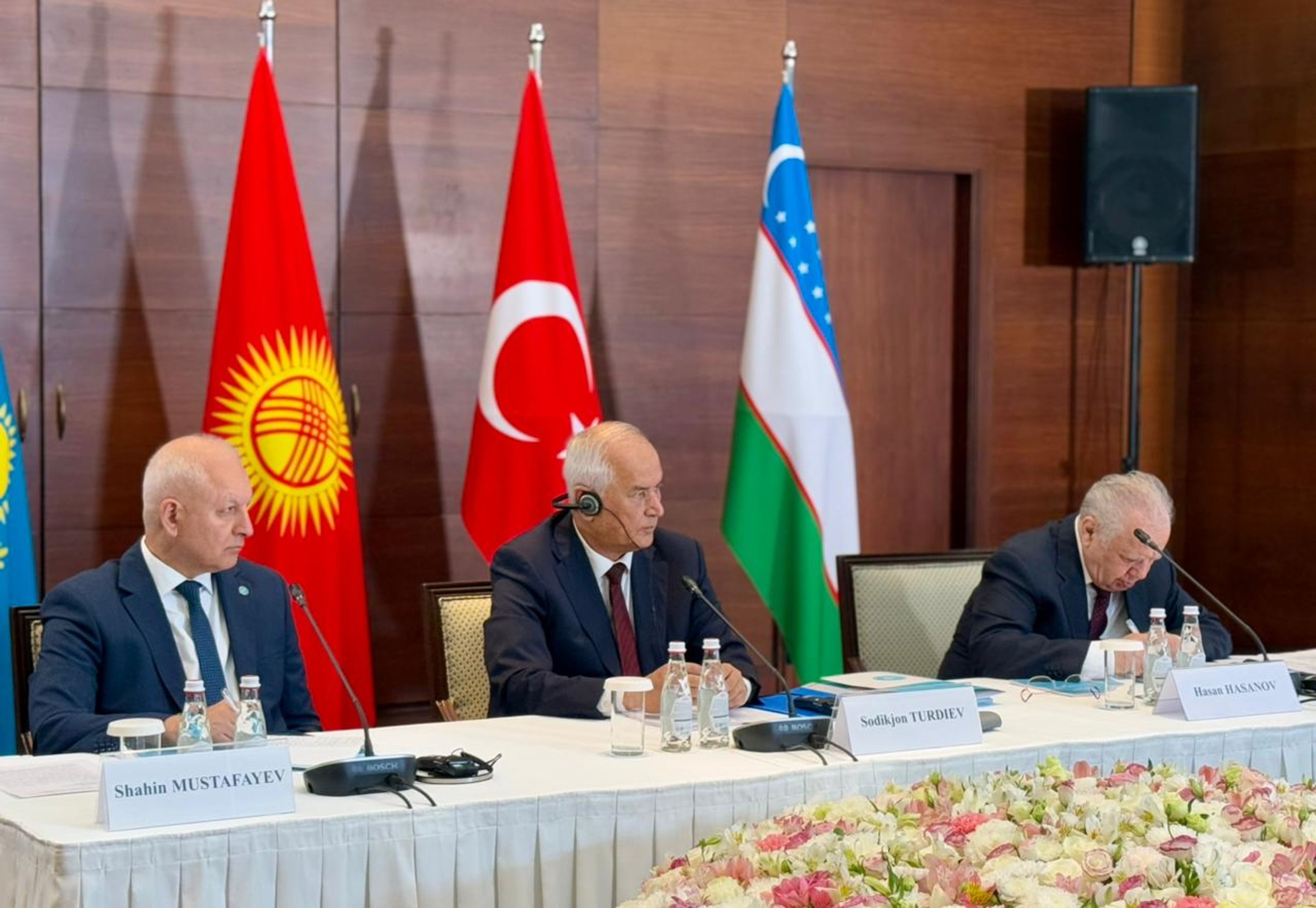
The Middle Corridor has become the backbone of the Turkic world's independence, security and prosperity, Organization of Turkic States (OTS) Council of Elders Chairman Binali Yıldırım said on Monday, calling for deeper economic integration, digital transformation and stronger cybersecurity cooperation among member states.
Speaking at the 19th Meeting of the OTS Council of Elders in Almaty, Yıldırım highlighted the strategic importance of transportation networks, artificial intelligence and digital technologies for the future of the Turkic world.
“The Middle Corridor is not merely a logistics route; it is the backbone of the Turkic world's independence, security and prosperity,” Yıldırım said.
Yıldırım praised Kazakhstan’s recent economic and political achievements, saying the country had emerged as one of Eurasia’s leading states under the leadership of President Kassym-Jomart Tokayev. He also commended Astana’s contributions to the development of the OTS and efforts to strengthen integration among Turkic nations.
Emphasizing the growing role of technology in shaping global competitiveness, Yıldırım said countries that successfully adapt to digital transformation, innovation, artificial intelligence and sustainable development would be better positioned in the future.
He recalled that leaders of Turkic states adopted key decisions on artificial intelligence and digital technologies during the informal OTS summit held in Turkistan in May 2025.
Economic cooperation remains one of the organization’s top priorities, Yıldırım said, noting that the combined economies of Turkic states rank among the world’s largest and represent a major source of energy supplies.
Trade among OTS members has risen significantly in recent years, reaching approximately $77 billion, or 7% of total trade among member states, up from around $48 billion and 3% just a few years ago. However, Yıldırım said the figure remained below the bloc’s potential.
“Our goal is to increase this share to 20% as soon as possible,” he said.
Yıldırım pointed to the Digital Economy Partnership Agreement signed at the Bishkek Summit, the activities of the Turkic Investment Fund and new financial mechanisms as key tools for boosting regional trade and investment.
He also urged member states to accelerate the ratification of transportation agreements signed at the Samarkand Summit and expand the use of digital customs and transit systems to reduce costs and improve efficiency along the Middle Corridor.
According to Yıldırım, the geopolitical shifts triggered by the Russia-Ukraine war have increased the strategic value of Central Asia, while initiatives such as the Zangezur Corridor and the China-Kyrgyzstan-Uzbekistan railway project could further strengthen the region’s role in global supply chains.
He said integrating artificial intelligence into transportation and customs systems would help create predictive logistics networks, automated risk management systems and smoother border procedures.
Addressing cybersecurity, Yıldırım said digital threats had become a matter of national security, noting that state borders are no longer limited to land, air and sea domains.
He voiced support for Kazakhstan’s proposal to establish a OTS Cybersecurity Council and called for the swift signing of a memorandum on cybersecurity cooperation among member states.
Yıldırım also reiterated support for the Turkish Republic of Northern Cyprus (TRNC), describing it as an inseparable part of the Turkic world and emphasizing the strategic importance of solidarity with the island’s Turkish Cypriot administration.