
Daily Sabah logo

Politics
Diplomacy Legislation War On Terror EU Affairs Elections News Analysis
TÜRKİYE
Istanbul Education Investigations Minorities Expat Corner Diaspora
World
Mid-East Europe Americas Asia Pacific Africa Syrian Crisis Islamophobia
Business
Automotive Economy Energy Finance Tourism Tech Defense Transportation News Analysis
Lifestyle
Health Environment Travel Food Fashion Science Religion History Feature Expat Corner
Arts
Cinema Music Events Portrait Reviews Performing Arts
Sports
Football Basketball Motorsports Tennis
Opinion
Columns Op-Ed Reader's Corner Editorial
PHOTO GALLERY
JOBS ABOUT US RSS PRIVACY CONTACT US
© Turkuvaz Haberleşme ve Yayıncılık 2026

Daily Sabah - Latest & Breaking News from Turkey | Istanbul

  • Politics
    • Diplomacy
    • Legislation
    • War On Terror
    • EU Affairs
    • Elections
    • News Analysis
  • TÜRKİYE
    • Istanbul
    • Education
    • Investigations
    • Minorities
    • Expat Corner
    • Diaspora
  • World
    • Mid-East
    • Europe
    • Americas
    • Asia Pacific
    • Africa
    • Syrian Crisis
    • Islamophobia
  • Business
    • Automotive
    • Economy
    • Energy
    • Finance
    • Tourism
    • Tech
    • Defense
    • Transportation
    • News Analysis
  • Lifestyle
    • Health
    • Environment
    • Travel
    • Food
    • Fashion
    • Science
    • Religion
    • History
    • Feature
    • Expat Corner
  • Arts
    • Cinema
    • Music
    • Events
    • Portrait
    • Reviews
    • Performing Arts
  • Sports
    • Football
    • Basketball
    • Motorsports
    • Tennis
  • Gallery
  • Opinion
    • Columns
    • Op-Ed
    • Reader's Corner
    • Editorial
  • TV

Scientists to study huge underwater continent Zealandia

by

SYDNEY Jul 28, 2017 - 12:00 am GMT+3
No Image
by Jul 28, 2017 12:00 am

Scientists are attempting to unlock the secrets of the "lost continent" of Zealandia, setting sail Friday to investigate the huge underwater landmass east of Australia that has never been properly studied.

Zealandia, which is mostly submerged beneath the South Pacific, was once part of the Gondwana super-continent but broke away some 75 million years ago.

In a paper published in the Geological Society of America's Journal GSA Today in February, researchers made the case that it should be considered a new continent.

They said it was a distinct geological entity that met all the criteria applied to Earth's other continents, including elevation above the surrounding area, distinctive geology, a well-defined area and a crust much thicker than that found on the ocean floor.
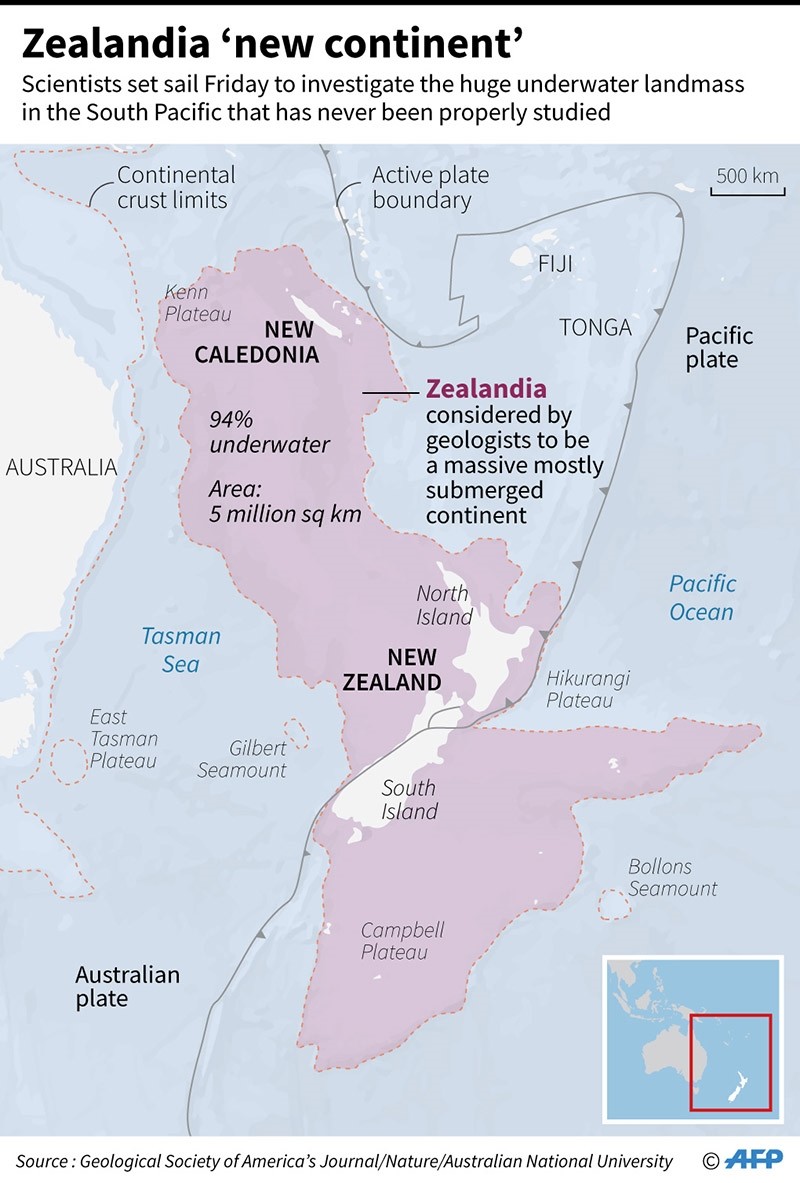
Covering five million square kilometers (1.9 million square miles), it extends from south of New Zealand northward to New Caledonia and west to the Kenn Plateau off Australia's east.

Drill ship Joides Resolution will recover sediments and rocks lying deep beneath the sea bed in a bid to discover how the region has behaved over the past tens of millions of years.

The recovered cores will be studied onboard, allowing scientists to address issues such as oceanographic history, extreme climates, sub-seafloor life, plate tectonics and earthquake-generating zones.

Co-chief scientist Jerry Dickens, from Rice University in Texas, said the region was a vital area to study changes in global climate.

"As Australia moved north and the Tasman Sea developed, global circulation patterns changed and water depths over Zealandia fluctuated," he said.

"This region was important in influencing global changes."

Australian National University's Neville Exon said the two-month expedition, setting out Friday from Townsville, would also help better understand major changes in the global tectonic configuration that started about 53 million years ago.

This is around the time that the Pacific "Ring of Fire", a hotspot for volcanoes and earthquakes, came into existence.

In the February scientific paper, lead author Nick Mortimer said experts had been gathering data to make the case for Zealandia being a continent for more than 20 years.

But their efforts had been frustrated because most of it was hidden beneath the waves.

"If we could pull the plug on the oceans, it would be clear to everybody that we have mountain chains and a big, high-standing continent," he said at the time.


  • shortlink copied
  • Last Update: Jul 28, 2017 8:33 am
    KEYWORDS
    life
    The Daily Sabah Newsletter
    Keep up to date with what’s happening in Turkey, it’s region and the world.
    You can unsubscribe at any time. By signing up you are agreeing to our Terms of Use and Privacy Policy. This site is protected by reCAPTCHA and the Google Privacy Policy and Terms of Service apply.
    No Image
    Turkish capital Ankara's seagulls
    PHOTOGALLERY
    • POLITICS
    • Diplomacy
    • Legislation
    • War On Terror
    • EU Affairs
    • News Analysis
    • TÜRKİYE
    • Istanbul
    • Education
    • Investigations
    • Minorities
    • Diaspora
    • World
    • Mid-East
    • Europe
    • Americas
    • Asia Pacific
    • Africa
    • Syrian Crisis
    • İslamophobia
    • Business
    • Automotive
    • Economy
    • Energy
    • Finance
    • Tourism
    • Tech
    • Defense
    • Transportation
    • News Analysis
    • Lifestyle
    • Health
    • Environment
    • Travel
    • Food
    • Fashion
    • Science
    • Religion
    • History
    • Feature
    • Expat Corner
    • Arts
    • Cinema
    • Music
    • Events
    • Portrait
    • Performing Arts
    • Reviews
    • Sports
    • Football
    • Basketball
    • Motorsports
    • Tennis
    • Opinion
    • Columns
    • Op-Ed
    • Reader's Corner
    • Editorial
    • Photo gallery
    • DS TV
    • Jobs
    • privacy
    • about us
    • contact us
    • RSS
    © Turkuvaz Haberleşme ve Yayıncılık 2021