Daily Sabah logo

Politics
Diplomacy Legislation War On Terror EU Affairs Elections News Analysis
TÜRKİYE
Istanbul Education Investigations Minorities Expat Corner Diaspora
World
Mid-East Europe Americas Asia Pacific Africa Syrian Crisis Islamophobia
Business
Automotive Economy Energy Finance Tourism Tech Defense Transportation News Analysis
Lifestyle
Health Environment Travel Food Fashion Science Religion History Feature Expat Corner
Arts
Cinema Music Events Portrait Reviews Performing Arts
Sports
Football Basketball Motorsports Tennis
Opinion
Columns Op-Ed Reader's Corner Editorial
PHOTO GALLERY
JOBS ABOUT US RSS PRIVACY CONTACT US
© Turkuvaz Haberleşme ve Yayıncılık 2025

Daily Sabah - Latest & Breaking News from Turkey | Istanbul

  • Politics
    • Diplomacy
    • Legislation
    • War On Terror
    • EU Affairs
    • Elections
    • News Analysis
  • TÜRKİYE
    • Istanbul
    • Education
    • Investigations
    • Minorities
    • Expat Corner
    • Diaspora
  • World
    • Mid-East
    • Europe
    • Americas
    • Asia Pacific
    • Africa
    • Syrian Crisis
    • Islamophobia
  • Business
    • Automotive
    • Economy
    • Energy
    • Finance
    • Tourism
    • Tech
    • Defense
    • Transportation
    • News Analysis
  • Lifestyle
    • Health
    • Environment
    • Travel
    • Food
    • Fashion
    • Science
    • Religion
    • History
    • Feature
    • Expat Corner
  • Arts
    • Cinema
    • Music
    • Events
    • Portrait
    • Reviews
    • Performing Arts
  • Sports
    • Football
    • Basketball
    • Motorsports
    • Tennis
  • Gallery
  • Opinion
    • Columns
    • Op-Ed
    • Reader's Corner
    • Editorial
  • TV

NASA’s asteroid chaser zips by Earth for gravity boost

by

MIAMI Sep 22, 2017 - 12:00 am GMT+3
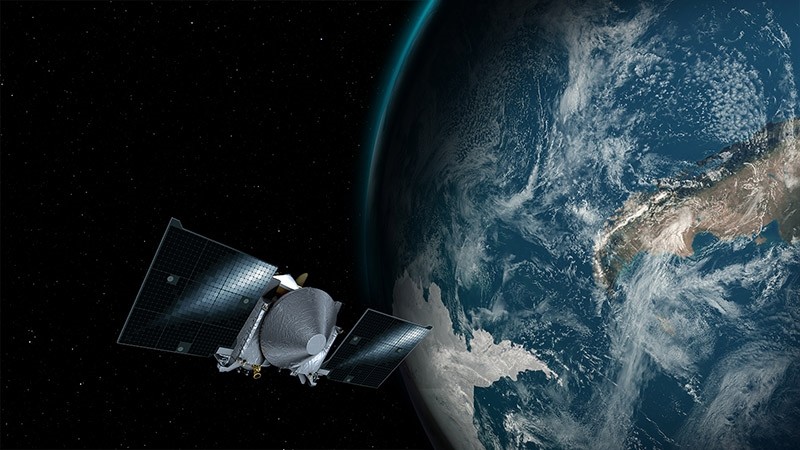
This illustration provided by NASA depicts the OSIRIS-REx spacecraft and the Earth. On Friday, Sept. 22, 2017, the probe will use Earth's gravity to put it on a path toward the asteroid Bennu. (AP Photo)
by Sep 22, 2017 12:00 am

An unmanned NASA spacecraft traveling to a distant asteroid veered toward Earth on Friday for a gravitational slingshot maneuver that will better aim it toward the Sun-orbiting space rock, Bennu, the US space agency said.

The gravity-boost took place about halfway through the journey of the spacecraft, known as OSIRIS-REx (Origins, Spectral Interpretation, Resource Identification, and Security - Regolith Explorer).

"Catch you on the flip side!" said the NASA Twitter account for OSIRIS-REx, just before it made its closest approach to Earth at 12:52 pm (1652 GMT).

The mission launched last year from Cape Canaveral, Florida. Its goal is to collect a sample from Bennu in 2018, and return it to Earth for further study in 2023.

Dante Lauretta, OSIRIS-REx principal investigator at the University of Arizona, Tucson, described the gravity-assist as "a clever way to move the spacecraft onto Bennu's orbital plane using Earth's own gravity instead of expending fuel."

The spacecraft zipped over Antarctica at a distance of 11,000 miles (17,000 kilometers), using Earth's gravity to shift its trajectory so it can eventually meet up with Bennu.

Bennu is a primitive, carbon-rich asteroid, the kind of cosmic body that may have delivered life-giving materials to Earth billions of years ago.

The asteroid's orbit around the Sun is tilted six degrees in comparison to Earth's.

NASA cautioned that during the gravity assist, OSIRIS-REx must swing through a region of space that contains Earth-orbiting satellites.

"NASA has taken precautions to ensure the safety of the spacecraft as it flies through this area," said the space agency.

"The mission's flight dynamics team designed a small maneuver that, if necessary, could be executed a day before closest approach to change the spacecraft's trajectory slightly to avoid a potential collision between OSIRIS-REx and a satellite."

OSIRIS-REx was expected to lose communications with Earth for about an hour during the flyby.

"The spacecraft will be too low relative to the southern horizon to be in view with either the Deep Space tracking station at Canberra, Australia, or Goldstone, California," explained Mike Moreau, the flight dynamics system lead at NASA's Goddard Spaceflight Center.

An update on its progress is expected later Friday.

  • shortlink copied
  • Last Update: Sep 22, 2017 10:25 pm
    KEYWORDS
    life
    The Daily Sabah Newsletter
    Keep up to date with what’s happening in Turkey, it’s region and the world.
    You can unsubscribe at any time. By signing up you are agreeing to our Terms of Use and Privacy Policy. This site is protected by reCAPTCHA and the Google Privacy Policy and Terms of Service apply.
    No Image
    Fahreddin Pasha archive reveals treasure of holy lands images
    PHOTOGALLERY
    • POLITICS
    • Diplomacy
    • Legislation
    • War On Terror
    • EU Affairs
    • News Analysis
    • TÜRKİYE
    • Istanbul
    • Education
    • Investigations
    • Minorities
    • Diaspora
    • World
    • Mid-East
    • Europe
    • Americas
    • Asia Pacific
    • Africa
    • Syrian Crisis
    • İslamophobia
    • Business
    • Automotive
    • Economy
    • Energy
    • Finance
    • Tourism
    • Tech
    • Defense
    • Transportation
    • News Analysis
    • Lifestyle
    • Health
    • Environment
    • Travel
    • Food
    • Fashion
    • Science
    • Religion
    • History
    • Feature
    • Expat Corner
    • Arts
    • Cinema
    • Music
    • Events
    • Portrait
    • Performing Arts
    • Reviews
    • Sports
    • Football
    • Basketball
    • Motorsports
    • Tennis
    • Opinion
    • Columns
    • Op-Ed
    • Reader's Corner
    • Editorial
    • Photo gallery
    • DS TV
    • Jobs
    • privacy
    • about us
    • contact us
    • RSS
    © Turkuvaz Haberleşme ve Yayıncılık 2021