Daily Sabah logo

Politics
Diplomacy Legislation War On Terror EU Affairs Elections News Analysis
TÜRKİYE
Istanbul Education Investigations Minorities Expat Corner Diaspora
World
Mid-East Europe Americas Asia Pacific Africa Syrian Crisis Islamophobia
Business
Automotive Economy Energy Finance Tourism Tech Defense Transportation News Analysis
Lifestyle
Health Environment Travel Food Fashion Science Religion History Feature Expat Corner
Arts
Cinema Music Events Portrait Reviews Performing Arts
Sports
Football Basketball Motorsports Tennis
Opinion
Columns Op-Ed Reader's Corner Editorial
PHOTO GALLERY
JOBS ABOUT US RSS PRIVACY CONTACT US
© Turkuvaz Haberleşme ve Yayıncılık 2025

Daily Sabah - Latest & Breaking News from Turkey | Istanbul

  • Politics
    • Diplomacy
    • Legislation
    • War On Terror
    • EU Affairs
    • Elections
    • News Analysis
  • TÜRKİYE
    • Istanbul
    • Education
    • Investigations
    • Minorities
    • Expat Corner
    • Diaspora
  • World
    • Mid-East
    • Europe
    • Americas
    • Asia Pacific
    • Africa
    • Syrian Crisis
    • Islamophobia
  • Business
    • Automotive
    • Economy
    • Energy
    • Finance
    • Tourism
    • Tech
    • Defense
    • Transportation
    • News Analysis
  • Lifestyle
    • Health
    • Environment
    • Travel
    • Food
    • Fashion
    • Science
    • Religion
    • History
    • Feature
    • Expat Corner
  • Arts
    • Cinema
    • Music
    • Events
    • Portrait
    • Reviews
    • Performing Arts
  • Sports
    • Football
    • Basketball
    • Motorsports
    • Tennis
  • Gallery
  • Opinion
    • Columns
    • Op-Ed
    • Reader's Corner
    • Editorial
  • TV

Astronomers detect ancient cosmic pileup of 14 galaxies at the farthest edge of the universe

by

WASHINGTON Apr 26, 2018 - 12:00 am GMT+3
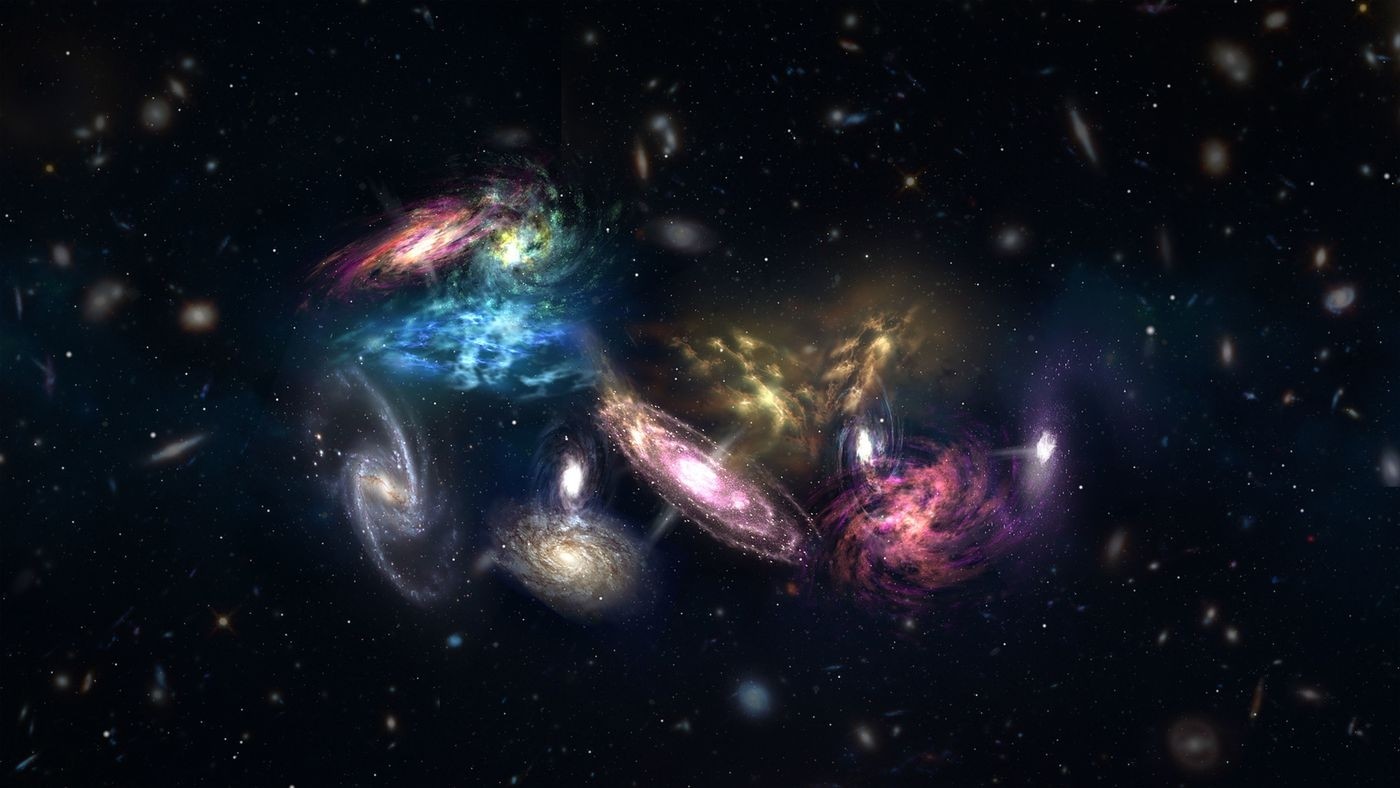
An artist's impression of the 14 galaxies detected by ALMA telescopess as they appear in the very early, very distant universe, in this illustration released April 25, 2018. (REUTERS Photo)
by Apr 26, 2018 12:00 am

Astronomers have detected the early stages of a colossal cosmic collision, observing a pile-up of 14 galaxies 90 percent of the way across the observable universe in a discovery that upends assumptions about the early history of the cosmos.

Researchers said on Wednesday the galactic mega-merger observed 12.4 billion light-years away from Earth occurred 1.4 billion years after the Big Bang that gave rise to the universe. Astronomers call the object a galactic protocluster, a precursor to the type of enormous galaxy clusters that are the largest-known objects in today's universe.

It marked the first time scientists observed the birth of a galaxy cluster, with at least 14 galaxies crammed into an area only about four times the size of our average-sized Milky Way galaxy.

A protocluster as massive as the one observed here, designated as SPT2349-56, should not have existed at that time, according to current notions of the early universe. Scientists had figured this could not happen until several billion of years later.

"We were staggered by the implications," said astrophysicist Scott Chapman of Dalhousie University in Canada. "Yes, conventional wisdom was that clusters take a lot longer to build up and assemble. SPT2349 shows us it happened much more rapidly and explosively than simulations or theory suggested."

Galaxy clusters can have thousands of galaxies bound together by gravity that can boast total masses a quadrillion larger than our sun, with immense amounts of the enigmatic material called dark matter, gigantic black holes and super-heated gas.

SPT2349's mass is about 10 trillion times larger than our sun.

The galaxies within SPT2349 were producing stars at a remarkable clip, up to a thousand times the Milky Way's star-formation rate.

In observing objects so distant, astronomers are peering back in history because of the length of time light takes to travel. SPT2349-56 appeared when the universe was about a tenth its current age.

"This result is exciting as it allows us to directly study the formation of a massive galaxy cluster in the early universe," Yale University astronomer Tim Miller added.

The researchers, who studied SPT2349 using land-based telescopes in Chile, said it most likely has snowballed in size since 12.4 billion years ago and could be among the largest structures in the cosmos today.

The research was published in the journal Nature.

About the author
Research Associate at Center for Islam and Global Affairs (CIGA) at Istanbul Sabahattin Zaim University
  • shortlink copied
  • Last Update: Apr 26, 2018 12:27 pm
    KEYWORDS
    life
    The Daily Sabah Newsletter
    Keep up to date with what’s happening in Turkey, it’s region and the world.
    You can unsubscribe at any time. By signing up you are agreeing to our Terms of Use and Privacy Policy. This site is protected by reCAPTCHA and the Google Privacy Policy and Terms of Service apply.
    No Image
    La Palma volcano, migrants & sunken statues: Weekly top photos
    PHOTOGALLERY
    • POLITICS
    • Diplomacy
    • Legislation
    • War On Terror
    • EU Affairs
    • News Analysis
    • TÜRKİYE
    • Istanbul
    • Education
    • Investigations
    • Minorities
    • Diaspora
    • World
    • Mid-East
    • Europe
    • Americas
    • Asia Pacific
    • Africa
    • Syrian Crisis
    • İslamophobia
    • Business
    • Automotive
    • Economy
    • Energy
    • Finance
    • Tourism
    • Tech
    • Defense
    • Transportation
    • News Analysis
    • Lifestyle
    • Health
    • Environment
    • Travel
    • Food
    • Fashion
    • Science
    • Religion
    • History
    • Feature
    • Expat Corner
    • Arts
    • Cinema
    • Music
    • Events
    • Portrait
    • Performing Arts
    • Reviews
    • Sports
    • Football
    • Basketball
    • Motorsports
    • Tennis
    • Opinion
    • Columns
    • Op-Ed
    • Reader's Corner
    • Editorial
    • Photo gallery
    • DS TV
    • Jobs
    • privacy
    • about us
    • contact us
    • RSS
    © Turkuvaz Haberleşme ve Yayıncılık 2021