Daily Sabah logo

Politics
Diplomacy Legislation War On Terror EU Affairs Elections News Analysis
TÜRKİYE
Istanbul Education Investigations Minorities Expat Corner Diaspora
World
Mid-East Europe Americas Asia Pacific Africa Syrian Crisis Islamophobia
Business
Automotive Economy Energy Finance Tourism Tech Defense Transportation News Analysis
Lifestyle
Health Environment Travel Food Fashion Science Religion History Feature Expat Corner
Arts
Cinema Music Events Portrait Reviews Performing Arts
Sports
Football Basketball Motorsports Tennis
Opinion
Columns Op-Ed Reader's Corner Editorial
PHOTO GALLERY
JOBS ABOUT US RSS PRIVACY CONTACT US
© Turkuvaz Haberleşme ve Yayıncılık 2025

Daily Sabah - Latest & Breaking News from Turkey | Istanbul

  • Politics
    • Diplomacy
    • Legislation
    • War On Terror
    • EU Affairs
    • Elections
    • News Analysis
  • TÜRKİYE
    • Istanbul
    • Education
    • Investigations
    • Minorities
    • Expat Corner
    • Diaspora
  • World
    • Mid-East
    • Europe
    • Americas
    • Asia Pacific
    • Africa
    • Syrian Crisis
    • Islamophobia
  • Business
    • Automotive
    • Economy
    • Energy
    • Finance
    • Tourism
    • Tech
    • Defense
    • Transportation
    • News Analysis
  • Lifestyle
    • Health
    • Environment
    • Travel
    • Food
    • Fashion
    • Science
    • Religion
    • History
    • Feature
    • Expat Corner
  • Arts
    • Cinema
    • Music
    • Events
    • Portrait
    • Reviews
    • Performing Arts
  • Sports
    • Football
    • Basketball
    • Motorsports
    • Tennis
  • Gallery
  • Opinion
    • Columns
    • Op-Ed
    • Reader's Corner
    • Editorial
  • TV

NASA's New Horizons probe to photograph most distant world ever studied

by

TAMPA, FL. Dec 28, 2018 - 12:00 am GMT+3
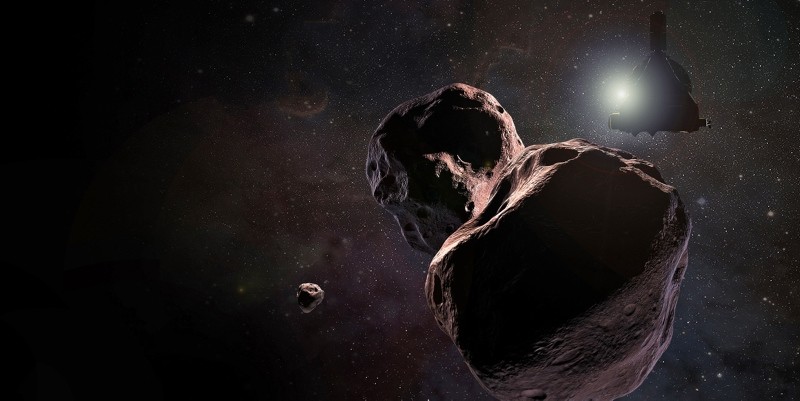
A handout photo by NASA shows an artist's impression of NASA's New Horizons spacecraft encountering 2014 MU69, nicknamed Ultima Thule, a Kuiper Belt object that orbits the Sun 1 billion miles (1.6 billion kilometers) beyond Pluto. (EPA Photo)
by Dec 28, 2018 12:00 am

NASA's unmanned New Horizons spacecraft is closing in on its historic New Year's flyby target, the most distant world ever studied, a frozen relic of the solar system some four billion miles (6.4 billion kilometers) away.

The cosmic object, known as Ultima Thule, is about the size of the U.S. capital, Washington, and orbits in the dark and frigid Kuiper Belt about a billion miles beyond the dwarf planet, Pluto.

The spacecraft's closest approach to this primitive space rock comes January 1 at 12:33 a.m. ET (0533 GMT).

Until then, what it looks like, and what it is made of, remain a mystery.

"This is a time capsule that is going to take us back four and a half billion years to the birth of the solar system," said Alan Stern, the principal investigator on the project at the Southwest Research Institute, during a press briefing Friday.

A camera on board the New Horizons spacecraft is currently zooming in on Ultima Thule, so scientists can get a better sense of its shape and configuration — whether it is one object or several.

"We've never been to a type of object like this before," said Kelsi Singer, New Horizons co-investigator at the Southwest Research Institute.

About a day prior, "we will start to see what the actual shape of the object is," she said.

The spacecraft entered "encounter mode" on December 26, and is "very healthy," added Stern.

Communicating with a spacecraft that is so far away takes six hours and eight minutes each way — or about 12 hours and 15 minutes round trip.

New Horizons' eagerly awaited "phone home" command, indicating if it survived the close pass — at a distance of just 2,200 miles (3,500 kilometers) — is expected January 1 at 10:29 a.m. (1529 GMT).

Until then, the New Horizons spacecraft continues speeding through space at 32,000 miles (51,500 kilometers) per hour, traveling almost a million miles per day.

And NASA scientists are eagerly awaiting the first images.

"Because this is a flyby mission, we only have one chance to get it right," said Alice Bowman, mission's operations manager for New Horizons.

The spacecraft, which launched in 2006, captured stunning images of Pluto when it flew by the dwarf planet in 2015.


  • shortlink copied
  • Last Update: Dec 28, 2018 11:03 pm
    KEYWORDS
    life
    The Daily Sabah Newsletter
    Keep up to date with what’s happening in Turkey, it’s region and the world.
    You can unsubscribe at any time. By signing up you are agreeing to our Terms of Use and Privacy Policy. This site is protected by reCAPTCHA and the Google Privacy Policy and Terms of Service apply.
    No Image
    In photos: Protesters block highway construction in German forest
    PHOTOGALLERY
    • POLITICS
    • Diplomacy
    • Legislation
    • War On Terror
    • EU Affairs
    • News Analysis
    • TÜRKİYE
    • Istanbul
    • Education
    • Investigations
    • Minorities
    • Diaspora
    • World
    • Mid-East
    • Europe
    • Americas
    • Asia Pacific
    • Africa
    • Syrian Crisis
    • İslamophobia
    • Business
    • Automotive
    • Economy
    • Energy
    • Finance
    • Tourism
    • Tech
    • Defense
    • Transportation
    • News Analysis
    • Lifestyle
    • Health
    • Environment
    • Travel
    • Food
    • Fashion
    • Science
    • Religion
    • History
    • Feature
    • Expat Corner
    • Arts
    • Cinema
    • Music
    • Events
    • Portrait
    • Performing Arts
    • Reviews
    • Sports
    • Football
    • Basketball
    • Motorsports
    • Tennis
    • Opinion
    • Columns
    • Op-Ed
    • Reader's Corner
    • Editorial
    • Photo gallery
    • DS TV
    • Jobs
    • privacy
    • about us
    • contact us
    • RSS
    © Turkuvaz Haberleşme ve Yayıncılık 2021