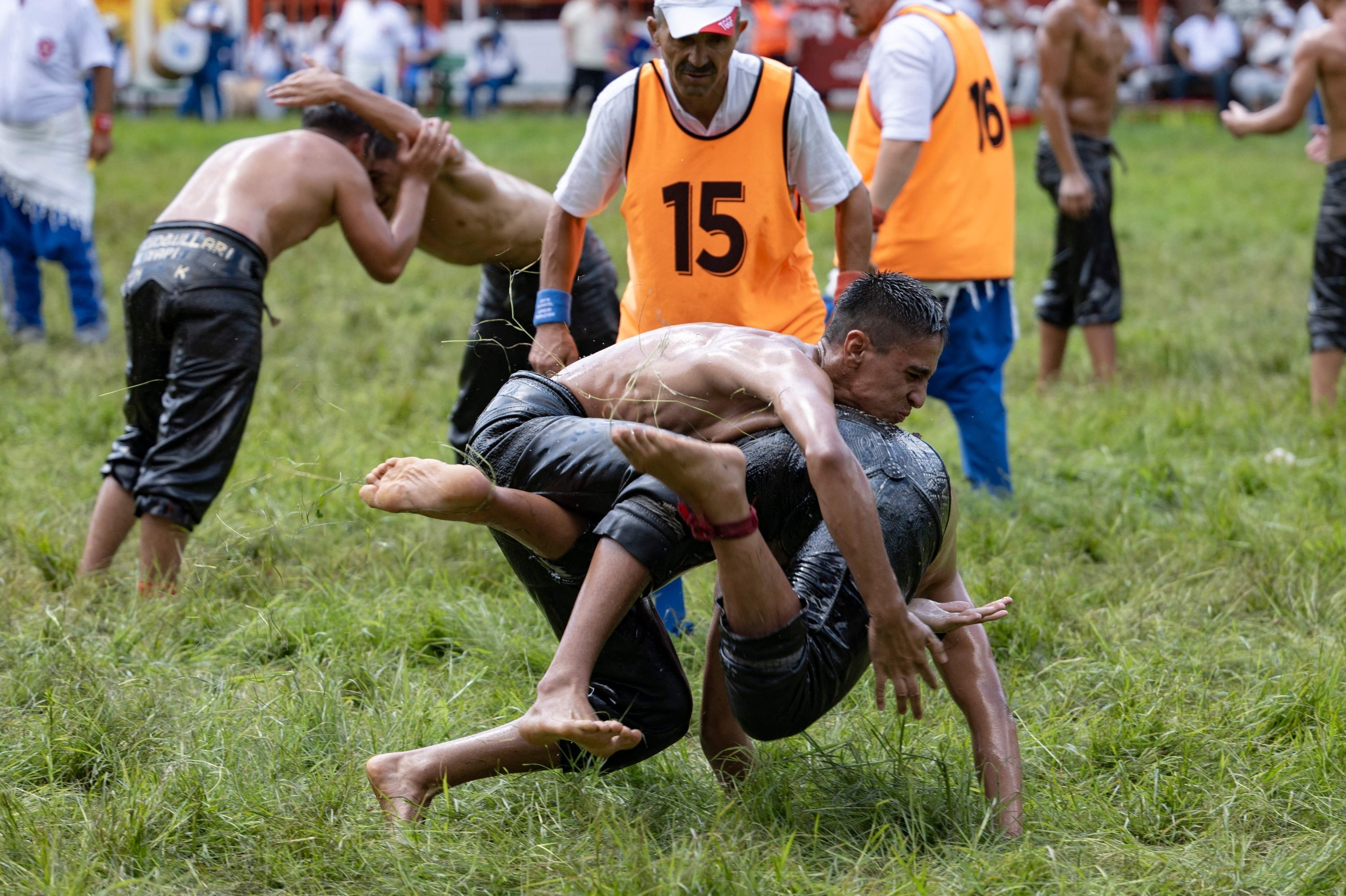
Where brute strength meets grace, and tradition is soaked in olive oil, the heartbeat of Turkish wrestling returns to Edirne’s historic Sarayiçi field for the 664th time.
From July 4 to 6, the Kırkpınar Oil Wrestling Festival, a centuries-old celebration of valor, discipline, and national identity, will once again unfold beneath the summer sun.
With 826 wrestlers, including 40 top-tier başpehlivans, vying for glory, the event is more than a sporting spectacle – it’s a living legend.
The origins of Kırkpınar trace back to the tale of Ali and Selim, two Ottoman scouts who wrestled each other to death on the road to Rumelia’s conquest.
Their match ended without a winner, but the memory of their fight sparked a tradition that has rumbled through the ages.
What began as an act of tribute has endured for over six centuries, carrying its rituals and codes intact into modern-day Türkiye.
Wrestlers enter the arena in kispet, hand-stitched leather trousers made from water buffalo or calfskin, greased with olive oil to ensure a slippery contest of grip and grit.
Before combat begins, wrestlers perform the peşrev – a ceremonial warm-up dance, part exercise, part prayer, that stirs the crowd and centers the soul.
With every step, they honor not only the opponent before them but the generations who came before.
The goal is simple, yet brutal: pin your opponent’s back to the earth.
Victory can also come by lifting the rival off the ground and carrying him three steps, or tearing the kispet completely.
Techniques bear poetic names like kaz kanadı (goose wing), kolbastı (arm tie), and kurt kapanı (wolf trap), passed down through time like heirlooms.
Kırkpınar is ruled not just by strength but by ethics and respect.
Any form of insult toward referees, opponents, or the audience is met with immediate penalties. Match-fixing, stalling, or violating conduct rules taints the wrestler’s standing – at Kırkpınar, honor counts just as much as power.
Though the administrative role of the ağa – once the patron who hosted the event and rewarded champions – is now largely symbolic, his presence remains essential.
Today, much of his duties are carried out by the Edirne Municipality and the Turkish Wrestling Federation.
The coveted title of Başpehlivan of Türkiye awaits the champion of the top category.
If a wrestler clinches this title three years in a row, he earns permanent possession of the golden belt, the sport’s highest honor.
Around the ring, cazgırs chant poetic introductions, invoking hometowns and legacies as they summon wrestlers to the mat with ritualistic flair.
Their rhymes are backed by the davul and zurna, traditional drum and reed instruments that pace the rhythm of the match and echo the pulse of the crowd.
Invitations to Kırkpınar are still symbolically delivered via the red-bottomed candle, a relic from times when summoning a wrestler was as sacred as the match itself.
With each hold, chant, and drop of sweat, Kırkpınar continues to embody the spirit of Turkish wrestling – fierce but fair, ancient yet alive.