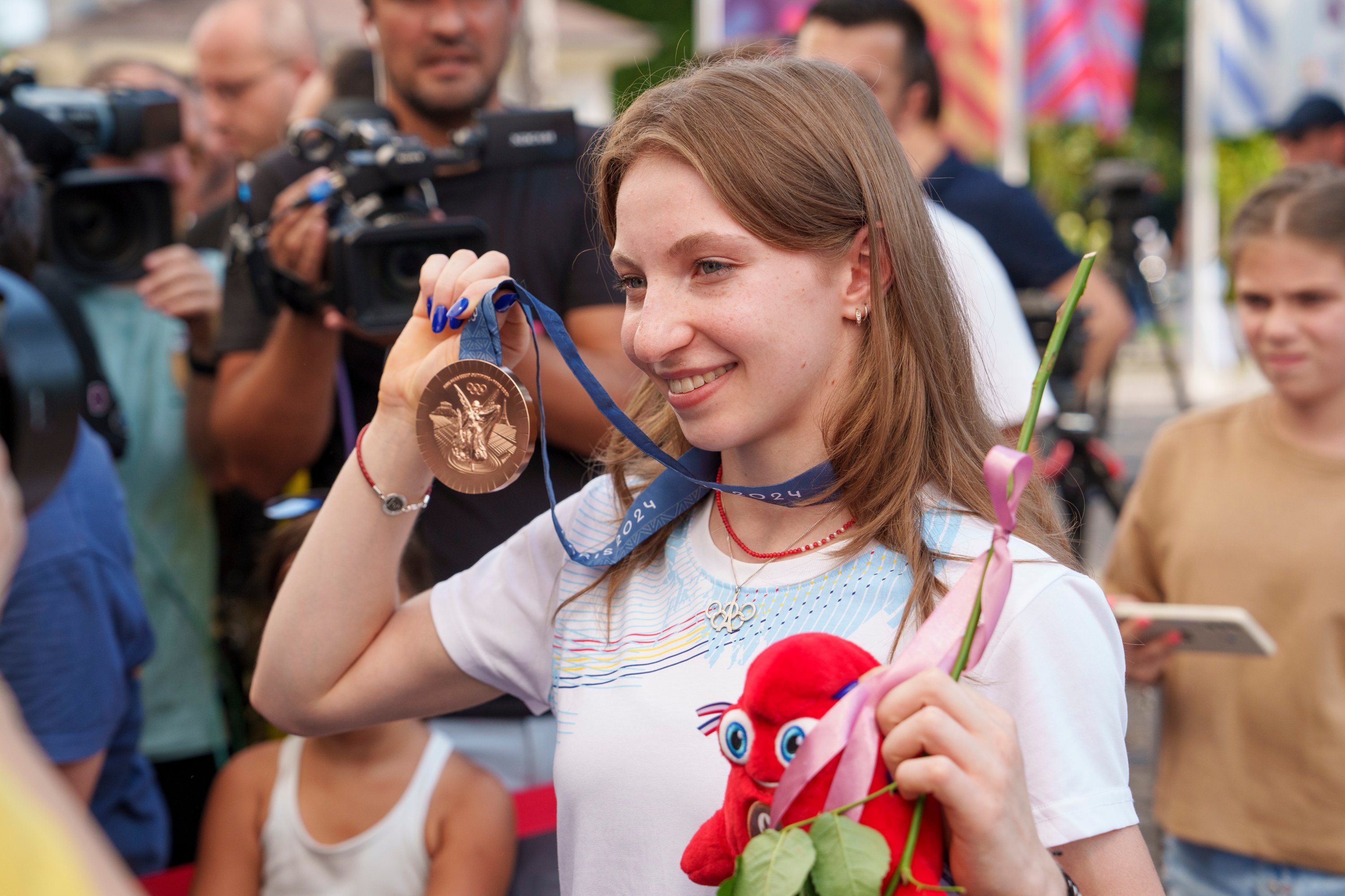
Romanian gymnast Ana Maria Barbosu has received a two-year suspension for three whereabouts failures under anti-doping rules, a decision that could sideline the 2024 Olympic bronze medalist until just two months before the 2028 Los Angeles Games.
The Court of Arbitration for Sport's Anti-Doping Division (CAS ADD) announced the ruling Wednesday, confirming that the 20-year-old committed three violations between September and December 2025 by failing to meet requirements for providing her whereabouts information.
The suspension took effect May 5, 2026, the date her provisional suspension began, meaning Barbosu will be eligible to return to competition in May 2028, provided the decision is not overturned on appeal.
Barbosu challenged the proposed sanction and requested a hearing before CAS ADD. However, a single judge ruled that all three whereabouts failures had been correctly recorded, upholding the anti-doping rule violation.
The case does not involve a positive test for prohibited substances. Instead, it centers on requirements designed to ensure that athletes remain available for unannounced out-of-competition drug testing.
Athletes included in registered testing pools must regularly submit accurate information about their locations, including a designated 60-minute period each day during which they must be available for testing.
Under anti-doping regulations, any combination of three missed tests and/or failures to provide accurate whereabouts information within a rolling 12-month period constitutes an anti-doping rule violation. The standard penalty is a two-year suspension, although the sanction can vary depending on the athlete's degree of fault.
World Gymnastics, which administers its anti-doping programme through the International Testing Agency (ITA), initiated disciplinary proceedings after the three failures were recorded.
In its statement Wednesday, CAS ADD said it had partially upheld World Gymnastics' request for disciplinary proceedings against Barbosu.
While confirming the two-year suspension, the tribunal ruled that her competitive results obtained since December 2025 would not be disqualified. The decision allows her results during that period to stand, including those from her collegiate gymnastics career in the United States.
The ITA acknowledged the ruling.
Barbosu has competed for Stanford University, where she enjoyed a successful freshman season in 2026. She earned All-American honors on balance beam and in the all-around, collected Atlantic Coast Conference titles and finished as a co-runner-up on beam at the NCAA Championships.
Following the announcement of her provisional suspension, Barbosu maintained that the case did not involve prohibited substances and pointed to the challenges of adjusting to college life in the United States.
Her suspension leaves her with a narrow window to regain competitive form before the Los Angeles Olympics. Assuming the ruling stands, she could return to international competition in May 2028, shortly before the Games begin.
Meanwhile, the disciplinary case is separate from the ongoing legal dispute over the floor exercise bronze medal she won at the 2024 Paris Olympics, which remains unresolved.
Barbosu's Olympic medal has been at the center of a prolonged dispute involving American gymnast Jordan Chiles.
During the floor exercise final in Paris, Barbosu initially received a score of 13.700, placing her third and putting her in position to claim bronze. Chiles, who competed last, was initially awarded 13.666 and finished fifth.
However, an inquiry submitted by Chiles' coach resulted in a 0.1 increase to her difficulty score, lifting her total to 13.766 and moving her into third place. Barbosu dropped to fourth, while fellow Romanian Sabrina Maneca-Voinea finished fifth.
Romania subsequently challenged the result at CAS, arguing that Chiles' inquiry had been submitted after the one-minute deadline.
CAS ruled in Romania's favor, finding that the inquiry had been filed outside the permitted time. The original scores were reinstated, restoring Barbosu to third place, and the International Olympic Committee subsequently reallocated the bronze medal to the Romanian gymnast.
The dispute took another turn in February 2026 when Switzerland's Federal Supreme Court referred the case back to CAS for reconsideration following the submission of new evidence.
CAS said Wednesday that the parties involved in the separate proceedings had requested that no hearing take place before May 2027 as written submissions continue.
The case involves Barbosu, the Romanian Gymnastics Federation, Chiles, USA Gymnastics, World Gymnastics and gymnastics official Donatella Sacchi.
Although both proceedings involve Barbosu, the whereabouts suspension has no bearing on the ownership of the Paris Olympic medal.