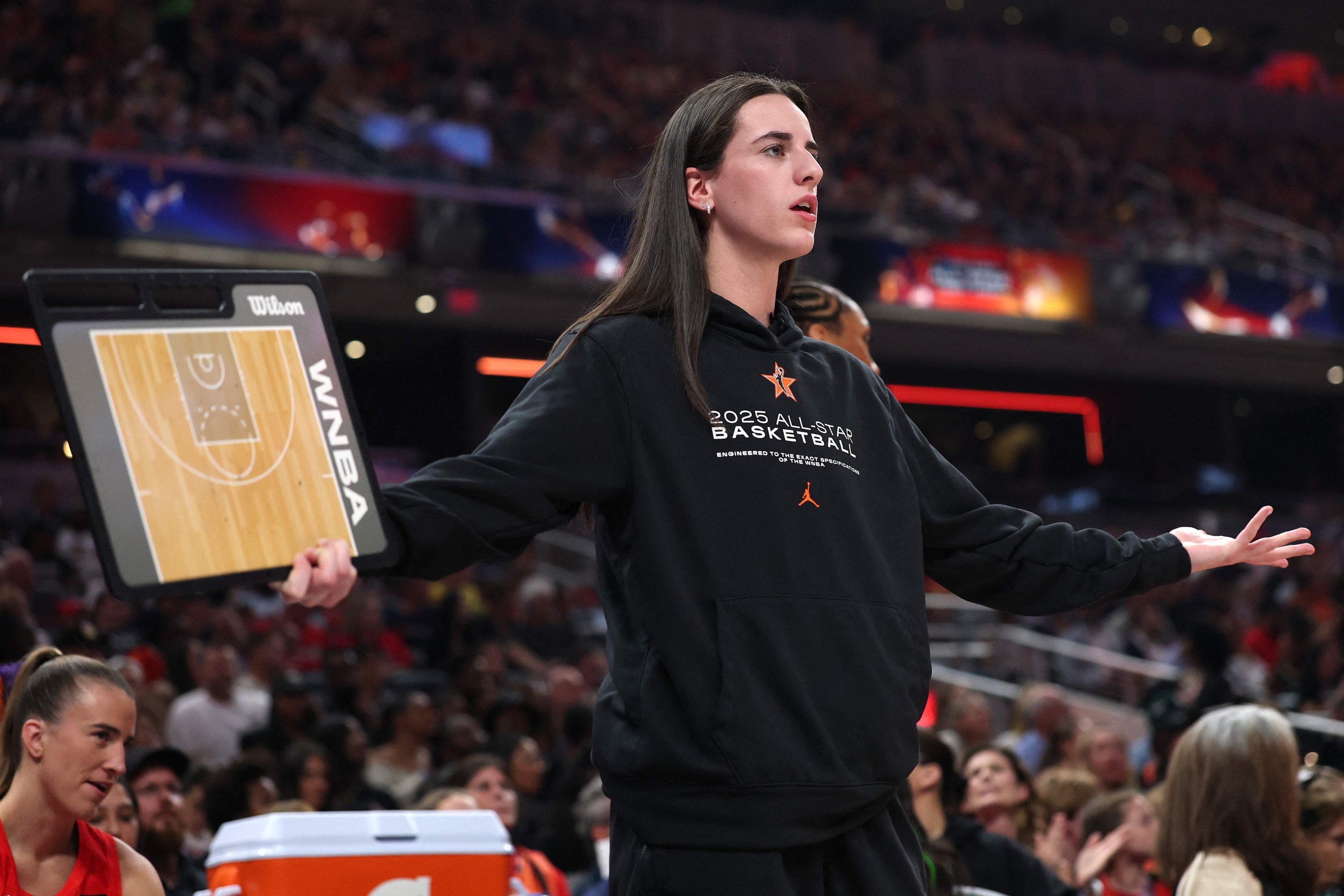
A 55-year-old Texas man pleaded guilty Monday to stalking and harassing Indiana Fever star Caitlin Clark and was sentenced to 18 months in prison.
Michael Lewis, of Denton, Texas, received credit for time already served at the Marion County Adult Detention Center following his arrest in January at an Indianapolis hotel. He was charged with felony stalking after allegedly sending Clark repeated threats and sexually explicit messages via social media.
As part of his sentence, Lewis is prohibited from contacting Clark, attending Indiana Fever or Pacers games, and using the internet for the duration of his incarceration.
The judge also recommended mental health treatment for Lewis, who was repeatedly disruptive during Monday’s hearing, including saying of Clark, “I want her to be safe,” and making apocalyptic statements, according to WTHR.
Lewis was arrested in January after authorities tracked the IP address of his threatening messages on X to a hotel in Indianapolis. He continued to message Clark even after police visited the hotel to address earlier threats, which he either denied or referred to as part of “an imaginary relationship.”
Clark told police she did not know Lewis and had not responded to any of his messages.
“This resolution ensures that the defendant is held accountable for his threatening actions, the fear he instilled, and the disruption he caused,” Marion County Prosecutor Ryan Mears said Monday. “He will now spend the next two and a half years in the Department of Correction, and the victim will be able to have peace of mind while focusing on what matters to her.”
Clark also reportedly told police she feared for her safety to the extent that she altered her appearance in public.
“I hope everyone focuses on the fact that there is a real victim here – a 22-year-old young person who has been profoundly impacted by what is being said,” Mears said. “I think, hopefully, this case also highlights that there are consequences to what people say online. You have someone who is now looking over their shoulder, because they don’t know, ‘Is this going to be the day or the time when I have to encounter this person in person?’”