A serious injury can change far more than a person's physical health. It can interrupt careers, reshape identities and force difficult emotional adjustments.
For elite athletes, whose lives revolve around competition, the road back often extends well beyond rehabilitation, offering lessons that apply to anyone recovering from surgery, chronic pain or other life-altering setbacks.
Sports psychologists and former athletes say recovery is rarely a straight path. Physical healing, emotional acceptance and mental resilience often develop at different speeds, making patience just as important as determination.
"Sport has always mimicked life," said Ross Flowers, a Los Angeles-based sports and performance psychologist. "You're going to face challenges, bumps and bruises. You've got to figure out how to work through them and overcome them."
Fans regularly watch elite competitors perform through broken bones, torn ligaments and dislocated joints at the Olympics, the World Cup and other major events. Comeback stories, such as Olympic alpine skier Lindsey Vonn's return after multiple serious injuries, have become defining moments in sports.
But experts warn there is a critical difference between pushing physical limits and ignoring warning signs.
"There’s a relationship with pain and understanding how to work with it, if it’s possible to work through it, but also knowing how to back off of it so the pain does not persist," Flowers said.
He explained that the greatest physical gains often come from training to the edge of fatigue without crossing into injury.
Former collegiate runner Liv Paxton understands that lesson firsthand.
The 28-year-old battled shin splints, quadriceps strains and eventually a partially torn Achilles tendon while competing for Winthrop University and the College of William & Mary. Determined to keep running, she continued training until her body forced her to stop.
Following Achilles surgery, Paxton said she approaches training very differently.
"I'm so much better about keeping in tune with my body," she said. "That's not something that I focused on in college. I just thought I was bulletproof."
She now places far greater importance on recovery, nutrition and quality sleep, recognizing them as essential parts of performance rather than afterthoughts.
Not every injury happens in an instant. Some begin as minor aches before gradually becoming debilitating conditions that force people to step away from sports, work or everyday activities.
Whether it is a football player sidelined after a collision or someone unable to stand because of chronic back pain, the challenge is often the same: accepting that pushing through pain is no longer the answer.
"So how do we know our limits? It is definitely an experimental process," said Lisa Miller, a health and sport sciences professor with the American Public University System.
She noted that many athletes still struggle to recognize when enough is enough, but increasing awareness of mental health has encouraged more competitors to prioritize their long-term well-being over immediate success.
"We have also had more examples of athletes saying this is too much, I'm burned out and I'm going to take a break, bringing much more attention to the psychological side of sport," Miller said.
Honest self-assessment, she added, is essential because returning to competition does not always mean returning to previous levels of performance.
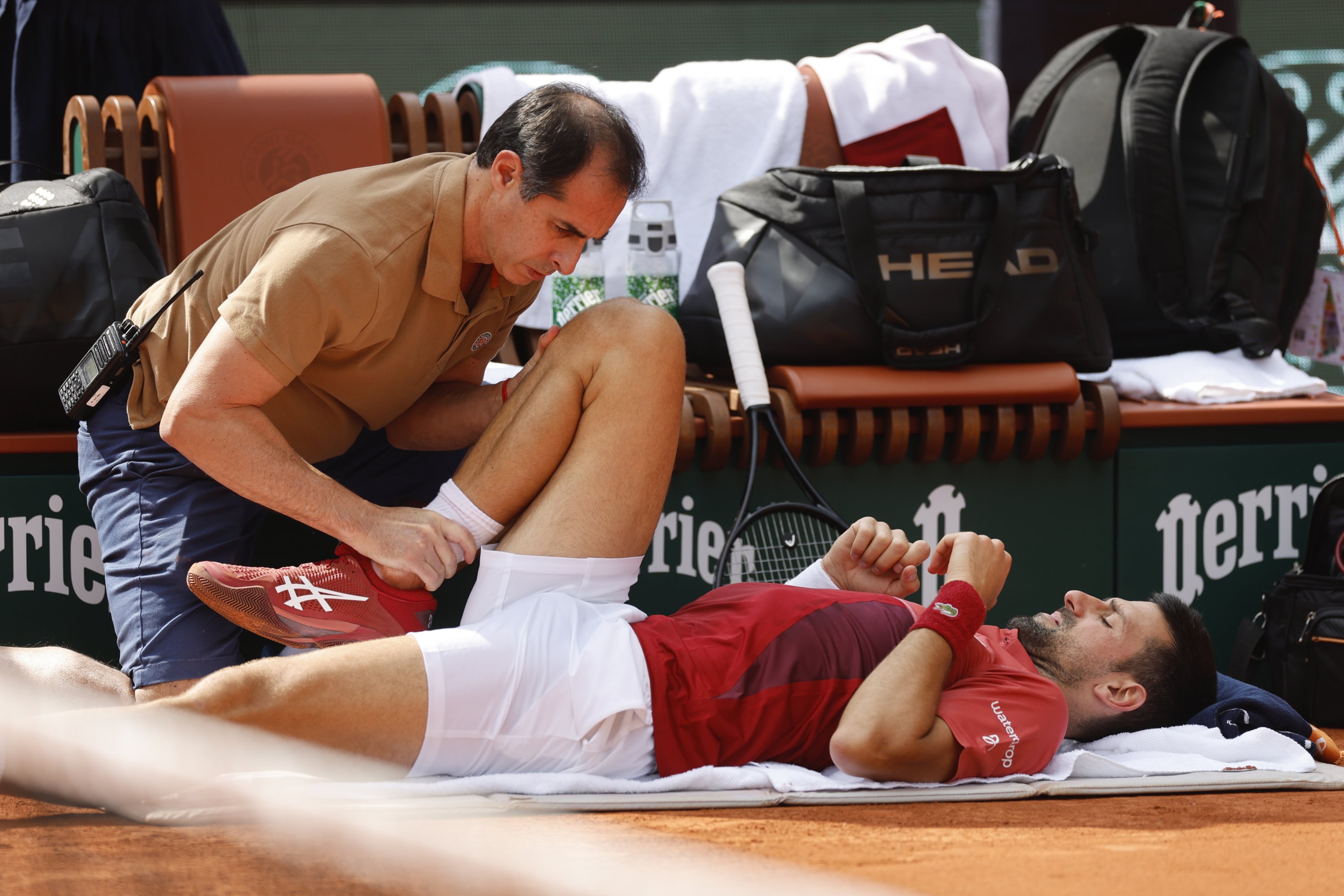
Tennis legend Serena Williams recently illustrated that reality by withdrawing from a doubles match because of a knee injury, choosing long-term health over immediate competition.
Physical recovery often marks only one stage of healing.
Even after successful surgeries or fully healed bones, athletes may have to grieve the loss of the careers, routines or identities they once knew.
Former Baltimore Ravens cornerback Kyle Arrington experienced that challenge after a severe concussion abruptly ended his football career.
For nearly two decades, every hour of his life had revolved around the sport.
"I knew what everything looked like year in and year out for the past almost 20 years," said Arrington, who won a Super Bowl with the New England Patriots. "To have that stripped away in a blink of an eye was a real upheaval."
Sports psychologists say depression and grief commonly follow season-ending or career-ending injuries. Beyond physical limitations, many athletes mourn lost friendships, missed opportunities and the disappearance of a purpose that once defined them.
Arrington, now 39, admitted retirement following his concussion led him into one of the darkest periods of his life.
With support from family and friends, he gradually rebuilt his life and now focuses on mentoring young people through the E.V.O.L.V.E. Foundation, the nonprofit organization he founded.
Flowers said strong support systems play a vital role throughout recovery.
"Having a team around you is incredibly important to get good advice, be objective, but also positively push you, not just for your sport and your performance, but for life," he said.
Experts say meaningful recovery often begins when people stop trying to recreate the life they lost and instead embrace new possibilities.
American freestyle skier Jamie MoCrazy knows that transition well.
The first woman to land a double backflip during a slopestyle run at the 2013 Winter X Games, MoCrazy suffered a traumatic brain injury at age 22 that left her in a coma.
The injury ultimately ended her elite skiing career.
"I realized that I didn't want to compete if I wasn't at the level that I had previously been competing," said the 33-year-old, who now works as a motivational speaker in Salt Lake City.
Although nothing fully replaces the thrill of elite competition, she has found a similar rush while speaking before audiences.
"I take some deep breaths and then walk out on stage," she said. "That's the closest of a mimic for me."
Former professional boxer Patricia Alcivar also reinvented herself after enduring a series of injuries, including a hyperextended elbow, broken toes and multiple stitches above one eye.
Today, the 46-year-old channels her competitive drive into marathon running and mountain climbing.
She has scaled peaks including Tanzania's Mount Kilimanjaro and Utah's Mount Superior, finding fulfillment in challenges that test her endurance without the violence of boxing.
"I will never regret boxing because it taught me that I am a fighter inside and outside the ring," Alcivar said.
Recalling her Kilimanjaro climb, she laughed at one realization that kept her smiling during the grueling ascent.
"Nobody's punching me in the face. Nobody's trying to kill me."
For Miller, that willingness to embrace a different future is what ultimately defines successful recovery.
"There is hope that something else can replace this," she said. "And when we can find that daily rejuvenation of hope, we can also find new sources of happiness as well."
Recovery, experts say, is not about returning to the person you once were. It is about discovering who you can become after life's toughest setbacks.