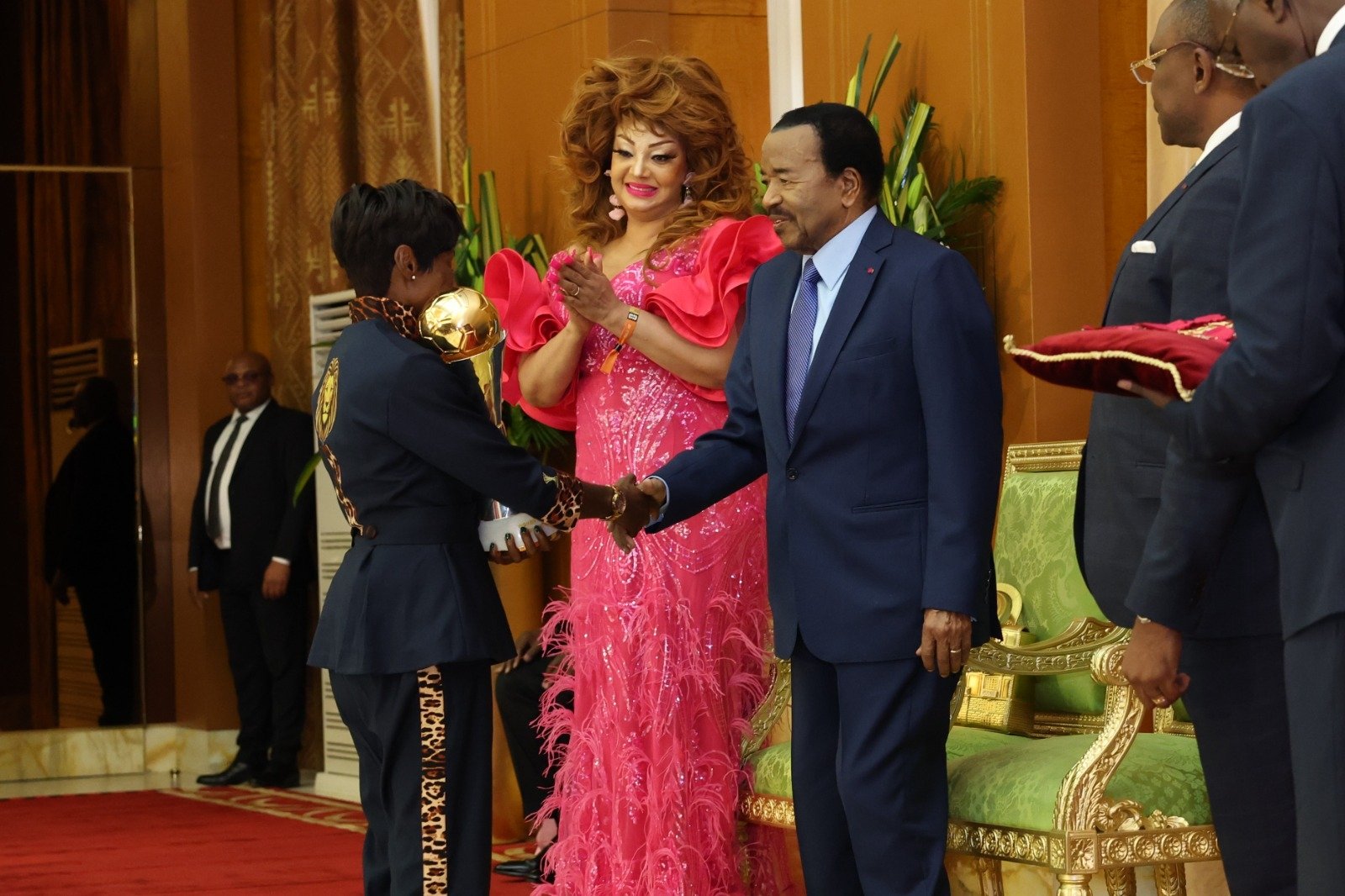
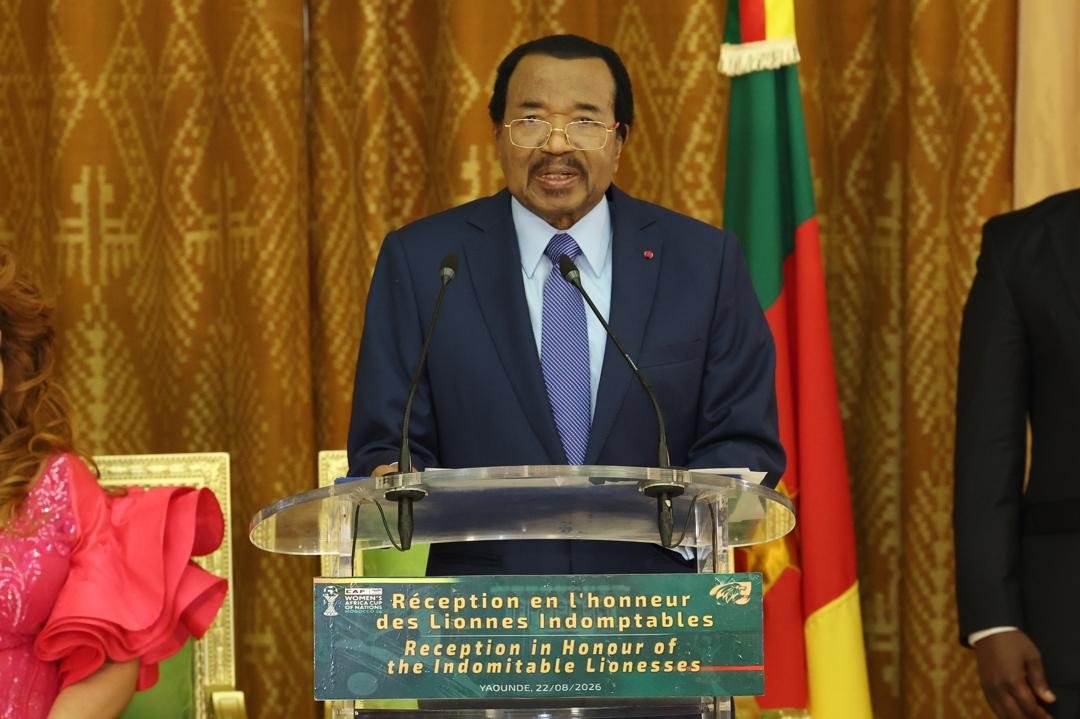
Cameroon President Paul Biya made his first public appearance in 73 days on Saturday, receiving the country’s women’s national football team at the presidential palace after their Africa Cup of Nations triumph.
The appearance offered a rare public glimpse of the 93-year-old president after his extended stay in Switzerland had fueled questions about his health, his ability to govern and the future of political leadership in Cameroon.
Biya, the world’s oldest serving head of state, returned to Yaounde on Thursday after spending more than two months in Geneva. His office had described the trip as a private stay, but the unusually long absence intensified speculation in a country where political power has remained highly centralized around the presidency.
The president appeared at the palace to congratulate the Indomitable Lionesses, who beat Malawi 3-0 in the African Women’s Cup of Nations final on Aug. 16 in Rabat, Morocco.
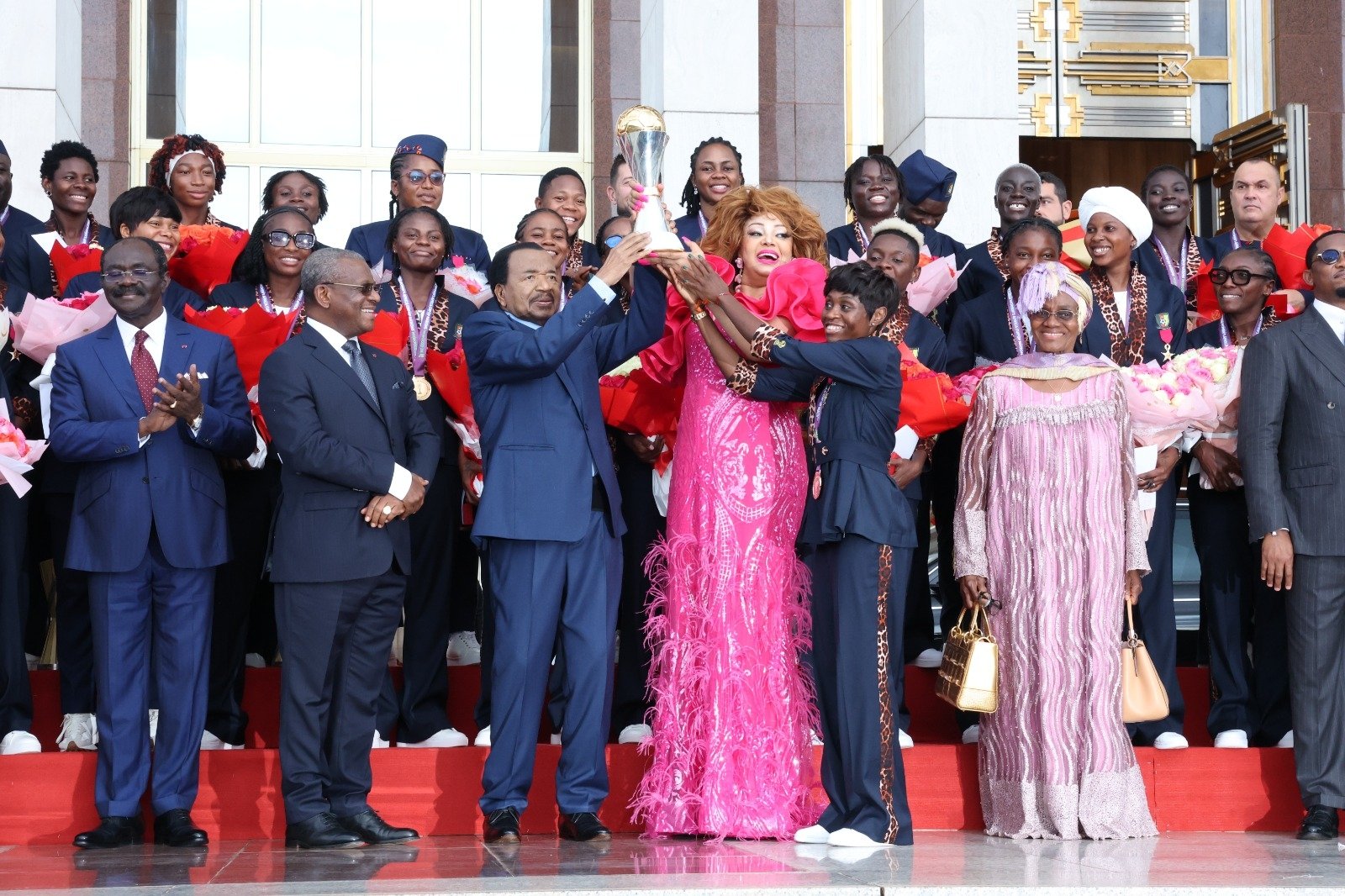
“I’m so happy that we could bring the trophy to Cameroon. Very, very honored and happy,” forward Easther Mayi Kith said during the reception.
Coach Valentine Nguele called the occasion “nothing but happiness” and said the team had accomplished “something exceptional” with the support of Cameroonians.
Biya’s return to public view came two days after he arrived back in Cameroon. He landed in Yaounde at about 4 p.m. GMT on Thursday from Geneva, where he had been since June 7.
Cameroonian media reported that Biya had spent the time in Switzerland with family members and close aides. He left the airport with his wife, Chantal Biya, and waved from a car as it traveled toward the presidential palace.
Dozens of supporters of his ruling party gathered at the airport to welcome him, with some wearing clothing bearing the president’s image.
Biya’s health has been the subject of speculation for years, particularly during his frequent trips to Geneva. On June 18, Communications Minister Rene Emmanuel Sadi rejected reports that the president had been hospitalized at a Geneva clinic.
His latest absence nevertheless drew renewed criticism from opposition figures, who described the country as operating in an “institutional vacuum” and on “autopilot.” The concerns have also focused on the lack of a vice president and uncertainty surrounding the country’s political succession.
James Fame Ndongo, a senior ruling-party official and higher education minister, rejected claims last month that Biya’s absence had created a power vacuum, saying the president remained in charge of state affairs.
Some Cameroonians remain unconvinced.
“For a democracy like ours, it’s normal for a president’s prolonged absence to raise questions. But it changed nothing in the functioning of the country,” said Giles Owono, a 30-year-old teacher who joined supporters welcoming Biya at the airport.
Others were more critical.
“It makes no difference whether he returns or stays away. When he is here, he does nothing,” said Prosper Nkou Mvondo, leader of the opposition Univers party. “I see no reason to take part in this spectacle.”
Biya has ruled Cameroon since 1982 and was re-elected to an eighth term in October 2025. The election was followed by protests that were violently suppressed. Authorities acknowledged several dozen deaths but did not provide a definitive toll.
His prolonged stay abroad has also revived debate about what comes after Biya and intensified speculation over potential successors in a political system that has been dominated by his presidency for more than four decades.
Cameroon does not have a vice president. Under the constitution, Senate President Aboubakary Abdoulaye is next in line to assume power if the presidency becomes vacant, pending the organization of a presidential election.