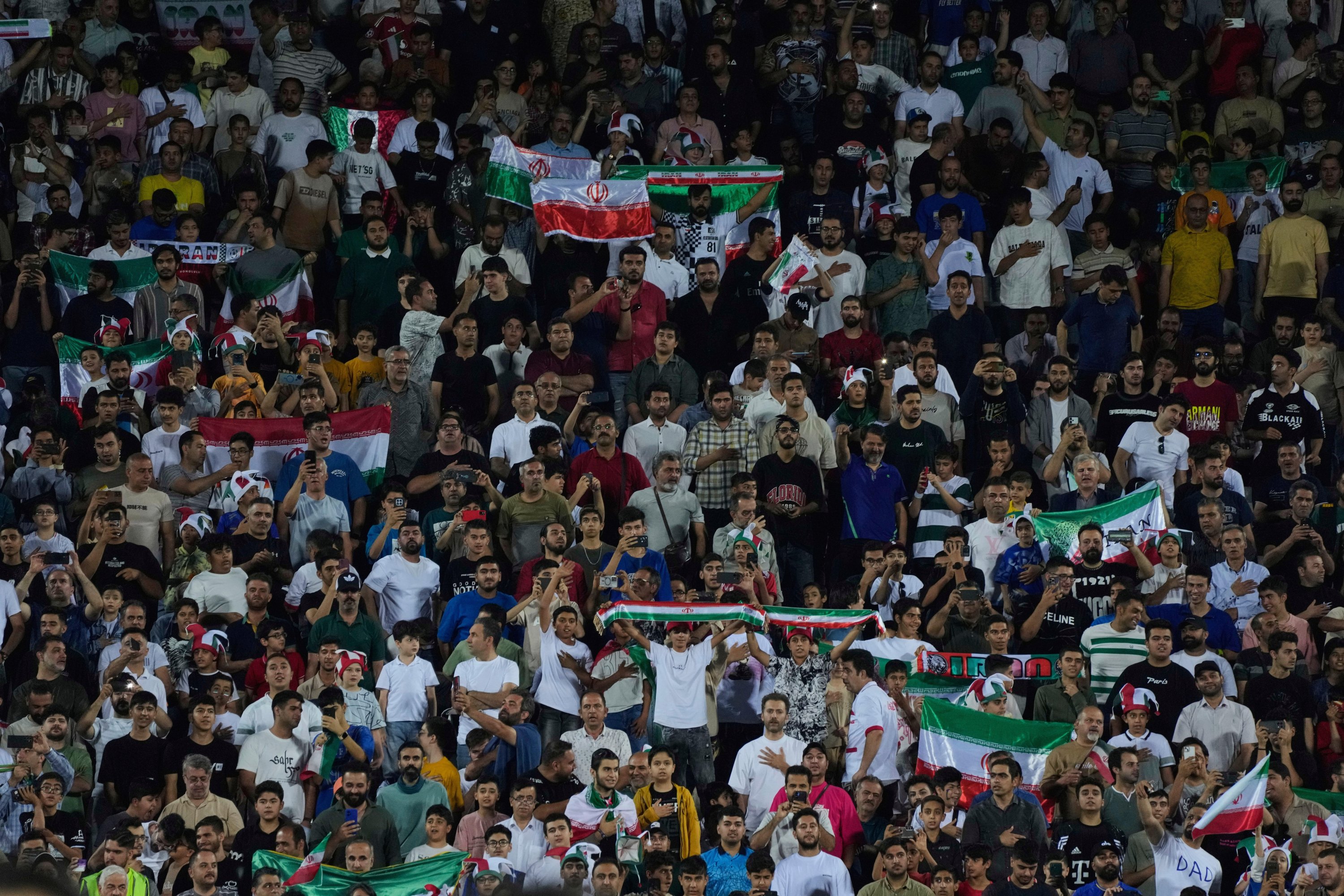
The 2026 FIFA World Cup will move forward as scheduled despite rising geopolitical tensions in the Middle East, with FIFA officials insisting the global tournament is simply too significant to halt.
Speaking Monday at the International Broadcast Centre in Dallas, FIFA chief operating officer Heimo Schirgi acknowledged that the ongoing war involving Iran, Israel and the United States has created uncertainty. Still, he stressed that football’s biggest event remains on course.
“At some stage we will have a resolution, and the World Cup will go on,” Schirgi said. “The World Cup is too big, and we hope that everyone who has qualified will be able to participate.”
The tournament, set to begin June 11, will be the largest in World Cup history, expanding from 32 teams to 48 and spanning three host nations: the United States, Mexico and Canada. Matches will be played across 16 cities, including 11 venues in the United States.
FIFA officials say they are closely monitoring the evolving situation in the Middle East, particularly the status of Iran, which qualified for the tournament through Asian Football Confederation competition.
Iran is scheduled to compete in Group G alongside Belgium, New Zealand and Egypt, with two matches planned in Los Angeles and another in Seattle.
Schirgi said FIFA remains in regular contact with Iran’s football federation, though he declined to discuss details of those conversations.
“If I had a crystal ball I could tell you what will happen,” Schirgi said. “But the situation is changing day by day. We are working with federal and international partners and evaluating developments continuously.”
Political tensions could also complicate travel logistics. The U.S. administration has imposed restrictions affecting several nations that have already qualified, including Iran, Ivory Coast, Haiti and Senegal.
Officials, however, have indicated that players, team staff and their immediate families will be granted entry for the tournament.
Beyond the geopolitical backdrop, FIFA leaders framed the World Cup as a rare global unifier.
“Given the state of the world today, this will be a great opportunity to bring everyone together,” Schirgi said. “The World Cup is truly global. People from everywhere come together and celebrate the game.”
Dallas itself is preparing for a central role in the event. FIFA officials gathered in the city to unveil plans for a month-long fan festival and to inspect construction of the International Broadcast Centre inside the Kay Bailey Hutchison Convention Center.
The massive media hub is expected to operate around the clock during the tournament and host between 3,000 and 3,500 journalists and broadcasters from around the world. It sits about 20 miles from AT&T Stadium in Arlington, home of the NFL’s Dallas Cowboys, where nine World Cup matches are scheduled.
Ticket sales have also drawn scrutiny. FIFA faced criticism over premium seat prices that reach as high as $8,680 for category-one seats, with early-round tickets exceeding $2,700 in some cases.
Schirgi defended the organization’s recent decision to reopen a 48-hour ticket window, saying it was designed to give fans another chance after initial demand exceeded supply.
“If someone applied for a category-three ticket and we didn’t have enough available, we offered them the opportunity to purchase a higher category,” he explained.
After backlash over prices, FIFA also announced it would allocate a limited number of $60 tickets for each match to the 48 participating national federations, allowing loyal supporters access to more affordable seats.