World players’ union FIFPRO has joined calls for an independent review of FIFA’s governance after the collapse of a controversial proposal that would have given private investors a stake in the commercial operation of the organization’s biggest competitions.
FIFPRO and FIFPRO Europe said Monday that the review was needed to ensure that no single FIFA office could advance major decisions without adequate consultation with football’s key stakeholders.
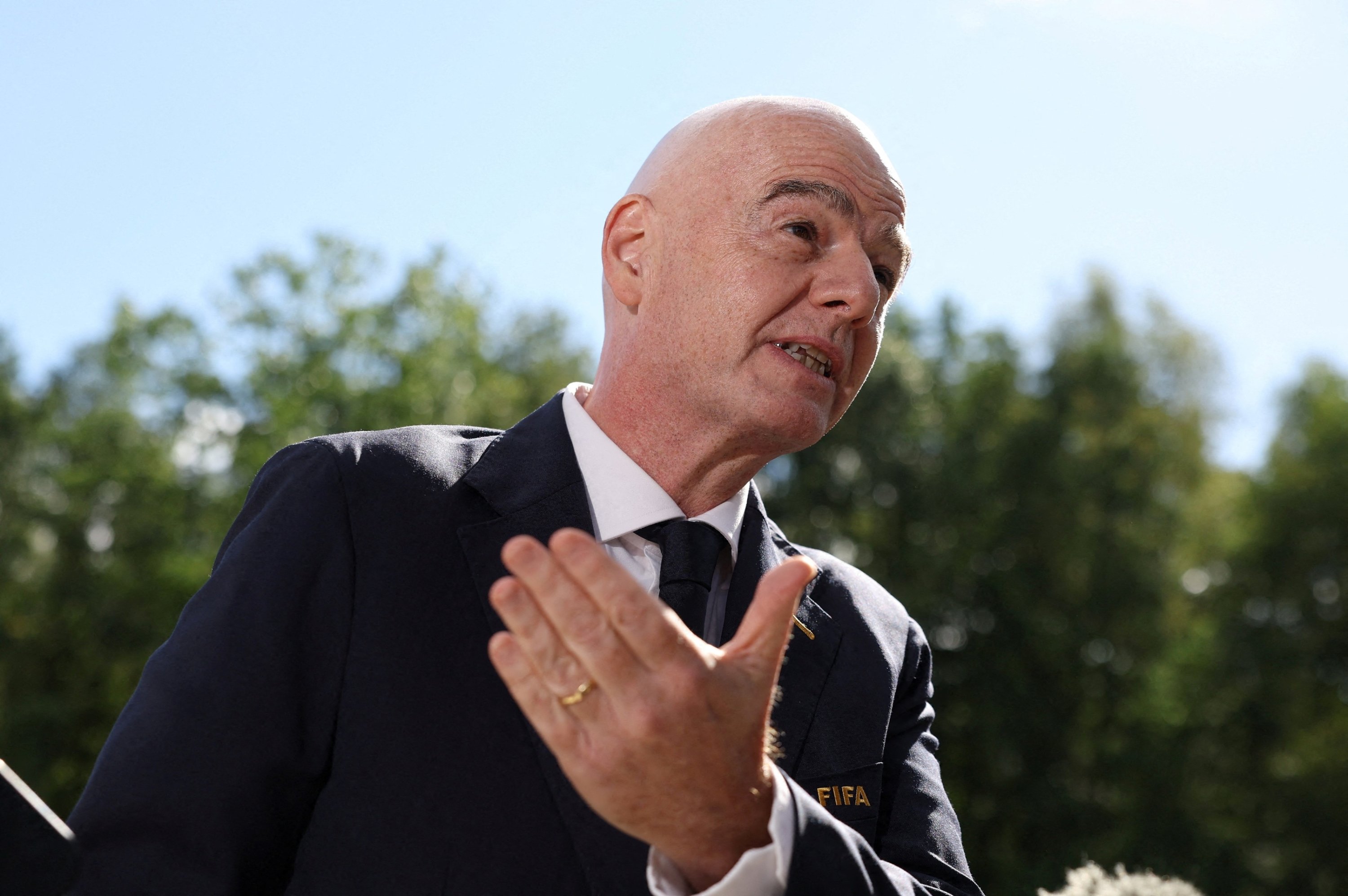
The demand follows the fallout from FIFA Forward Enterprise, or FFE, a proposal championed by FIFA President Gianni Infantino that would have allowed private investors to acquire a 20% stake in a company overseeing commercial aspects of FIFA competitions, including the men’s World Cup.
FIFA abandoned the plan after strong opposition from three continental confederations, including European governing body UEFA, which had threatened to boycott FIFA competitions unless the proposal was withdrawn and assurances were given that a similar initiative would not be pursued again.
UEFA dropped its boycott threat on Aug. 27 but said it had “lost confidence” in Infantino and would work to find a credible candidate to challenge him for the FIFA presidency at next year’s Congress. UEFA also called for an independent investigation into how the FFE proposal was developed and advanced.
FIFPRO said it supported that review and called for reforms to FIFA’s decision-making structures, including the formal integration of players, clubs and leagues into the FIFA Council’s decision-making process.
“The governance of the global game must reflect the interests of those who create its value,” FIFPRO Europe said in its report, produced with Player IQ and Football Benchmark.
The union argued that the FFE proposal exposed weaknesses in FIFA’s governance system by attempting to turn football’s most valuable competitions into investment assets without sufficient consultation with those involved in the game.
“FFE was an attempt to convert the game’s core competitions into an investable, tradeable and undervalued financial asset for private capital,” the report said.
FIFA said on July 28 that the FFE proposal was valued at $20 billion. UEFA, in legal filings in U.S. courts seeking access to documents related to the initiative, described that valuation as “fraudulently off-market.”
FIFA said Aug. 5 that it would review the process surrounding the proposal, but it has not identified who will conduct the review. The governing body also said at the time that “everything that was done was done in full compliance with the FIFA regulatory framework,” raising questions about the independence and scope of any subsequent examination.
FIFPRO’s report also sought to demonstrate the extent to which the global football economy depends on players and European clubs.
According to the study, European clubs employed 856 players at the expanded 2026 World Cup and released players whose combined estimated value was about 16.9 billion euros ($19.8 billion), representing 94% of the tournament’s total player value.
All 20 individual award winners from the previous five World Cups were also employed by European clubs, the report said.
FIFPRO Europe said those figures illustrated why the people and institutions underpinning the sport should not be treated as an asset that can be transferred to private capital without broad stakeholder involvement.
The union said it supported efforts to increase solidarity payments to smaller federations, but argued that any new funding mechanism should be developed collectively rather than imposed unilaterally.
“Any future proposal to grow solidarity funding should be built together, through trusted governance, not advanced unilaterally,” the report said.
The study also highlighted what it described as a widening gap between the growth of World Cup revenues and the share distributed as prize money to participating federations.
According to the report, prize money accounted for about 7.7% of World Cup revenue in 2026, down from 10.5% in 2006, despite the tournament generating substantially greater overall revenues.
Players receive only a fraction of that return, while national federations rely heavily on World Cup distributions as FIFA’s main performance-based source of income, the report said.
FIFPRO said the debate over FFE should therefore lead to broader reforms rather than end with the withdrawal of the proposal.
It called for greater representation of players, clubs and leagues in FIFA’s governance structures and for an independent review of executive decision-making within the FIFA Council.
The union said such changes were necessary to prevent a repeat of a process in which a proposal with potentially far-reaching consequences for global football could be developed and advanced without sufficient consultation.
The FFE dispute has intensified an already growing debate over the balance of power within world football, with FIFA defending its authority to pursue new revenue and development models while UEFA and other stakeholders question whether those decisions are being made with sufficient transparency and accountability.
FIFA did not immediately respond to a request for comment on the FIFPRO report.