Daily Sabah logo

Politics
Diplomacy Legislation War On Terror EU Affairs Elections News Analysis
TÜRKİYE
Istanbul Education Investigations Minorities Expat Corner Diaspora
World
Mid-East Europe Americas Asia Pacific Africa Syrian Crisis Islamophobia
Business
Automotive Economy Energy Finance Tourism Tech Defense Transportation News Analysis
Lifestyle
Health Environment Travel Food Fashion Science Religion History Feature Expat Corner
Arts
Cinema Music Events Portrait Reviews Performing Arts
Sports
Football Basketball Motorsports Tennis
Opinion
Columns Op-Ed Reader's Corner Editorial
PHOTO GALLERY
JOBS ABOUT US RSS PRIVACY CONTACT US
© Turkuvaz Haberleşme ve Yayıncılık 2026

Daily Sabah - Latest & Breaking News from Turkey | Istanbul

  • Politics
    • Diplomacy
    • Legislation
    • War On Terror
    • EU Affairs
    • Elections
    • News Analysis
  • TÜRKİYE
    • Istanbul
    • Education
    • Investigations
    • Minorities
    • Expat Corner
    • Diaspora
  • World
    • Mid-East
    • Europe
    • Americas
    • Asia Pacific
    • Africa
    • Syrian Crisis
    • Islamophobia
  • Business
    • Automotive
    • Economy
    • Energy
    • Finance
    • Tourism
    • Tech
    • Defense
    • Transportation
    • News Analysis
  • Lifestyle
    • Health
    • Environment
    • Travel
    • Food
    • Fashion
    • Science
    • Religion
    • History
    • Feature
    • Expat Corner
  • Arts
    • Cinema
    • Music
    • Events
    • Portrait
    • Reviews
    • Performing Arts
  • Sports
    • Football
    • Basketball
    • Motorsports
    • Tennis
  • Gallery
  • Opinion
    • Columns
    • Op-Ed
    • Reader's Corner
    • Editorial
  • TV
  • Sports
  • Football
  • Basketball
  • Motorsports
  • Tennis

Heat stress fears grow as World Cup faces rising temperature risks

by Reuters

LONDON, U.K. May 14, 2026 - 10:54 am GMT+3
Edited By Kelvin Ndunga
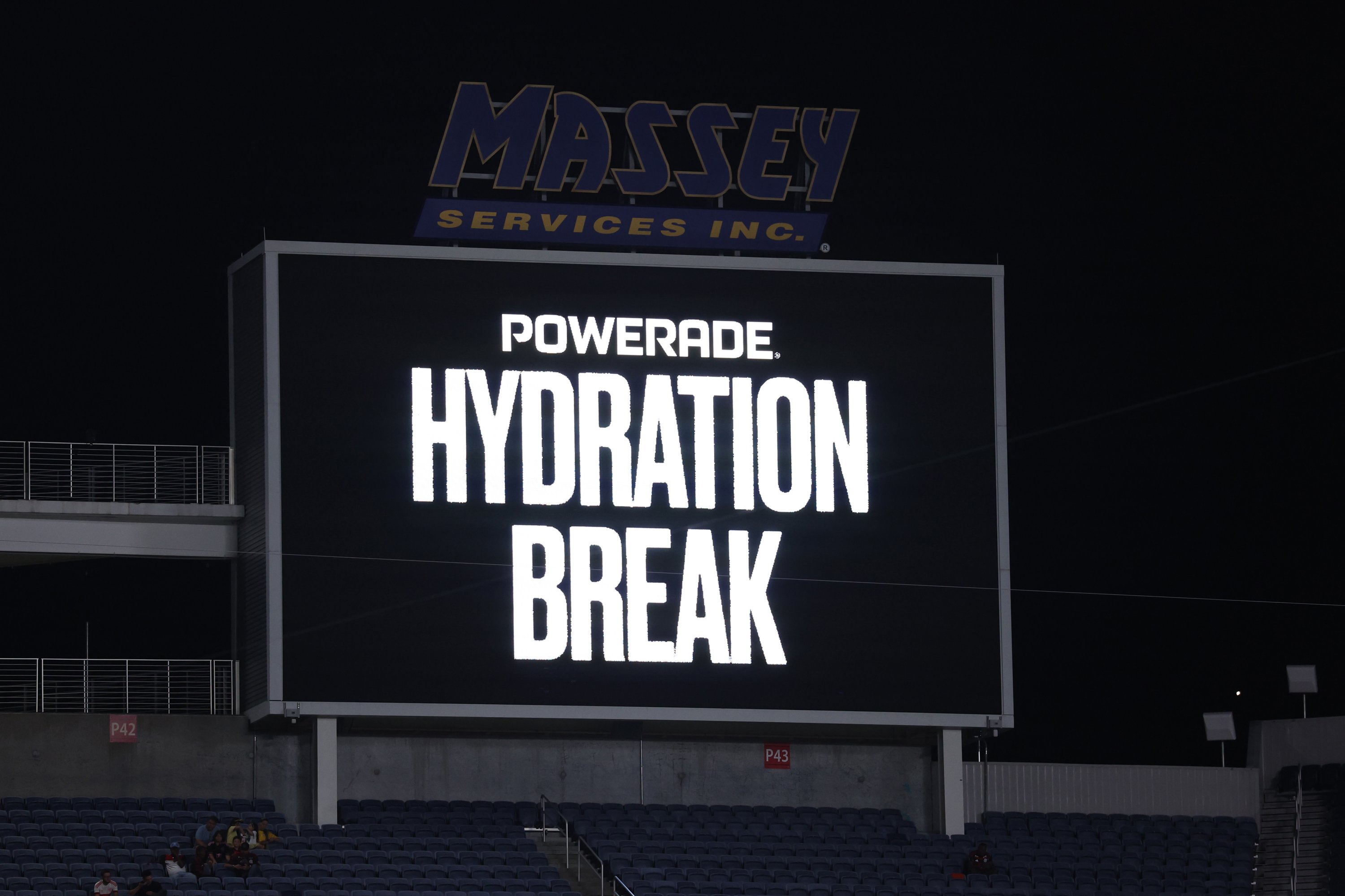
A Powerade Hydration break is displayed on the screen during the FIFA Club World Cup 2025 Group D match between Los Angeles Football Club and CR Flamengo at Camping World Stadium, Orlando, U.S., June 24, 2025. (Getty Images Photo)
by Reuters May 14, 2026 10:54 am
Edited By Kelvin Ndunga

Football’s global players’ union renewed concerns Thursday over extreme heat at the 2026 World Cup after scientists warned that the risk of dangerous temperatures for players and fans has risen sharply.

A study by climate research group World Weather Attribution found that around a quarter of the 104 matches at the expanded tournament across the United States, Mexico and Canada are likely to be played in conditions exceeding safety thresholds recommended by FIFPRO, nearly double the risk recorded during the 1994 World Cup in the U.S.

Researchers said about five matches could be held in conditions considered unsafe, where postponement would be recommended.

Scientists based their assessment on scheduled kickoff times and the Wet Bulb Globe Temperature (WBGT) index, which measures the body’s ability to cool itself under heat stress.

“The calculations to estimate the likelihood of 2026 FIFA World Cup games being played in high WBGT conditions are in line with FIFPRO’s calculations published in 2023,” said FIFPRO medical director Vincent Gouttebarge.

“These estimations justify the need for, and implementation of, a series of mitigation strategies aimed at better protecting players’ health and performance when they are exposed to hot conditions.”

FIFPRO recommends cooling measures when WBGT rises above 26 degrees Celsius and says matches should be postponed if it exceeds 28 degrees Celcius, which is roughly equivalent to 100 degrees Fahrenheit in dry heat or 86 degrees Fahrenheit in high humidity.

FIFA told Reuters it has carried out heat-risk planning, with measures including three-minute hydration breaks in each half, cooling infrastructure for fans and players, adapted work-rest cycles and enhanced medical readiness that can be scaled according to real-time conditions.

“FIFA is committed to protecting the health and safety of players, referees, fans, volunteers and staff,” the governing body said in a statement.

‘More conservative football’

Chris Mullington, a consultant anesthetist at Imperial College London NHS Trust and clinical senior lecturer at Imperial College London, said extreme heat is more likely to affect how games are played than trigger widespread medical emergencies among players.

“It will be more of a performance issue than a health issue,” he said. “These players are elite athletes and acclimatized. You’ll see players self-pacing. That behavioral thermoregulation is very difficult to override.

“So you may end up with more conservative football.”

Cooling systems are expected to reduce some of the risk at three of the 16 host venues, according to the analysis.

However, more than a third of games with at least a 10% chance of exceeding 26 C WBGT are scheduled at stadiums without air conditioning, including venues in Miami, Kansas City, New York City and Philadelphia.

That includes the final at MetLife Stadium, which now faces a one-in-eight chance of exceeding the 26 C threshold and roughly a 3% risk of reaching the more dangerous level, about double the risk it would have carried in 1994, the analysis said.

Friederike Otto, a professor of climate science at Imperial College London, said the findings highlighted the need for FIFA to reconsider when future World Cups are scheduled, particularly in regions vulnerable to extreme summer heat.

“From a health point of view, it would be advisable to have these (World Cups) either earlier or later in the year, so you can have a football party rather than something that is a massive health risk for the whole city,” Otto said.

FIFPRO also warned that while air-conditioned stadiums in cities such as Dallas and Houston may help protect players, fans attending matches and outdoor fan festivals could remain exposed to prolonged periods of dangerous heat.


  • shortlink copied
  • Last Update: May 14, 2026 12:36 pm
    KEYWORDS
    2026 world cup fifa fifpro climate change extreme heat
    The Daily Sabah Newsletter
    Keep up to date with what’s happening in Turkey, it’s region and the world.
    You can unsubscribe at any time. By signing up you are agreeing to our Terms of Use and Privacy Policy. This site is protected by reCAPTCHA and the Google Privacy Policy and Terms of Service apply.
    No Image
    Alaska's night sky lights up with mesmerizing aurora borealis
    PHOTOGALLERY
    • POLITICS
    • Diplomacy
    • Legislation
    • War On Terror
    • EU Affairs
    • News Analysis
    • TÜRKİYE
    • Istanbul
    • Education
    • Investigations
    • Minorities
    • Diaspora
    • World
    • Mid-East
    • Europe
    • Americas
    • Asia Pacific
    • Africa
    • Syrian Crisis
    • İslamophobia
    • Business
    • Automotive
    • Economy
    • Energy
    • Finance
    • Tourism
    • Tech
    • Defense
    • Transportation
    • News Analysis
    • Lifestyle
    • Health
    • Environment
    • Travel
    • Food
    • Fashion
    • Science
    • Religion
    • History
    • Feature
    • Expat Corner
    • Arts
    • Cinema
    • Music
    • Events
    • Portrait
    • Performing Arts
    • Reviews
    • Sports
    • Football
    • Basketball
    • Motorsports
    • Tennis
    • Opinion
    • Columns
    • Op-Ed
    • Reader's Corner
    • Editorial
    • Photo gallery
    • DS TV
    • Jobs
    • privacy
    • about us
    • contact us
    • RSS
    © Turkuvaz Haberleşme ve Yayıncılık 2021