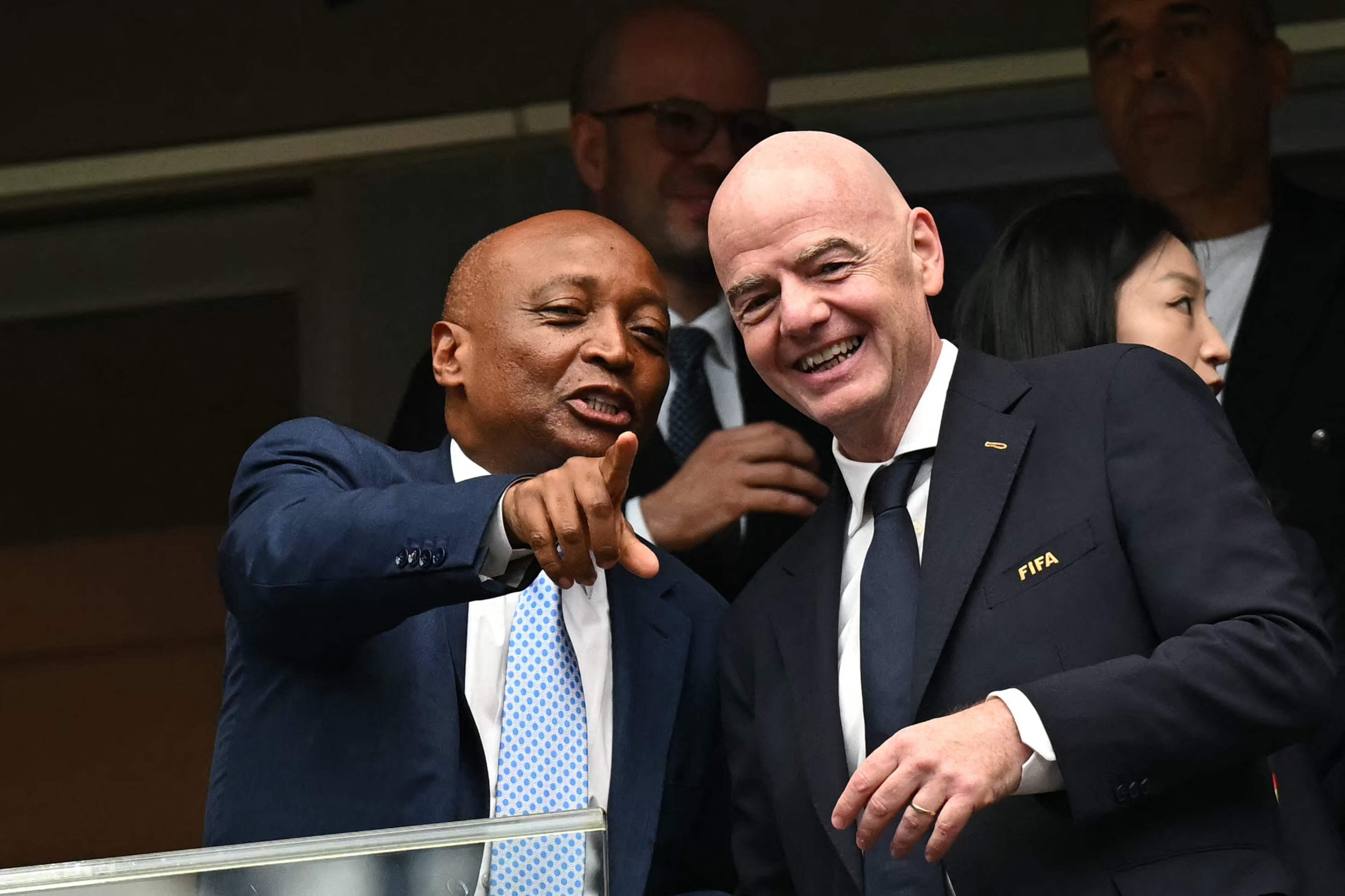
Gianni Infantino has weathered the biggest challenge of his decade as FIFA president, but the crisis has exposed deep divisions within world football and left the governing body's leadership, governance and future direction under unprecedented scrutiny.
The controversy erupted in late July after Infantino unveiled plans to establish FIFA Forward Enterprise (FFE), a commercial subsidiary designed to oversee the organization's broadcasting, sponsorship, ticketing, licensing and tournament operations, including the men's and women's World Cups.
The proposed company was valued at approximately $20 billion, based on estimates from financial advisers including JPMorgan, with FIFA aiming to sell up to a 20% minority stake to private investors. The sale was expected to generate about $4.2 billion, money Infantino said would transform football development by dramatically increasing funding for FIFA's 211 member associations.
Under the proposal, each federation could have received as much as $40 million during the 2027-30 funding cycle through expanded FIFA Forward grants and a one-time Fast-Forward payment, a significant increase from the previous baseline of roughly $8 million. FIFA projected that total development funding could eventually exceed $10 billion while insisting it would retain majority ownership and full authority over competitions, governance, the international calendar and sporting decisions.
Infantino promoted the initiative as a way to unlock FIFA's commercial potential while giving smaller football nations greater financial resources. Instead, it sparked one of the fiercest internal rebellions in FIFA's modern history.
Critics argued the proposal had been developed with little consultation and concentrated too much power within FIFA's leadership. UEFA condemned it as a "shabby, back-room, opaque deal," publicly declaring it had lost confidence in Infantino's leadership while warning that its 55 member associations could boycott FIFA competitions.
The backlash quickly spread beyond Europe. CONCACAF demanded accountability, while the Asian Football Confederation criticized FIFA's lack of transparency throughout the process. Former Portugal star Luis Figo joined calls for Infantino to resign, and reports linking potential investors to relatives of U.S. President Donald Trump further intensified political concerns surrounding the proposal.
Discontent also emerged from inside FIFA itself. Secretary General Mattias Grafström privately described the episode as a "sad and reproachable series of events" in a memo to staff, reflecting growing unease among senior executives. Facing mounting pressure from virtually every corner of world football, FIFA ultimately abandoned the FFE project altogether.
Seeking to restore unity, Infantino convened an emergency meeting of FIFA's senior leadership, including CAF President Patrice Motsepe in Rabat, Morocco, on Aug. 5 and 6.
The gathering ended with a carefully coordinated show of solidarity. FIFA released a statement in which Grafström and members of the management board reaffirmed their "full support" for Infantino, describing him as the only official directly elected by FIFA's 211 member associations. Infantino, in turn, pledged his support for the organization's leadership team.
While standing behind its president, FIFA also acknowledged significant failures in how the proposal had been handled.
The governing body admitted the FIFA Council and member associations should have been more closely involved before the plan became public. It also accepted mistakes made after details of the proposal leaked to the media, apologized to both the Council and member associations, and promised similar errors would not happen again.
FIFA said it will conduct a formal review of its internal decision-making process before presenting its findings at the next Council meeting. At the same time, it signaled a more aggressive approach toward outside criticism, saying it would defend the organization's integrity and reputation against future attacks.
The Rabat meeting helped stabilize Infantino's position in the short term, but it did not erase the political damage.
The FIFA president has already confirmed his intention to seek a fourth term at the FIFA Congress in Rabat on March 18, 2027, a victory that would extend his presidency through 2031.
Candidates must secure nominations from at least five member associations by Nov. 18, 2026, before standing for election. Victory requires a simple majority of 106 votes, with every member association carrying equal voting power regardless of footballing stature or commercial influence.
Before the FFE controversy, Infantino reportedly had formal backing from more than 200 member associations. That support has since weakened, with several European federations, including England and Wales, withdrawing or signaling they intend to withdraw their endorsements. UEFA continues to express no confidence in Infantino and has not completely abandoned the possibility of boycotting FIFA competitions.
Despite European resistance, Infantino still appears to enjoy significant support across Africa and Asia, where FIFA development funding remains especially valuable. Confederation members from both continents account for more than 100 votes, giving the incumbent a substantial electoral advantage. Morocco, one of the hosts of the 2030 World Cup, also remains among his supporters.
Although speculation has linked CONCACAF President Victor Montagliani and Asian Football Confederation President Sheikh Salman bin Ibrahim Al Khalifa with possible presidential bids, no formal challenger has emerged.
Beyond the election, the failed FFE proposal has intensified demands for broader governance reforms.
The episode highlighted long-standing concerns over centralized decision-making, limited consultation and the concentration of authority within FIFA's leadership. Future proposals involving commercial partnerships, tournament expansion or changes to the international calendar are now expected to face far greater scrutiny from confederations and member associations.
While FIFA's statutes allow member associations or the FIFA Council to call extraordinary meetings under certain conditions, neither option appears likely in the current political landscape because Infantino continues to command majority support.
The dispute has also deepened FIFA's already complicated relationship with UEFA.
Europe remains football's commercial powerhouse, generating much of the sport's revenue, elite competitions and playing talent. Yet FIFA's one-association, one-vote system gives greater political influence to the larger number of federations across Africa, Asia and other regions. Balancing those competing interests without damaging football's commercial ecosystem will remain one of FIFA's greatest challenges.
Financially, FIFA will continue operating under its existing FIFA Forward development program after shelving the FFE initiative. Member associations will still receive increased funding, though far below the levels promised under the abandoned proposal.
Infantino has built much of his presidency around expanding FIFA's commercial footprint through larger tournaments, including the 48-team men's World Cup and the continued growth of women's and club competitions. Maintaining those revenues while satisfying demands for greater transparency will be critical to preserving political support.
Attention will also increasingly shift toward preparations for the 2030 World Cup, which will be jointly hosted by Morocco, Portugal and Spain. Key organizational decisions, including the final venue selection and tournament logistics, remain outstanding. FIFA has denied reports suggesting those decisions could be influenced by political considerations.
Although FIFA celebrated record commercial returns and attendance figures during the 2026 World Cup in the United States, Canada and Mexico, the tournament also attracted criticism over ticket prices, political controversies, visa and travel issues, and several operational decisions. Infantino strongly defended the competition while accusing sections of the media of unfairly targeting FIFA.
The broader questions, however, extend well beyond one failed commercial proposal.
Infantino's eligibility for another term has reignited debate over presidential term limits and succession planning. If re-elected, he would become one of FIFA's longest-serving presidents, further intensifying discussions about institutional accountability and checks on executive power.
Supporters credit his leadership with significantly increasing FIFA's revenues and expanding investment across global football. Critics argue his centralized style has weakened trust by limiting consultation with confederations and concentrating decision-making within a small leadership circle.
The next seven months leading to the presidential election will determine whether FIFA's public display of unity in Morocco marked a genuine reconciliation or merely postponed a deeper power struggle.
Infantino retains considerable structural advantages under FIFA's voting system and continues to enjoy broad support across much of the football world. Yet the scale of the recent backlash from confederations, national associations, former players and political figures demonstrated that expectations surrounding transparency, governance and accountability have fundamentally changed.